




Interested in understanding What Is A/B Testing is and how it works? A Beginner’s Guide walks you through the fundamentals in 12 simple steps. You’ll learn how split testing operates, ways to boost your website’s conversion rate, and methods to test elements like calls to action and headlines.
We’ll also look at optimizing checkout and landing pages, running website experiments, and boosting user engagement
You’ll get introduced to helpful tools such as VWO (Visual Website Optimizer), Optimizely, and Unbounce.
We’ll touch on email testing, multivariate and split URL testing, website analytics, and understanding user behavior.
The goal is to help you make your website work better for you.
If you want to boost your website’s revenue, two proven strategies work well.
The first is to attract more visitors who are a good fit for what you offer.
Means bringing in people who are more likely to become customers because your products or services match their needs.
The second strategy, which often works faster and costs less, is to improve the number of your current visitors who become customers.
If you can turn more of your existing visitors into customers, you’ll grow your revenue without spending extra to get more traffic.
A/B testing is one of the best ways to get more conversions.
It’s a method that uses data to help you decide what changes to make on your site.
If you want your website to perform better, A/B testing is a smart move.
Instead of guessing, A/B testing lets you see which changes actually help you reach your goals.
Would you like to see your website’s conversion rates go up?
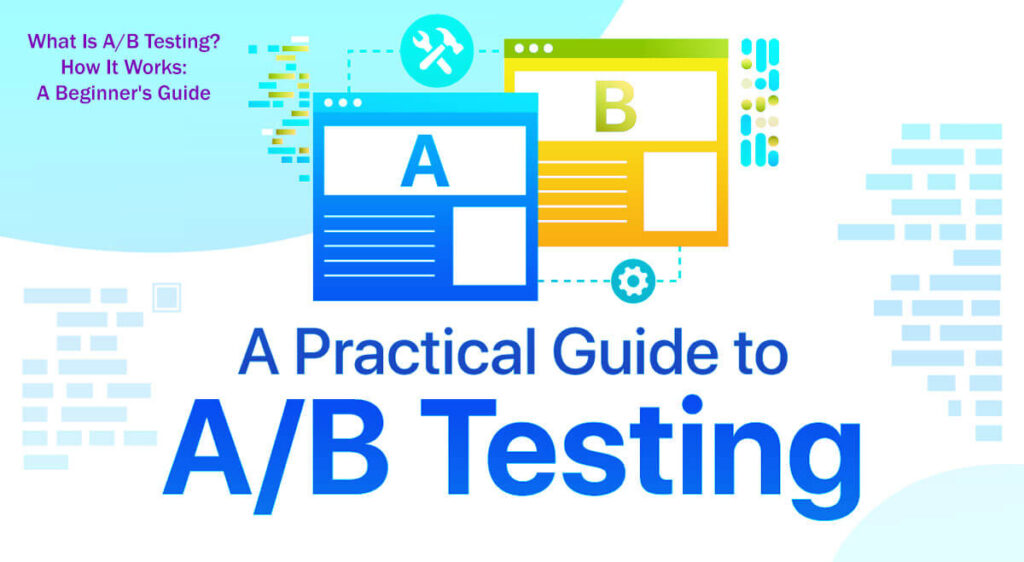
What Is A/B Testing? How It Works: A Beginner’s Guide in 12 Easy Steps
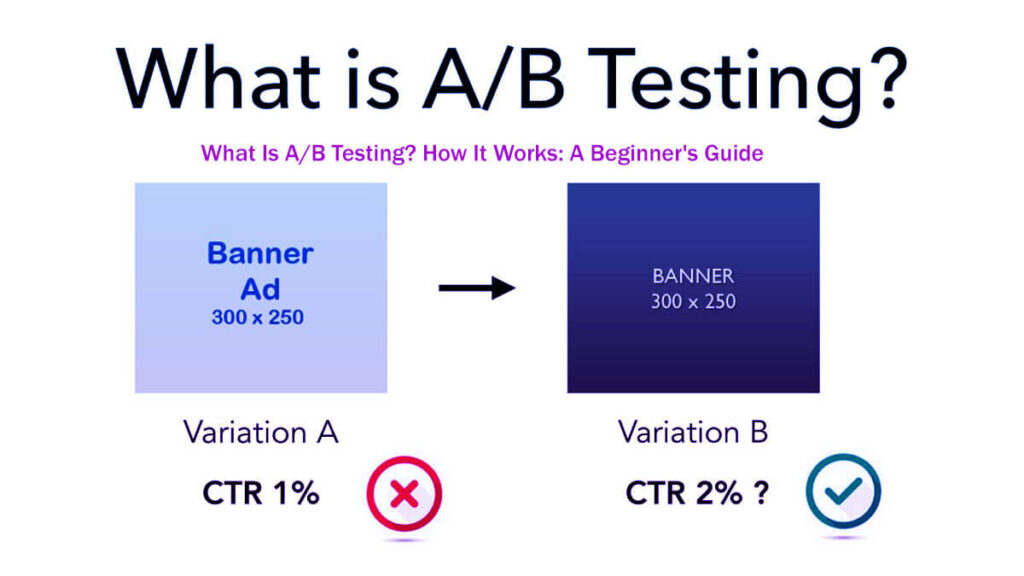
It’s surprising how slight changes can have a big impact.
For example, changing the size, wording, position, or color of a call-to-action button can all affect how visitors behave.
By running A/B tests regularly, you can see for yourself which strategies work best.
Over time, these insights help you turn your website into a stronger sales tool.
Before you start A/B testing, it’s important to know the basics. This process is ongoing, not just a one-time thing.
Next, I’ll explain how A/B testing works and how you can leverage it to grow your business and improve your conversion rates.
If you’re new to A/B testing, Crazy Egg is a great, easy-to-use tool that makes testing simple and helps you learn what works.
With Crazy Egg, you can spot issues before you even start testing. It shows you where people click, how far they scroll, and what content they skip.
Crazy Egg offers helpful features such as heatmaps, scrollmaps, session recordings, and built-in A/B testing.
Crazy Egg allows you to set up basic A/B tests without extensive developer assistance.
The results are also easy to understand.
Visual data from heatmaps and scrollmaps helps you see which ideas will have the most impact by showing how users behave.
If you want to look closer at how people use your site, Crazy Egg’s session recordings let you watch real users as they browse.
This approach goes beyond basic testing. It helps you understand why visitors behave the way they do and provides deeper insights into user engagement.
Crazy Egg has also added new reporting and AI analysis features that give you even more insight into user behavior.
These features help keep your testing focused and efficient so that you can make real improvements.
How A/B Testing Works
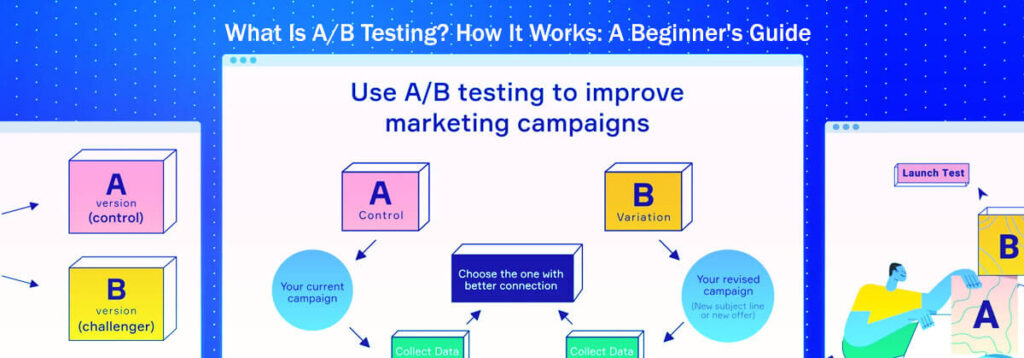
Now, let’s look at the basics of A/B testing to help you get started.
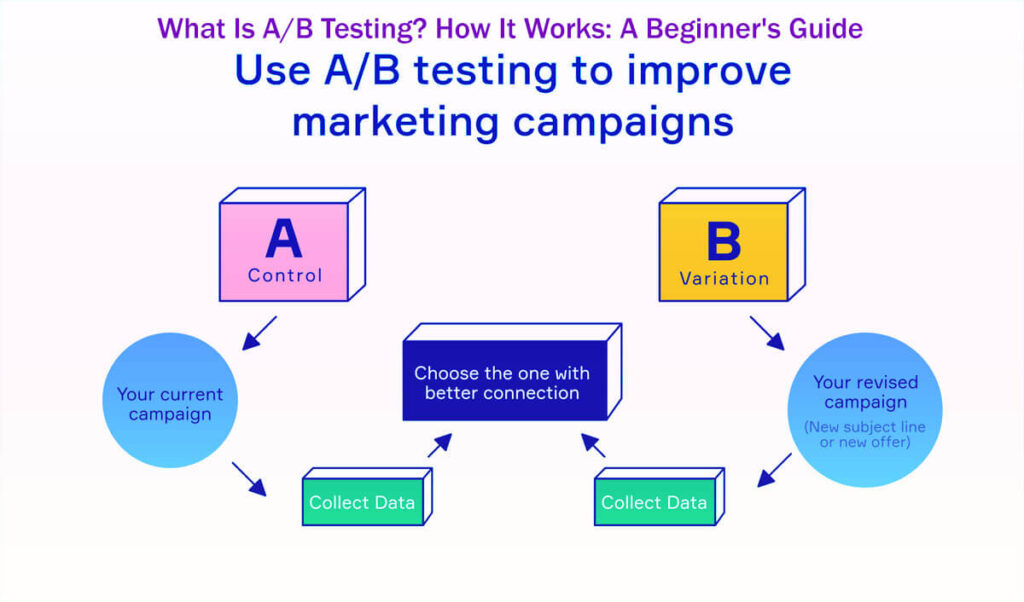
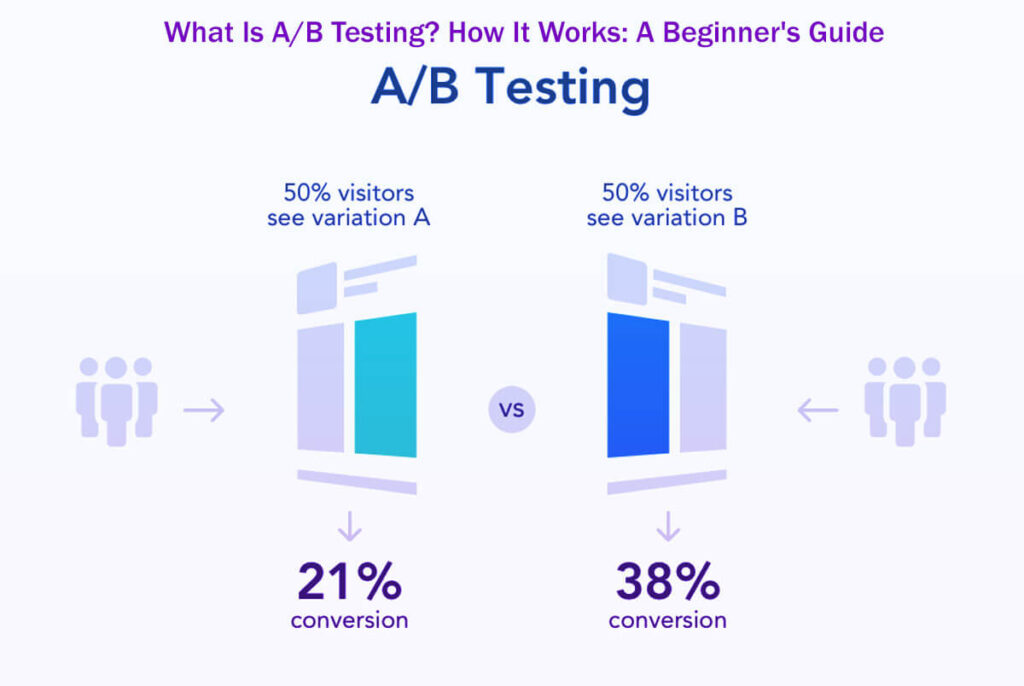
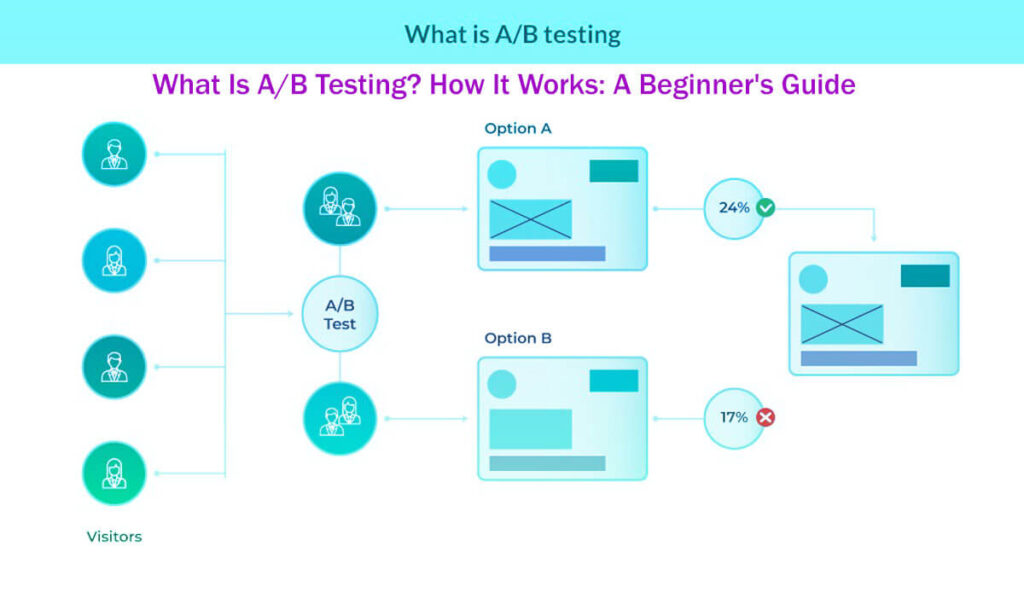
A/B testing is pretty simple. First, come up with an idea for something on your website you want to test.
Then, you make a new version of that element and show both versions at the same time to see which one does better, based on a key metric.
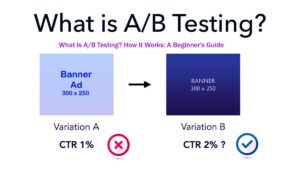
To break it down, some visitors see version A (the original), and others see version B (the new one).
It’s important to make sure visitors are split evenly and randomly between the two versions during the test.
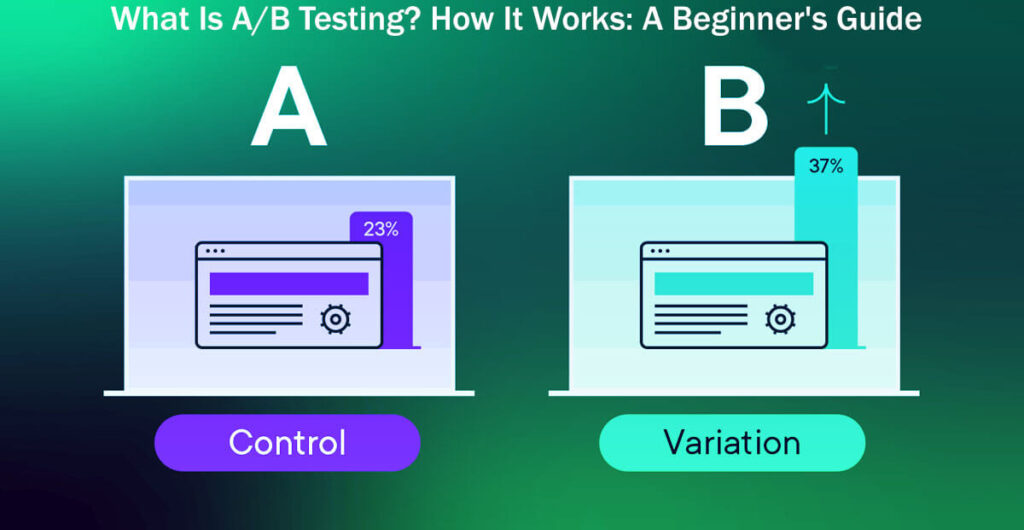
To help explain this, imagine a graphic that compares the original and new versions side by side.
Seeing them together makes it easier to spot the differences and understand how changes might affect user behavior and conversions.
By looking closely at your A/B test results, you can make smart choices to improve your website and boost your revenue.
Keep the test running until enough people have visited to show a clear difference between the versions.
Means letting the test run long enough to collect solid data so that you can pick a clear winner.
Once you know which version works better, you can use it as part of your overall plan.
You can also come up with new ideas to test, even if your results aren’t clear, to keep improving your future tests.
Figuring out what to test and how long to run each test can feel overwhelming, since every website is different.
But if you follow a clear process, you’ll make better decisions and avoid common mistakes.
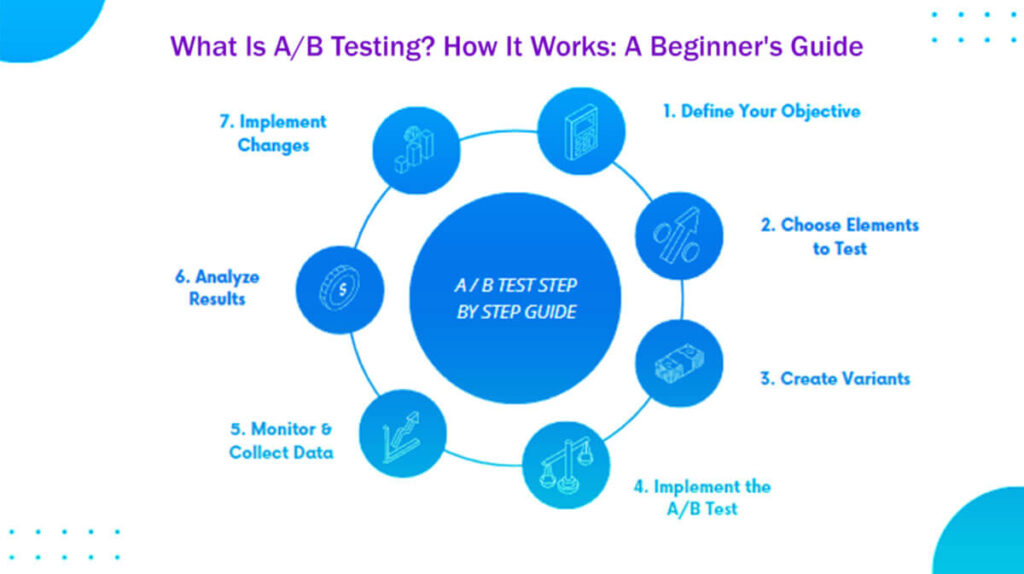
Here are the main steps to follow:
Set Clear Goals for Your Testing Process
Set Clear Goals: Start by deciding exactly what you want to achieve with your test.
Be specific about your goal and the conversion metric you want to improve.
Your main goal might be to increase online sales, get more people to start a trial, request a demo, or become qualified leads.
A clear goal helps you focus your tests and measure your results.
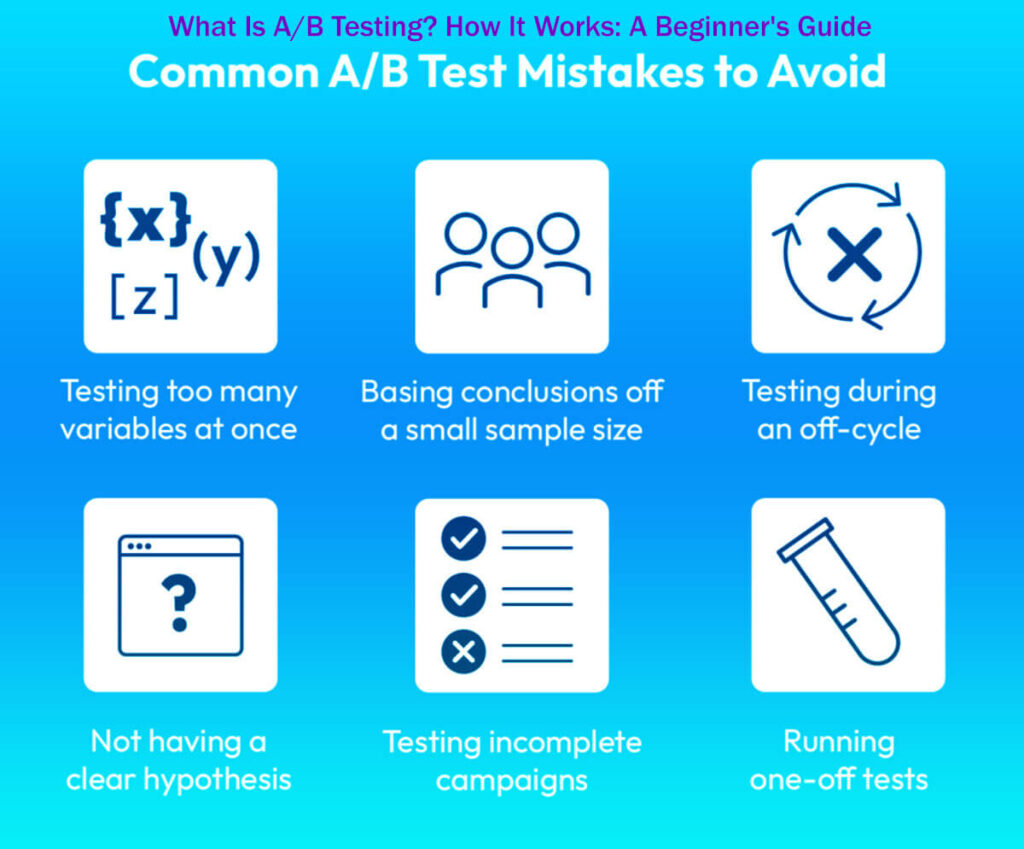
Change Only One Thing at a Time: Don’t test several changes at once.
If you change too many things, it’s hard to know which one made the difference.
So, focus on just one thing that’s closely tied to your goal.
It could be a headline, an image, or any part of your site that might affect what users do.
Test High-Impact Elements First: If you’re not sure where to start, try testing things that stand out, like call-to-action buttons.
If your goal is more conversions, focus on the parts of your site meant to drive those actions.
CTAs can vary depending on your business, but common ones include “Buy Now,” “Add to Cart,” “Start Trial,” “Schedule a Demo,” and “Subscribe.”
Match Your Test to the Page’s Purpose: Ensure your test aligns with the page’s intended purpose.
Test one idea at a time.
This way, you’ll know exactly what caused any changes. If you test too many things at once, you won’t know what worked.
Be Consistent: Run your tests consistently and in an organized manner.
Small wins add up over time and can really improve your website’s performance.
Keep checking and updating your testing strategy as you go. It will help you get even better results.
By following these steps, you’ll build a stronger testing process and see better conversion rates over time.
Test Your CTA Buttons
To improve your website design and boost user engagement, focus on factors such as button size, contrast, and where you place important elements on the page.
A clearly placed call-to-action (CTA) button helps guide users to take action. It’s best to make these buttons bigger and use colors that stand out.
Putting CTAs near the top of the page, where visitors see them right away, can increase click-through rates because users don’t have to scroll to find them.
The words you use in your CTA matter just as much and can strongly influence how users respond.
A/B testing different CTA messages, such as benefit-focused phrases versus direct prompts, helps you determine which style works best for your audience.
Trying out different versions of your CTA shows you which wording gets users to take action.
Adding persuasive words, often called “power words,” to your CTAs can make them more effective.
Power words trigger emotions and can help increase your conversion rates.
Check if your current CTAs use these persuasive words.
If not, try using more specific, urgent, and action-focused phrases that feel immediate, but avoid anything that sounds spammy or exaggerated.
After the CTA, users notice your headings and subheadings next. Their design and wording are key to making a good impression.
If your titles are unclear or misleading, users may leave. Make sure your headlines are clear and show the value you offer.
You can measure how well your headlines work by tracking things like how far users scroll, how long they stay, and your conversion rates.
Evaluate Your Headings
Good headlines usually help improve these important metrics.
For example, running an A/B test on different headline options can give you valuable insights.
In one case, an A/B test showed that one headline version led to a 27.76% increase in form completions compared to another, with everything else on the site staying the same.
If your A/B test results are within 5% of each other, treat them as inconclusive.
Running an A/A test, where you compare the same version to itself, can help set a better baseline for future tests.
If you run an e-commerce site, making the checkout process better should be a top priority. Lowering cart abandonment is key to increasing revenue.
Try out different checkout layouts and look for elements that might slow customers down, such as distractions or poorly placed elements.
Fixing these can encourage more people to finish their purchases.
Enhance Your Checkout Process
Make your checkout page simple and easy to use.
Show trust signals, such as security badges or customer reviews, to help users feel confident about making a purchase.
Using a few key strategies can significantly improve your checkout process.
For example, you can offer express payment options like Apple Pay or Google Pay.
Show security badges to reassure users, and decide whether to hide or show coupon fields.
Let customers check out as guests, and put the order summary above the CTA button so it’s easy to review before buying.
For instance, iHerb improved its checkout by making the interface less cluttered.
They removed distracting banners and moved the “Calculate” button closer to the main “Proceed to Checkout” CTA, making the process smoother and more organized.
Shows that a simple, well-designed checkout can really help users complete their purchases.
Discover Which Images Convert
Images on your website shape first impressions, so it’s important to test different types of visuals.
Try using lifestyle images that show products in real-life settings rather than just plain product photos.
Also, test different subjects, facial expressions, backgrounds, and where you place images near CTAs and text.
Fast load times are crucial in today’s online world.
Pages that load quickly usually get more conversions because users leave slow sites.
After you find which images work best, keep testing different sizes and placements to get even better results.
Experiment with Various Color Schemes
Finally, color has a big impact on how users feel, pay attention, and read your site, so think carefully about your color choices.
Cultural background can affect how people perceive colors, but contrast and clarity remain important.
When testing color schemes, ensure there’s sufficient contrast for text, links, navigation, and CTAs so everyone can use your site easily.
A/B Color Testing: A Comprehensive Analysis
Let’s take a closer look at A/B testing, focusing on how the color of a call-to-action (CTA) button can affect results.
In this type of test, the only difference between the two versions is the color of the button.
Everything else, like the layout, text, images, and user experience, stays the same during the test.
Colors often associated with action, especially different shades of green, usually work well because people connect them with growth, energy, and movement.
However, it’s important not to make decisions based only on common assumptions.
You should test carefully with your own audience and consider your brand’s colors to achieve the best results.
Exploring Additional Elements for Testing
Besides button color, other important factors can also affect how users engage with your site and whether they convert.
Here are some key things you might want to test:
Honors and Media Attention: Highlighting awards or press coverage can significantly impact how users perceive your brand.
How many of these you show and where you place them on your site can help build trust and make your brand seem more credible.
Testimonials and Social Proof: Adding things like star ratings, strong customer quotes, or well-known brand logos can help new customers trust you more.
Sharing positive feedback can help people feel part of a community and see your business as reliable, leading to more conversions.
Video Content: Videos can really help keep users interested.
Try testing factors like video length, thumbnail images, and whether the video plays automatically or requires the user to start it to see what works best for keeping attention.
Advertising: It’s important to consider how ad placement, the number of ads, and their visibility affect user behavior on your site.
By checking these factors, you can see whether users are getting tired of ads and which placements receive the most attention.
All these factors can significantly influence your site’s conversion rates and visitor engagement.
Establishing a Focused A/B Test
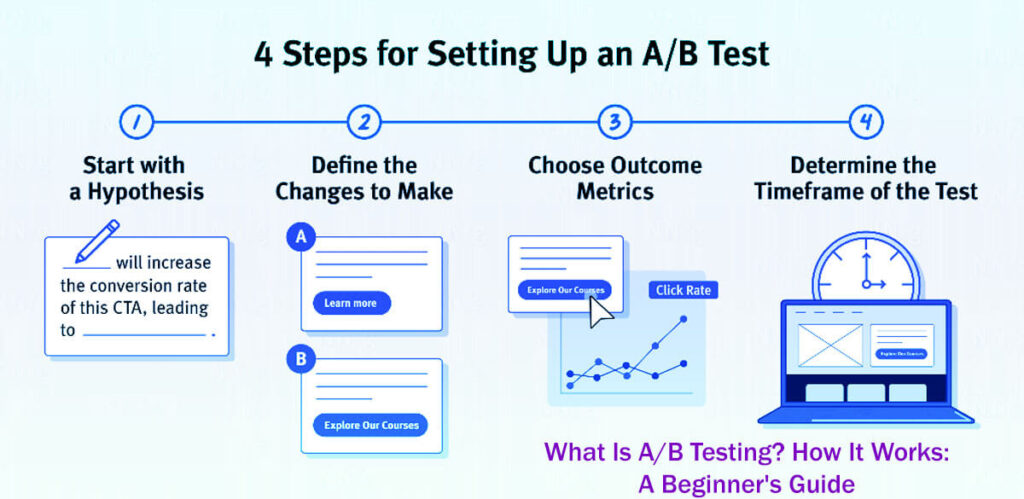
To run a good A/B test, set a clear goal first.
Knowing what you want to achieve is key to running a useful test.
Next, identify the specific change that you believe will help you reach your goal.
For example, if your main goal is to increase user signups, your hypothesis could say:
Making the main call-to-action button larger and more noticeable on the homepage will lead to more user signups because it becomes easier to see.
After that, set up your split test to see if your idea works.
Make sure you change only one thing at a time so you can see exactly how it affects user behavior.
Real-World Examples of Effective A/B Testing
Take the case of Yuppiechef, an online kitchenware store, which conducted an enlightening A/B test comparing a version of its website with a navigation bar to one without it.
Their hypothesis suggested that the navigation options distracted users from the primary call to action.
The results were impressive. By removing the navigation bar, they doubled their conversions, demonstrating the value of focused testing.
Similarly, Highrise undertook a headline-focused A/B test, refining the wording of their homepage header.
This test showed a 30% rise in click-through rates after using the new headline, demonstrating that minor wording tweaks can significantly impact results.
To sum up the A/B testing process, here are the main steps:
Define a Single Objective: Focus on a single main goal for your test to keep your results clear.
Formulate a Specific Hypothesis: Clearly state what you think will happen when you make a change.
Conduct a Clean A/B Test: Only change the thing you want to test so your data is accurate.
Analyze and Respond to Results: Examine your results closely and adjust your approach as needed, always aiming to improve.
It’s important to keep your tests focused.
If you change too many things at once, it gets hard to know which change actually helped.
Choosing the Best A/B Testing Platform
Once you know your goal and idea, the next step is figuring out how to run the test on your website.
You don’t need coding skills to conduct effective experiments. Many user-friendly tools are available to assist you.
One popular tool is VWO (Visual Website Optimizer), known for its flexibility and ease of use.
VWO has a WYSIWYG (What You See Is What You Get) editor so that marketers can set up and review tests easily without working with HTML or CSS.
VWO also offers different versions and free trials, so you can try it out before buying.
These features let marketers quickly change things like headlines or CTA text without needing IT help, but you can still use CSS or JavaScript for more complex tests if needed.
Another great option for web and feature testing is Optimizely.
Optimizely lets you do regular A/B tests, more advanced multivariate tests, and even segment your audience based on user behavior.
Optimizely’s pricing typically targets mid-sized and large businesses. To receive detailed pricing, contact their sales team for a custom quote.
Using these tips and tools, you can design effective A/B tests that enhance your website’s performance and support your business objectives.
Adding the Optimizely code snippet to your website can significantly improve your site’s performance.
With this snippet, you can run experiments and get data back almost instantly.
This quick feedback helps you track how users interact with your site and provides useful insights into their behavior.
If you also manage mobile apps, Optimizely offers flexible options for running experiments on the server or directly in the app.
This flexibility lets you adjust your approach across different platforms, making your data collection more effective.
Unbounce is another great platform known for helping people create and improve landing pages that boost conversions.
With Unbounce, marketers can build focused landing pages that turn visitors into customers.
The platform offers useful features, such as robust analytics and built-in marketing tools, to help you track how your pages are performing.
Unbounce stands out for supporting multiple testing methods, including A/B, multivariate, and A/B/n testing.
Means you can try out changes to things like pop-ups and sticky bars to see what works best.
Unbounce also offers a trial, so you can try it out before committing to a long-term plan.
Its drag-and-drop editor is easy to use, so you can quickly change and test your designs.
If you’re not sure which platform to choose, try starting with one of these tools and running some initial experiments.
Both platforms are designed to help you establish a modern testing program aligned with your objectives, enabling you to achieve your conversion goals.
Setting Priorities for Your Test List
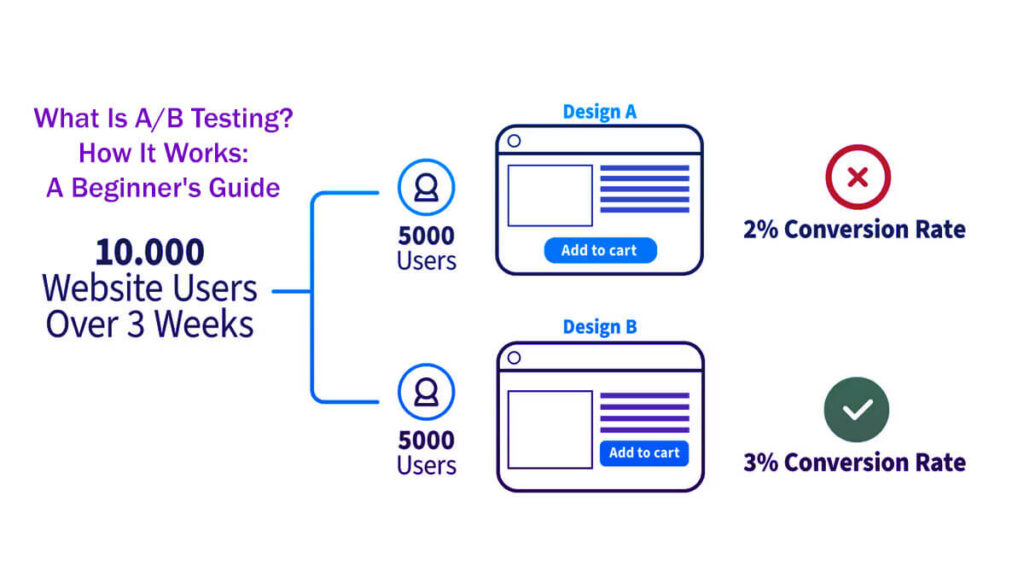
After a good brainstorming session, you’ll probably come up with a long list of possible experiments.
To get the best results, sort your ideas by how much impact they might have and how easy they are to put into action.
To help with this, ask yourself questions like:
Would moving a testimonial to a better spot help more than just rewriting your call to action?
Think about which changes are easiest to make but could lead to the biggest improvements.
The goal is to make a ranked list of experiments you can work through one by one.
Keep a running journal to jot down ideas, such as new headlines, different calls to action, where to place free shipping badges, early payment options, or simpler form designs.
Testing one thing at a time usually yields steady, small improvements, but bigger, well-planned changes can yield major results.
As you start testing, consider creating a spreadsheet to help you set priorities.
Include things like who suggested the idea, your hypothesis, when you plan to start and finish, and your test results.
A quick check for Impact, Confidence, and Effort can really help you decide which experiments to do first.
Remember, a single smart, bold test can sometimes boost your conversions by 125% or more.
On the other hand, ten small wins might only add up to about a 25% increase.
So, using both approaches—making small changes and running bold tests—can give you a balanced way to improve your results.
Setting Up Your Experiment
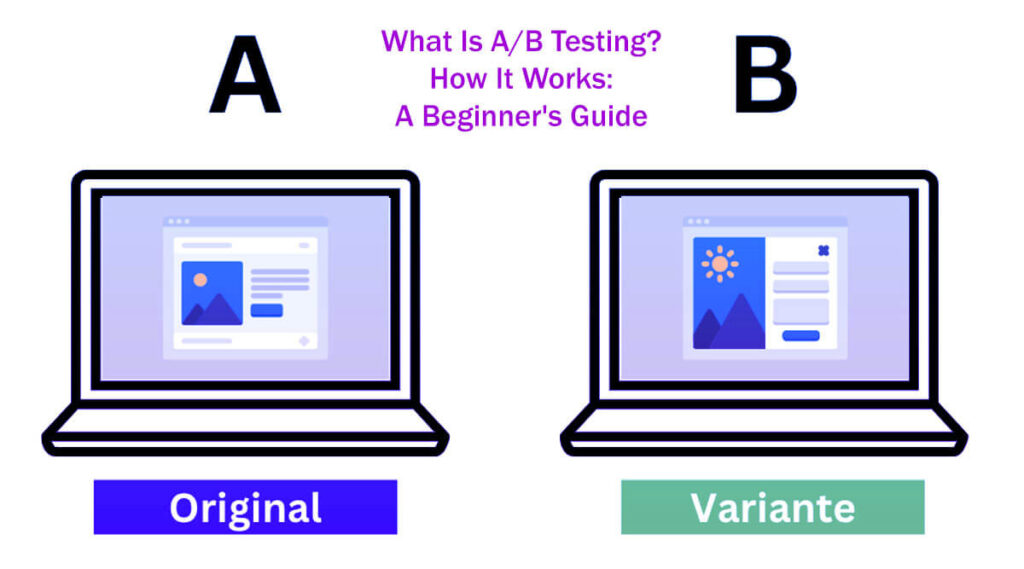
After you’ve set your testing priorities, the next step is to set up your experiment.
In this guide, I’ll show you how to do this using Visual Website Optimizer (VWO).
Keep in mind that the steps are different depending on which platform you use.
First, log in to your VWO account and click the “Create Test” button.
Then, choose “A/B test” to set up a standard split test.
A/B testing is a great way to start building your testing skills and confidence.
As you become more comfortable, you can try more advanced methods, such as multivariate or split-URL testing.
Next, pick the type of test you want to run.
Please enter the URL of the page you’d like to test. We’re here to help you through it!
VWO has a WYSIWYG editor, so you can easily change things like the headline, call to action, or page layout to create your test version.
This editor keeps your test versions looking consistent with your site’s fonts and styles, so your brand stays on track.
Most A/B tests don’t need any coding, but you can add HTML if you want to make advanced changes.
After that, make sure you clearly set your goals for the experiment.
For example, if you want to see how many visitors move from your homepage to the next step in your sales funnel, set that as your main conversion goal.
Might mean tracking completed purchases or new account signups, depending on your business.
Metrics like visits to a signup page can be helpful during testing, but your main focus should be on final conversion rates that align with your core business goals.
These numbers usually tie back to key metrics such as paid SaaS subscriptions, completed e-commerce orders, or revenue per visitor.
By focusing on these important factors, you’ll be able to see how well your experiments work and make real improvements to your website.
Begin by thoroughly detailing your whole workflow to identify and address bottlenecks effectively.
Means clearly listing each stage, from the first idea to the final result, and watching each step for slowdowns or problems.
A visual map of your process helps you find exactly where things get stuck, so you can take focused steps to work more efficiently.
When you review your results, focus on decisions that directly affect your bottom line.
Look at both the numbers and the feedback to ensure each choice adds real value to your organization.
Track things like revenue growth, cost savings, and customer satisfaction to see how changes impact your company’s finances and goals.
When you start testing, give each test a clear and descriptive name.
Makes it easier to find and refer to later.
For example, calling a test “Homepage — Headline Value Prop Test” makes its purpose clear and provides context for anyone reviewing the documentation later.
Good documentation is key to successful testing.
Be sure to take careful notes, including your hypothesis, or what you hope to learn from the test.
Write down details about the version you’re testing, what changes you made, and what improvements you expect.
Set clear rules for what counts as success, like higher conversion rates, lower bounce rates, or better user engagement.
Thorough documentation helps you learn and makes it easier to share knowledge and ideas with your team.
In A/B testing, it’s standard to split traffic evenly between the original and the new versions.
This way, both versions have the same chance to show results.
To reduce risk, you can limit how often the new version is displayed.
Only use uneven traffic splits if you have a strong reason, such as believing a certain group will respond much better to the new version.
Targeting is also important. It makes sure your test is relevant to the right audience segments.
Use filters like device type, location, or traffic source to make your test results more accurate.
This targeted approach makes your results more reliable and helps you apply insights to the right customers.
After you launch your test, watch for issues such as layout problems, broken links, or other errors.
Let the test run long enough to gather enough data. Stopping too soon can lead to wrong conclusions.
Most testing platforms will randomly show half of your visitors the original and half the new version.
Once you have enough data, you can find useful insights for next steps or pick a clear winner based on your success criteria.
If the new version doesn’t show a clear improvement in your main metric, pause it and try the next idea on your list.
This step-by-step approach helps you keep improving your strategies.
Understand the Statistics Behind Your Data
Understanding the basic statistics behind your data is key to making sense of your A/B test results.
You need to distinguish between real improvements and random noise. Here are a few key statistics to remember:
Mean: This is the average result you’re measuring, like conversion or click-through rates.
Variation: This shows how much individual results differ from the average. Less variation usually means more reliable results.
Sample Size: This is how much data you need to be sure your results are real and not just random.
The average result, like a conversion rate, is called the mean. Variance shows how much individual results differ from each other.
If your average results vary widely, your findings may not be reliable unless you have more data.
To strengthen your testing, try running A/A tests from time to time.
In these tests, you run two identical pages to check for setup issues and see how much your data naturally varies.
For example, even if two pages look the same, one might get more conversions because of small differences in user experience or how people interact with it.
To set a baseline for how much results can vary, split your traffic evenly between two identical pages.
This baseline helps you decide how long to run tests and protects against false positives.
You can use this data to set a reliable baseline for measuring future changes.
How long you run the test and how much data you collect are both key to successful testing.
There’s no single rule for how many visitors or days you need.
Run your test until you have enough data to spot the smallest improvement that matters for your business goals.
If you run a test for only a few days, the initial results might not tell you much.
A new version might look like it’s doing badly, but a small sample size can give you the wrong idea.
Usually, after a longer period, such as two weeks, you’ll get a clearer picture and can analyze the results more effectively.
Over this longer test, you might see the new version improve by about 25.18%.
Be careful with early results. Don’t check too often or end the test early just because you see some positive signs.
This habit, called “peeking,” can lead to more false positives and poor decisions.
Make sure your test runs long enough and gets enough traffic for real insights.
Watch out for things like seasonality or daily trends that could affect your results.
Use A/B Testing to Improve Your Emails
A/B testing isn’t just for your website. It can also make your email marketing much better.
Try testing things like your call-to-action wording, colors, images, and subject lines to see what your audience likes best.
This kind of testing boosts engagement and conversion rates, helping you get better results from your marketing.
Email marketing offers unique opportunities to improve your results by testing and refining your strategies.
To get the most out of email marketing, review each part of your emails in a structured way.
Pay attention to things like how long your messages are, who the sender is, when you send emails, what the preview text says, and whether your subject lines highlight value or spark curiosity.
When testing different subject lines, keep the rest of the email the same each time.
Keeping everything else the same lets you see if changes in open or conversion rates are really due to the subject lines.
This approach gives you more reliable data and helps you understand what your audience likes.
Don’t forget to consider the length of your emails, not just the subject lines.
Studies show that short emails—about 50 to 125 words—work well when you want readers to take a simple action.
Still, it’s important to test this with your own audience and email goals, since factors like your industry and your readers’ preferences can make a big difference.
Open rates matter, but they’re only one part of measuring your email campaign’s success.
Click-through rates and, most importantly, conversions are equally important because they show whether your emails are meeting your main goals.
If you combine what you learn from email marketing with tests on your website, you’ll get a better picture of how well your campaigns work and can make smarter changes.
Review Your Initial Tests
It’s also important to review your earlier tests often. Don’t limit A/B testing to just a day or two.
Give each test a few weeks to collect enough data to make good decisions.
For example, running four or five tests on different calls to action might take a few months.
When you start testing things like headlines, images, colors, and forms, you might notice that your results are already a year old by the time you finish all your tests.
That’s why it’s important to regularly check and update your data to keep your strategies working in a changing market.
Things like where your traffic comes from, who your audience is, and what you offer can change a lot over time. What worked last year might not work now.
In Conclusion
In summary, A/B testing is one of the best ways to boost your revenue and conversion rates.
Think of it as an ongoing process, not a one-time project.
Keep experimenting and base your tests on clear ideas to get the best results.
Start by testing things that make a big difference, like forms, the checkout experience, strong headlines, and calls to action.
Once you’ve covered those basics, move on to testing your layout and visuals, like colors, white space, and images.
Using this careful, step-by-step approach in your email campaigns is key to improving your whole conversion process.
After you finish a round of testing, check whether your past winning strategies still work by reviewing any new data or results.
If you haven’t started testing yet, make it your top priority.
Starting to test will help lower your customer acquisition costs and give you an edge over competitors who still guess at their marketing.
Using data to guide your decisions will set you up for success.
What Is Growth Hacking? The Ultimate Guide to Success: 13 Easy Steps
How to Monitor Your Competitors: 15 Easy Ways To Track Them
How to Promote Your Business Locally: 20 Easy Ways to Grow Your Local Business
What Is a Sales Conversion Rate? How to Increase: 6 Easy Steps
What is a Customer Loyalty Program? How to Increase Sales: 9 Effective Strategies