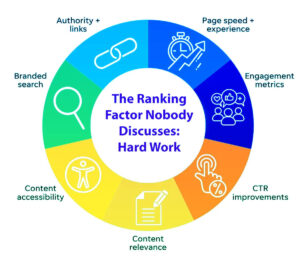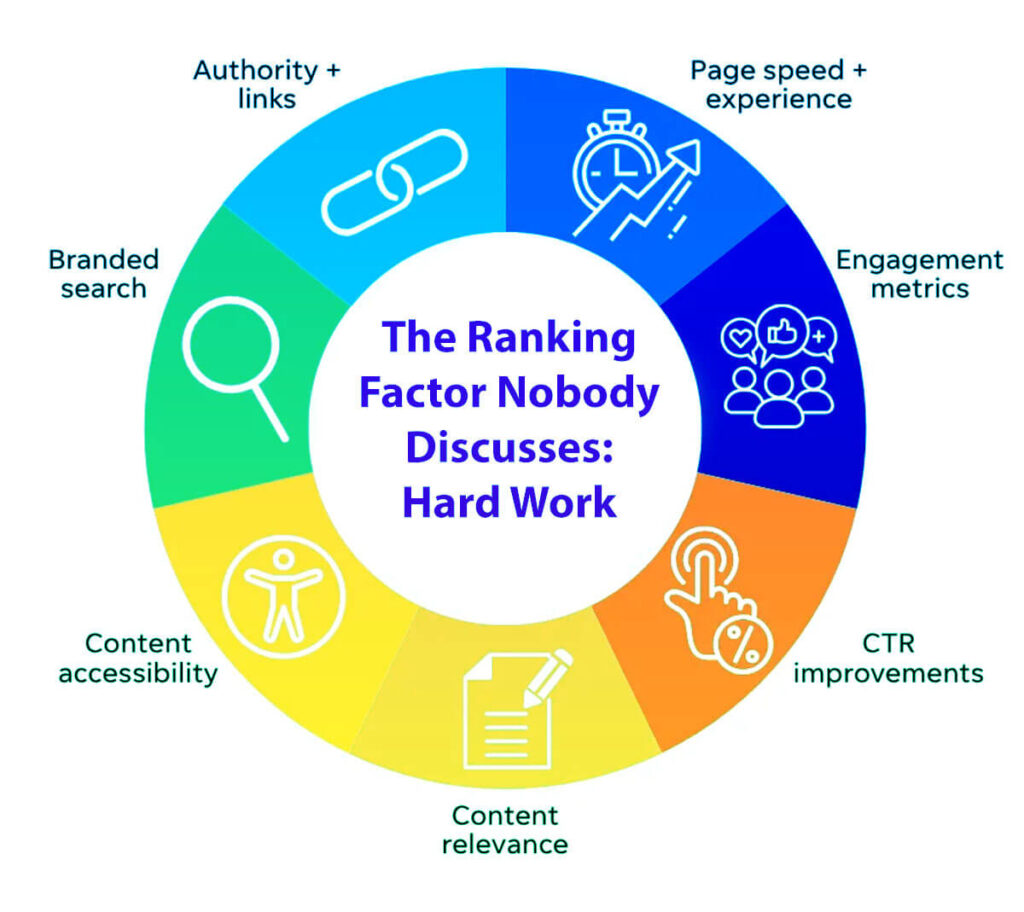





Find out why hard work is an often-overlooked The Ranking Factor Nobody Discusses: Hard Work in 8 Easy Steps: A Guide. See how putting in effort can improve your SEO, make your site better for visitors, and help your website perform well.
We’ll share practical tips to make your content clearer and keep your audience interested, so your site feels more trustworthy and enjoyable.
Let’s look at simple ways to make things easier for your readers, improve your site, and move up in Google rankings by using Google Trends
SEO advice can seem overly technical and complicated, often leaving marketers and content creators feeling overwhelmed.
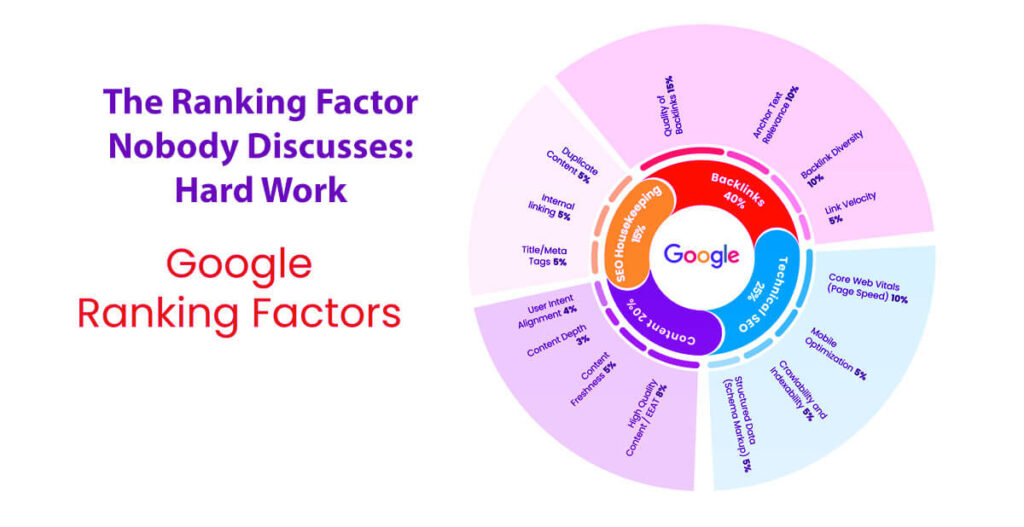
Most discussions focus on key topics such as backlinks, topical authority, Core Web Vitals, structured data (schema), and the concept of “helpful content.”
Although these factors influence search rankings, one crucial element is frequently overlooked: effort.
But the effort I mean goes beyond just creating, publishing, and promoting your content.
It’s really about the effort your reader has to make after clicking on your page.
If users have trouble finding what they need on your site, Google takes notice.
As a result, the search engine may lower your rankings.
One trend in today’s search results is that top pages offer a smooth user experience.
They give clear answers, show simple next steps, and avoid making readers hunt for information.
The Ranking Factor Nobody Discusses: Hard Work in 8 Easy Steps: A Guide
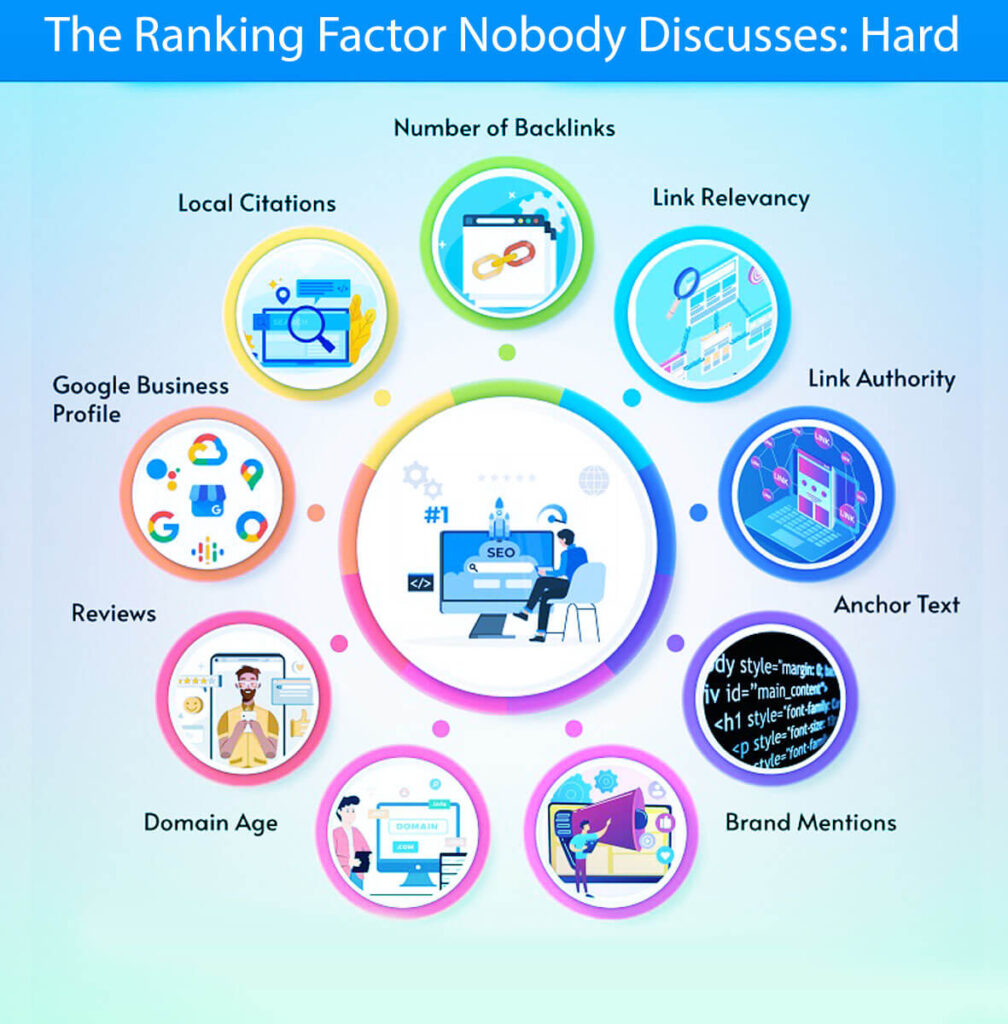
What do I really mean when I say “effort”?
Effort is the total work a reader has to do to get through your content.
It includes:
Understanding your message clearly.
Feel confident that your information is reliable and trustworthy.
Finding the details that fit their own situation.
Taking action, whether that means finding an answer, exploring more content, or leaving your page satisfied.
Many things affect user experience, like page speed and readability, but effort goes beyond just these basics.
Here are some things to consider:
How quickly a reader can tell if your page answers their question.
How much extra content do they have to get through before finding the main point?
Whether your steps are truly actionable or just vague suggestions.
How relevant and useful your examples are for real situations users face.
Whether users have to jump between sections or pages to find their answers.
How many pop-up ads get in the way before users can read your main content?
How well your headings and subheadings help readers find their way through your content.
If your content takes too much effort to use, people are more likely to leave, change their search, and look for answers somewhere else.
But if you make things easy, users are more likely to stay, explore more, and get what they need.
Keep in mind, Google doesn’t need to fully understand your content to notice big differences in how users behave on different pages.
Why Effort Is Becoming a Bigger Deal Right Now
It uses measurable data to see how users interact with different websites.
Effort is becoming more important in SEO, especially in today’s digital world.
Users are getting more impatient—not because they’re lazy, but because they have so many choices competing for their attention:
SERP features give instant answers to simple questions, so people spend less time searching.
AI-generated content condenses a lot of information into short, easy-to-read paragraphs, providing quick clarity.
Users have plenty of other resources just a click away, making the competition even tougher.
So, a typical blog post isn’t just competing with other posts—it’s also up against the fastest ways for users to get clear answers.
If your page doesn’t make it easy for users to get valuable information, you face two main challenges:
SERP features can provide quick answers that overshadow your content.
Other well-designed pages with better user experiences get the rest of the clicks.
Why you might see so-called “inferior” content ranking higher than “superior” content.
Often, this “inferior” content actually gives users a smoother, more enjoyable experience.
The Effort Tax: A Hidden Barrier to Content Quality and Performance
In my analysis of many web pages that seem like they should rank higher, I often find content with strong writing, good backlinks, and solid keyword use—sometimes even better than the pages above them.
Yet even with these strengths, many of these pages still struggle to appear in search results.
This lack of progress is often due to what I call the Effort Tax. It can show up in different ways and really hurt a page’s performance.
Help Me Find My Fit Quickly
You Make Me Question Whether I Am in the Right Place
When I look up something like “best email marketing service for Shopify,” I want clear advice, not a long explanation about why email marketing matters.
If your page starts with a long motivational speech or too much background, I lose interest fast.
At that point, I’m ready to decide and need quick answers to key questions:
Who is this service meant for?
What concrete benefits can I gain from it?
How quickly can I find the information I need?
If your content doesn’t answer these questions right away, I get overwhelmed and frustrated. Makes it harder for me to keep reading or stay interested.
Solution: Start with a Quick “Fit Check” Right Away
To make things easier for readers, try adding a short “fit check” at the start of your content. For example, you could say:
“If you’re operating on Shopify and need to prioritize revenue tracking along with abandoned cart recovery, start your journey here.”
“If you’re a local business looking for straightforward newsletter solutions, feel free to skip ahead to this section.”
This small change makes things clearer for readers right away and sets a helpful tone before they even start reading.
Make Navigation Intuitive, Not Linear Reading
Most people won’t read every word on your page. They usually scan for the information they need.
If your content forces readers to wade through everything to find what they need, it can quickly feel overwhelming.
Solution: Structuring Headings as Navigation Points
To help with this, make your headings work as clear navigation points.
Good headings are specific, practical, and easy to skim. Helps readers quickly find what they need.
Examples of useful headings include:
- “Estimated Time to Complete”
- “Pricing Information”
- “Steps to Follow if Situation X Occurs”
- “Optimal Solutions for Y”
- “Common Mistakes and How to Avoid Them”
On the other hand, vague or broad headings like:
- “Why It Matters”
- “Things to Consider”
- “Overview”
- “Final Thoughts”
It doesn’t really help readers find their way. If I can’t find an answer in ten seconds, I’m much more likely to leave.
Avoid Fluff and Focus on Providing Value
Sometimes, content feels like the author is trying to show off rather than give useful, practical information.
Most readers aren’t looking for a show of knowledge. They want clear answers, steps they can follow, good recommendations, templates, or comparisons they can actually use.
Solution: Present the Answer Upfront
For example, if I’m looking for guidance on “how to fix X,” start with:
The most probable cause.
The quickest solution available.
A step-by-step guide for implementation.
Recommendations for what actions to take if the initial solution doesn’t work.
This approach shows you respect your reader’s time and helps them feel valued and informed.
Minimize Disruptive Interruptions
Interruptions like pop-ups, sticky videos, auto-playing content, long cookie banners, too many email sign-ups, and chat widgets that cover text all make the user experience worse.
These distractions annoy users and can also affect their behavior in ways that Google notices, potentially hurting your site’s performance.
Solution: Streamline Lead Capture
If you need to capture leads, try to make it as easy as possible:
Trigger lead capture mechanisms only after readers have had a chance to extract value from your content.
Keep prompts concise and easy to understand.
Ensure that the lead capture is straightforward to dismiss if the user is not interested.
Avoid stacking multiple intrusive interruptions on a single page.
Your main goal should be to connect with leads respectfully and effectively, without harming the user experience.
Using these strategies helps make your site more welcoming and useful, so users are more likely to engage and make good decisions.
You Don’t Make Trust Effortless
Building trust between content creators and readers is tough and takes real effort from everyone involved.
When I read advice on important topics like personal finance, health, legal issues, rankings, or advertising, I need to feel sure the information is credible and trustworthy.
If I don’t get that reassurance right away, I usually take extra steps to check if I can trust what I’m reading.
Often means I have to verify things in different ways, such as:
Cross-checking information: I verify accuracy by comparing content across multiple reputable sources.
I look up other sources to back up the claims I see.
Examining reviews or testimonials: I seek feedback from other users or experts to gauge the credibility of the advice.
Comparing sources for consistency: I check different viewpoints to ensure the information is reliable and aligns.
All this extra checking often sends me back to the search results to look for clearer or more trustworthy sources.
To make things easier and build trust, add proof right into your content. Here are some ways to do that:
Use screenshots: Showing real steps with visuals makes your advice clearer and more reliable.
Clarify assumptions: Explain when your advice applies, like saying, “This works if you’re using GA4 and have admin access.”
Highlight common pitfalls: Inform readers about potential issues to help them prepare.
Give specific examples: Use clear, real-life examples instead of general statements.
Cite primary sources: For important topics such as policies, pricing, or standards, reference trusted sources to enhance your credibility.
Instead of just adding an author bio and calling it E-E-A-T, I suggest making trust-building much simpler.
Make sure your content is clear and trustworthy for readers.
You Get the Reader to Turn Your Advice into Action
A lot of so-called “helpful” content falls short at the end. It tells readers what to do but skips the details on how actually to do it.
Sometimes, even if the steps are technically correct, they’re too vague. Leaves readers confused and unsure how to move forward.
Because of this, readers have to put in extra work, such as:
Interpreting the information: Figuring out the advice can take a long time if it doesn’t directly address their needs.
Adapting instructions: Readers may need to adjust general instructions to fit their own situations.
Guessing what works: Without clear direction, readers may end up guessing what to do in their own context.
Troubleshooting issues: If problems arise, readers often have to resolve them on their own.
To help, give readers practical resources and tools, like:
Templates: Share templates that readers can quickly fill in with their own details.
Scripts: Give ready-made scripts to help readers take action right away.
Swipe files: Offer examples and files readers can adapt for their own use.
Checklists: Give thorough checklists so readers don’t miss any important steps.
Decision trees: Create clear guides to help readers make choices based on their situation.
Direct action rules: Give simple “If you see X, do Y” instructions for quick decisions.
When readers can easily use key information from your post and make progress fast, your content becomes more engaging and gives them a reason to come back.
A Simple Method to Identify Your Effort Issue
I use a simple mental model called the 5 Effort Questions to judge how effective a webpage is.
These questions help me see how user-friendly and useful the content is:
Is this relevant to me within 5 seconds?
Can I find my answer within 15 seconds?
Can I trust the information without needing to navigate away from the page?
Can I act on it without having to improvise or make assumptions?
Are there any obstacles that hinder my reading experience?
If your content doesn’t meet at least three of these five points, your rankings may drop, even if the content is good.
How to Minimize Effort Without Rewriting Everything
You don’t have to rewrite all your content to make things easier for readers. Small, meaningful edits can make a big difference.
Here’s one way to start:
Rewrite your introduction as a “Reader Contract.”
Use the first 150 to 250 words to clearly explain:
Who the content is for: Tell readers right away who you’re speaking to.
What the content will cover: Summarize the main topics or questions.
What readers will get: Clearly say what readers should learn or gain.
A simple “skip to” menu: Make it easy for readers to jump to the sections they care about.
Keep your tone clear and to the point. For example, you might say:
If you’re looking to [achieve a specific goal], this guide provides a helpful roadmap to support you every step of the way.
“If you find yourself in situation A, begin here. If you’re in situation B, start here.”
“Here’s the comprehensive checklist along with step-by-step instructions that you won’t want to miss.”
By doing this, you can improve the user experience, increase engagement, and build more trust in your content.
Add “Decision Shortcuts” Throughout the Post
Readers want more than just facts. They look for clear steps that make decisions easier.
To help them, add decision shortcuts to your content.
Place these shortcuts throughout your post so readers can quickly figure out what to do in their situation.
For example, you might include phrases such as:
“If this is your first time attempting this, you should select ____.” Speaks directly to beginners and helps them choose confidently without getting overwhelmed.
“If your priority is speed over cost, consider doing ____.” Helps readers weigh what matters most and decide based on their needs.
“If you find yourself stuck at step 3, it’s typically because ____.” Pointing out common problems can ease frustration and help readers move forward.
Adding these tips makes decisions easier and reduces mental effort for your readers.
When you remove confusion and guide readers to clear choices, you improve their experience with your content.
Improve Headings for Better Scannability
To make your post easier to read and more useful, try turning each main heading into a clear answer to a common question your audience might ask.
If readers can’t understand a heading right away, it probably means it’s written for the writer, not the reader.
Headings that answer questions make your content much easier to scan and navigate.
For example, instead of a vague title like “Tips for Effective Planning,” you could write:
“What Are the Key Steps to Plan Efficiently?”
Sums up the section and invites readers to keep reading.
Include One Proof Element for Each Major Claim
To back up your main points, include at least one piece of proof for each claim.
You don’t need lots of citations—pick clear evidence that builds trust and helps readers take action.
Consider including:
A screenshot that shows your point clearly.
A short data point that supports your claim and helps readers see why it matters.
A real-world example or personal story that makes your point relatable.
A short case study that shows real results and proves your point.
A brief, strong quote from a trusted source that adds authority to your claim.
These types of proof make you more credible and help readers make informed choices.
Break Down Barriers to Reading
This step might not seem exciting, but it’s key to making your content easier to read and can really pay off.
Work on removing anything that could distract or frustrate your readers:
Reduce Intrusive Ads: Cut down on pop-ups that break your reader’s focus.
Helps readers stay focused and keeps them reading.
Optimize Mobile Layout: Ensure your post looks great and functions properly on mobile devices.
Since most people browse on mobile, this helps you reach more readers.
Minimize Sticky Elements: Avoid sticky bars or pop-ups that take up space and distract from your content.
A clean design makes reading easier and more enjoyable.
Increase Font Size and Line Height: Make text larger and increase line spacing. Helps everyone, especially those with vision problems.
Improve Text Contrast: Make sure your text stands out from the background so everyone can read it easily.
Clear Away Clutter: Remove extra clutter, especially ads at the top of the page.
A simple, focused design keeps readers interested and less likely to leave.
If reading your page is hard, people are much more likely to leave.
Effort Is the New Battlefield for SEO
When two pages have similar information, the one that’s easier to read usually wins.
A page that helps readers reach their goals quickly will always do better than one that makes things harder.
If you’re stuck with flat traffic, small results from updates, or good content that won’t rank, it’s time to change your approach.
Instead of only asking questions like:
“Do I need more backlinks?”
“Do I need more words?”
“Do I need more keywords?”
Try asking more helpful questions, like:
“How can I simplify this process for the reader?”
Keep in mind that the easiest pages to use often rank highest in search results.
When you focus on user experience and clarity, you’ll see better engagement and higher SEO rankings.
FAQ: The Ranking Factor Nobody Discusses
Which ranking factor is frequently ignored?
Many experts say user experience (UX) is a key ranking factor that often gets overlooked. While most people focus on backlinks and keyword optimization, a smooth, positive user experience can also make a big difference in search rankings.
Why is user experience important for SEO?
Search engines like Google prioritize websites that offer a great user experience. This involves fast-loading pages, mobile-friendly design, and easy navigation. Implementing these features can improve your search rankings and attract more visitors.
How can I improve user experience on my site?
Work on making your site load faster, making sure it works well on phones, setting up clear navigation, and offering useful, interesting content. Regularly asking users for feedback can also help you identify areas for improvement.
Are there tools to measure user experience?
Yes. Tools like Google Analytics help you track what users do on your site. Services like Hotjar or Crazy Egg show heat maps and visitor recordings so you can see how people use your site.
What other overlooked factors could influence rankings?
Other factors people often miss are your site’s structure, how your pages link to each other, and even how old your domain is. Keeping these things in good shape can make your site more trustworthy and easier to use. If you focus on these often-overlooked areas, you could improve your site’s ranking and help more people find you online.ty.
In Conclusion
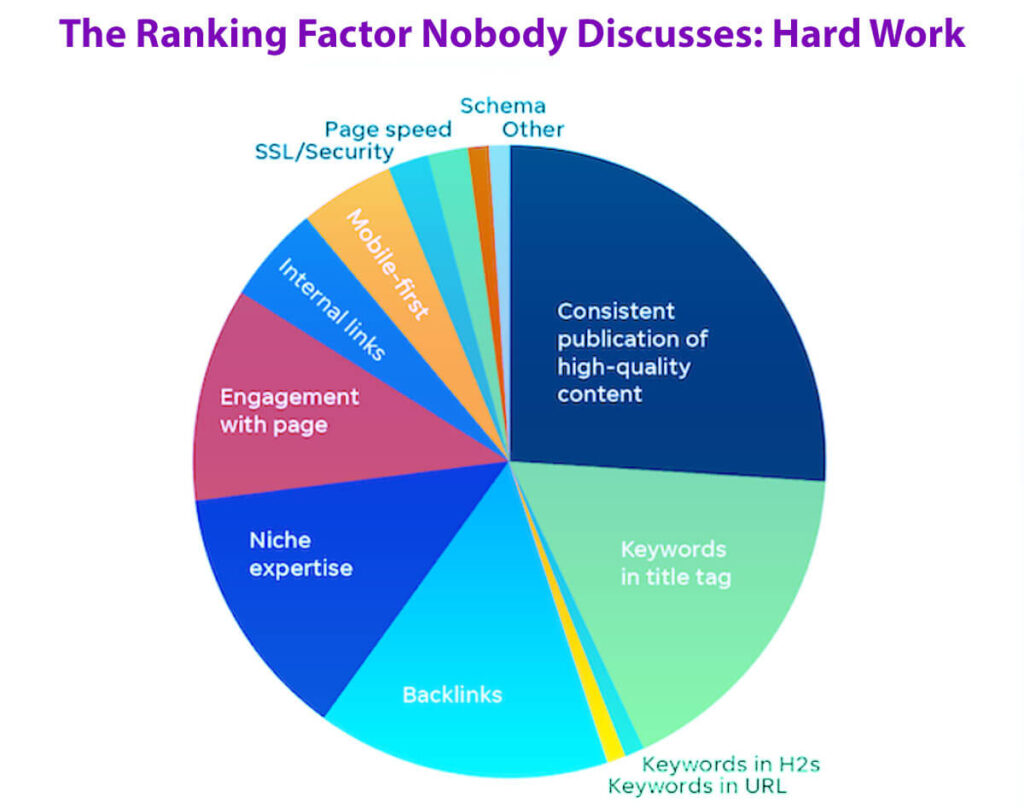
In summary, user engagement is a crucial yet frequently overlooked ranking factor.
Many digital marketers and SEO professionals focus on traditional SEO tasks like building backlinks and using the right keywords, but user engagement metrics are equally important.
Metrics like time on page, bounce rate, and user actions such as comments, shares, and clicks are crucial factors influencing search engine rankings.
When users are engaged, it shows they are truly interested in your content, which brings many benefits.
Enhanced user engagement indicates to search engines that your content is valuable and relevant.
A lower bounce rate indicates visitors stay longer and see your site as trustworthy and authoritative.
Furthermore, engaged users are more inclined to share your content on social media, which can expand your reach and attract new visitors to your website.
That’s why it’s important to develop and implement effective strategies to boost user engagement.
It could mean creating high-quality content that connects with your audience and delivers what they need.
Make sure your site is easy to use, mobile-friendly, and attractive. It can boost user satisfaction and encourage visitors to stay longer.
Encouraging people to interact in comment sections, forums, or on social media can help build a lively community that makes users want to return.
When you focus on user engagement and work to improve it, you boost your website’s SEO and build a loyal audience at the same time.
This approach can help you stand out from competitors who ignore engagement, leading to better rankings and more success in digital marketing.
How to Run a Giveaway or Contest That Actually Goes Viral in 8 Easy Steps
Focusing on Customer Retention Strategies to Increase Profits: Definition & Examples in 5 Easy Steps
How to Get More Google Reviews for Your Business? Manage 8 Easy Steps: A Guide
What Is Customer Retention Analytics? Metrics and Benefits — A Guide in 8 Easy Steps
What Is Email Marketing? Types of Email Marketing in 11 Easy Steps and How to Use Them