




Find out What Is Growth Hacking means with our easy-to-follow guide, featuring 13 practical steps for success. We’ll cover growth hacking strategies, growth loops, Startup growth hacks, and real-life examples.
You’ll learn about data-driven marketing, A/B testing for startups, user acquisition, retention marketing, and referral programs.
We’ll also look at how influencer marketing, SEO, and customer onboarding can help your business grow.
Finally, we’ll explore viral marketing and product-led growth. Join us as we take this journey to grow your business together.
Looking back, successful growth hacking can seem simple, which might make it look like achieving big results is easy.
But it’s important to remember that real success comes from many challenges, setbacks, and repeated efforts.
Many people imagine that breakthroughs come from large teams with abundant resources.
In reality, many great ideas start with one person or a small team who spot a market gap.
These people or teams quickly try out different solutions and choose a direction as soon as they see something promising.
shows how being flexible can lead to success.
It is especially encouraging for solo business owners or small teams.
It highlights why it’s important to stay focused, use simple tools, and keep testing, learning, and adjusting your approach.
These steps are key to building momentum, especially when you don’t have many resources.
Instead of giving you a one-size-fits-all plan, I want to help you run smart experiments and grow what works best for you.
I’ll share a clear framework, real examples, and practical methods to guide you.
Let’s start by looking at the basics.
Understanding Growth Hacking: What Is It?
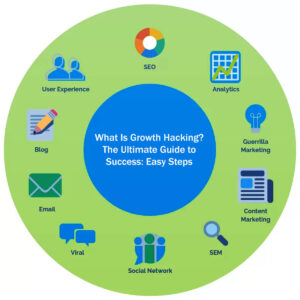
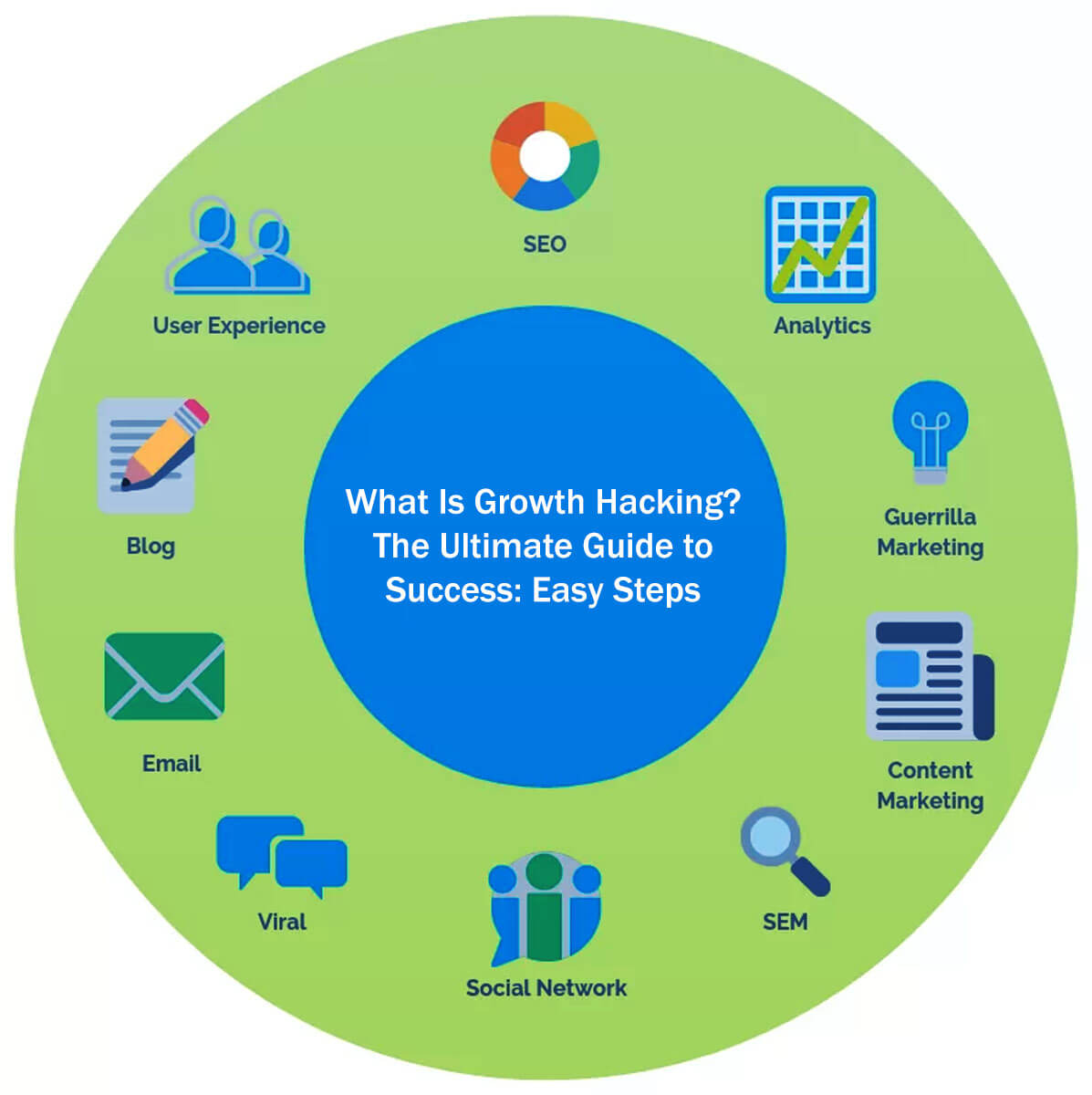
What Is Growth Hacking? The Ultimate Guide to Success: 13 Easy Steps

Growth hacking is a powerful way to get big results with a small team and limited resources. It focuses on rapid growth without a huge budget.
It’s a data-driven approach that aims to attract users and keep them coming back, thereby increasing their long-term value.
Growth hacking means coming up with new ideas, picking the ones with the most potential, testing them on a small scale, measuring the results, and then doubling down on what works.
Differs from traditional methods that rely on long campaigns or risky investments.
Instead, it focuses on small wins that add up to big results over time.
Growth hackers often look for creative ways to reach people rather than rely on expensive, slow marketing tactics.
They focus on improving their product, making it easy for new users to get started, and fine-tuning pricing or packaging.
When a tactic works, growth hackers double down on it, creating a loop that keeps bringing in new users.
You need to change how you think: instead of seeing your process as just a sales funnel (traffic > sign-ups > purchases), try to build growth loops.
These loops can include referral programs, user-generated content, marketplace effects, content SEO, or partnerships that tap into other platforms’ audiences.
Every new user not only adds to your growth but also helps bring in more users, so your growth keeps building on itself.
When done well, this approach can boost your reach, improve conversion rates, and help you keep users—all without needing a big budget.
While fast, compounding growth is possible, it’s important to know that this approach takes real, hands-on effort.
You’ll need to dive into setting up analytics, running A/B tests, and regularly improving your product—often every week.
So what do you get for all this work? Fast, affordable, and lasting growth, especially when you focus on keeping your users.
Real-World Growth Hacking Examples
Real-world success stories are the best way to demonstrate the power of growth hacking.
From the outside, these wins might look like pure luck.
But behind most overnight successes, there’s a lot of testing, smart decisions, and a deep understanding of how to reach people.
Rather than talk about famous companies like Netflix, Dropbox, and Airbnb, let’s look at newer examples that show today’s growth-hacking trends.
1. Klarna: Strategic Partnerships That Created a New Category
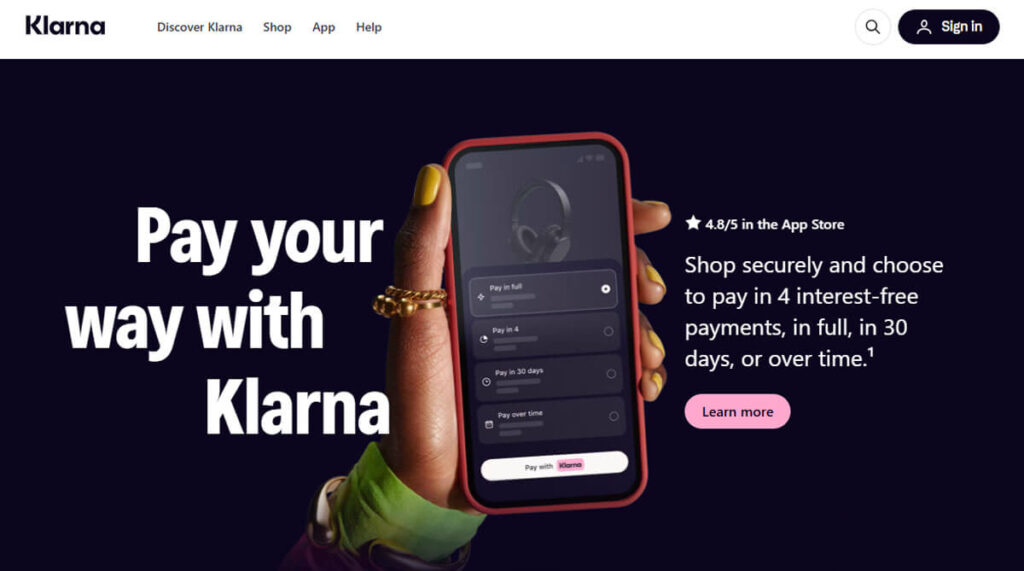
A few years ago, hardly anyone in the U.S. knew about Klarna.
Now, Klarna is a top name in the “buy now, pay later” space and handles millions of transactions every day.
Klarna went from big losses to profitability and is now preparing for a possible U.S. IPO after strong financial results.
During the pandemic, Klarna’s founders saw they needed to win over both customers and retailers, so they reached out to retail partners directly.
They shared a strong message about how flexible payment options could boost order values and conversion rates, which was especially important during tough economic times.
At the same time, Klarna launched a new “pay anywhere” feature using virtual one-time cards.
Let customers split payments even if the store isn’t set up with Klarna.
Made things easier for users and also helped Klarna collect useful data for future partnerships.
With these strategies, Klarna showed how focused growth hacking can change a brand’s position and drive lasting growth by leveraging smart partnerships and new ideas to meet customer needs.
To speed up distribution in a competitive market, it is important to pair an easy-to-use product with active outreach led by the founder.
This approach works best when a key metric for major merchants matches a real customer problem, solving both at once.
As the market evolves, there is room for growth by expanding into related areas such as banking and advertising, while demonstrating strong unit economics to prove the business is viable.
2. Anthropic: Distribution, Thought Leadership, and Credibility

In a short time, Anthropic has gone from a new player to a recognized leader in artificial intelligence.
This rise is mostly thanks to its unique story and high-quality products, led by well-known founders who focus on safety first.
The company is moving quickly with its AI models, as shown by the recent launches of Claude 3.5 and Claude 3.7 Sonnet.
Anthropic’s strategy combines strong academic research, regular model updates, active involvement in safety discussions, and smart distribution on major platforms.
By making Claude available on its own apps and on platforms like Google Cloud’s Vertex AI and Amazon Bedrock, Anthropic reaches both enterprise clients and developers where they already work.
The main lesson is to focus on access and expertise.
By improving quality in crowded markets, sharing useful research, and using platforms with large user bases, brands can grow their reach and influence.
3. Linktree: Handling a Small Problem on a Large Scale
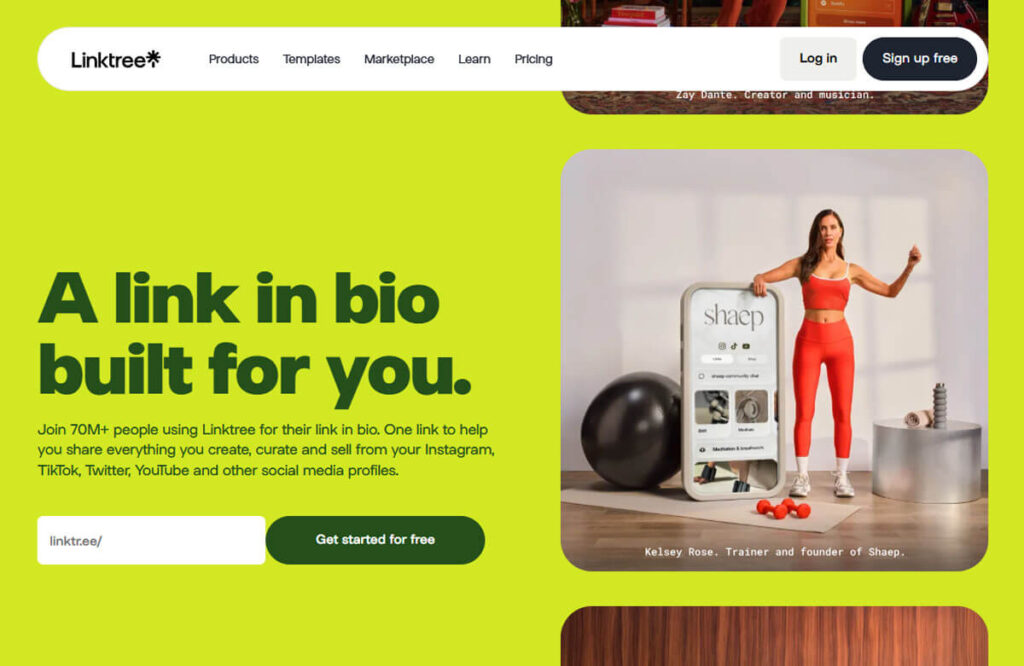
Linktree cleverly turned a simple problem—the limit of one link in a social media profile—into a whole new market niche.
By offering a strong free version and an easy-to-use interface for multiple links, Linktree turns every public profile into an ad for users’ online presence.
Seeing that many creators struggle to make money, Linktree added commerce and analytics features so users can sell products directly from their Linktree profiles.
This strategy gained momentum after Linktree partnered with well-known creators, which drew attention and built the brand’s trust.
The key idea is to find a common problem, create a simple solution, and let users promote your service themselves.
Visible social proof and a freemium model drive growth on their own, while built-in commerce features keep users coming back.
4. Cazoo: Rethinking the Entire Buying Process (and the Hard Lesson)

Cazoo changed the usual car-buying process by moving key steps online, like clear pricing, easy delivery, and built-in financing.
This new approach helped the company grow quickly through focused marketing and smart acquisitions in a tough market.
However, Cazoo eventually went into administration due to ongoing financial losses and its move away from its direct sales model.
It is a clear reminder that changing established industries is hard without a solid, long-term business model.
The main lesson is to make things clear in traditional sectors like finance, logistics, and product quality, and to manage the customer experience effectively across key areas.
Still, it is important to keep checking capital efficiency.
If payback times and profit margins drop in tough markets, the gains from distribution can disappear quickly.
5. Clubhouse: Time, Scarcity, and the Need for Change

During the height of global lockdowns, Clubhouse’s invite-only launch created urgency and drew in a passionate group of users.
But as the early excitement faded, the Clubhouse team saw they needed to change to keep users interested.
They switched to smaller, more flexible chats that helped users connect more deeply as the buzz around live audio faded.
This change showed how important it is to keep evolving to meet user needs and stay relevant in a fast-changing market.
Understand Your Audience: Get to Know Your Audience Better
To establish a connection with your target market, commence by conducting comprehensive research.
Look closely at demographic factors like age, gender, location, and income.
This basic information helps you understand who your potential customers are.
Next, learn more about your audience by exploring their interests, preferences, and online habits.
What hobbies do they enjoy?
Which social media platforms do they frequent?
What daily challenges can your product or service solve?
To gather this information, use both qualitative and quantitative research methods.
Surveys give you useful data about preferences and buying habits, while interviews help you understand what motivates or frustrates your potential customers.
Also, reviewing market reports and industry studies can reveal trends and patterns you might not notice right away.
After collecting your data, create detailed buyer personas that show the main traits, motivations, buying habits, and challenges of your ideal customers.
Each persona should represent a group within your audience, so you can adjust your marketing strategies to fit their needs.
A strong understanding of your audience will guide your marketing strategy.
Helps your messaging feel real and relevant to your audience.
You can further engage your audience through interactive methods, such as focus groups or online forums.
These platforms let you get direct feedback and have open conversations, giving you a better sense of what your customers expect and how they feel.
Staying engaged helps you consistently understand your audience and build a community around your brand.
Helps you create marketing campaigns that really connect.
Set Clear Goals and Define Achievable Objectives
Setting clear goals is key to any successful growth-hacking effort. Goals give you a foundation for your next steps.
Start by taking time to figure out exactly what you want to achieve with your growth hacking.
Your goals include getting more users, increasing engagement with interesting content, or keeping customers loyal with better programs.
To make your goals effective, use the SMART criteria: Specific, Measurable, Achievable, Relevant, and Time-bound.
For example, instead of just saying you want more users, set a clear target, such as “Acquire 1,000 new users within the next quarter.”
Being specific gives you clarity and a clear way to measure success.
It’s also important to use measurable metrics to regularly track your progress.
For example, to increase user engagement, you could monitor metrics like average time on site, click-through rates, and social media shares.
When you define success with clear numbers, you can see what’s working and make better decisions.
Make sure your goals are realistic and align with your current resources and market conditions.
Your goals should also match your main business objectives, so every growth-hacking effort supports your long-term vision.
Remember, business environments change, so your goals might need to change too.
Consistently revisit and adjust your goals to stay aligned with market, customer behavior, and business landscape changes.
By staying flexible, your growth-hacking strategies will remain relevant and effective.
Use Data Analytics to Achieve Deeper Insights

Using data analytics is key to understanding how people use your website and what they like about it.
Tools like Google Analytics, Mixpanel, and Hotjar help track user interactions on your website.
These platforms let you see where your website visitors come from, including search engines, social media, and referrals.
Helps you find out which channels work best for your business.
Focusing on a few key metrics provides a clear view of how users interact with your site.
Bounce rate is the percentage of visitors who leave after viewing only one page.
High bounce rates can point to problems with your content or site navigation.
Session duration indicates how much time visitors spend on your website. Longer sessions generally suggest that your content is more engaging.
Conversion rates measure how many visitors take actions you want, like signing up for a newsletter or making a purchase.
It is key to judging how well your marketing works.
Relying on data for decision-making shifts the focus from guesswork to actual user behavior insights.
Helps you improve your marketing and adjust your campaigns based on real feedback and results.
You can also use heatmaps to see which parts of your site get the most attention from visitors.
Heatmaps highlight the areas that attract the most attention and show you where you might need to make changes to improve the user experience.
In short, using data analytics helps you understand your audience and improve their experience, boosting engagement and increasing conversions.
By regularly reviewing these insights, you can keep your marketing aligned with what your users want and help your business grow.
Experiment and Test: How to Optimize Your Marketing?
With marketing changing so quickly, regularly trying new things is now a must, not just a nice-to-have.
To stay ahead, marketers need to keep testing and learning to find out what works best for their audience.
A/B testing is one of the best ways to experiment.
This approach entails creating multiple variations of an element, such as an email subject line or landing page, and testing to determine which performs best.
It’s a great way to find what resonates most effectively with your audience.
For example, in an email campaign, you could test one subject line that creates urgency, such as “Last Chance to Save 20%!”, and another that focuses on value, such as “Unlock 20% Off Your Favorite Items.”
Send these different versions to random groups of your audience to see which one gets more opens and engagement.
But just running tests isn’t enough. You also need to keep good records and carefully look at the results.
After your A/B tests, review the data to see how each version performed.
Check not just the basics like click-through and conversion rates, but also things like customer engagement and retention.
Digging into these details can give you valuable insights about your audience.
Through ongoing testing and iterative modifications, marketers can refine their strategies in line with approaches that demonstrate effectiveness.
When you keep experimenting, you’ll spot trends and figure out which methods your audience likes best.
This ongoing process makes your marketing more effective and helps your products or services match what users want.
In the end, if you keep testing and analyzing, you’ll boost your conversion rates and build stronger relationships with your customers, helping your business succeed over time.
How to Use Social Media to Connect with Your Audience?
Connecting with your audience on social media is now essential for building strong relationships.
Begin by identifying the social media platforms most frequently used by your target customers.
Research whether your audience prefers visual platforms like Instagram and TikTok, professional sites like LinkedIn, or community spaces like Facebook.
Knowing what your audience likes helps you shape your approach.
Once you know where your audience is, join the conversation on those platforms.
Take part in discussions about your brand, share helpful insights, and reply to comments and messages promptly.
These interactions make your brand feel more human and help build trust and loyalty with your followers.
Great content is key on social media, so focus on making posts that are interesting and easy to share.
Try different types of content, like eye-catching images, helpful videos, fun polls, and interesting articles.
Ensure your content matches your audience’s interests and motivates them to engage or act.
It can increase user engagement and encourage your followers to share your content, enhancing your reach.
Using a content calendar can make planning and organizing your posts much easier and more efficient.
A content calendar helps you keep your posts aligned with trends, seasonal events, and campaigns while staying true to your brand’s voice.
This way, you build a consistent story that keeps your audience engaged.
Also, keep an eye on your engagement numbers and see which types of content work best.
This information helps you improve your strategy, create better content, and build a strong community around your brand.
When you engage honestly and offer real value, you can grow your reach, boost your visibility, and strengthen your brand community.
Partner with Influencers: Collaborate with Influencers
Collaborating with influencers who align with your brand values and resonate with your target audience can enhance market growth and visibility.
Begin by researching and identifying influencers in your industry who align with your brand’s style and values.
Look for influencers with real, engaged followers whose audience is similar to your ideal customers.
After you find the right influencers, consider different ways to collaborate that align with your marketing goals.
Sponsored content is one option. Means influencers create posts or videos about your products or services that fit their usual style.
Introduces your products to their audience and puts your brand in a trusted setting.
You can also run giveaways or contests together with influencers.
Gets people involved and creates excitement around your brand.
You might also team up with influencers on special campaigns or products. Working together can lead to creative content that interests both your audiences.
Make sure your collaborations feel real and natural.
People notice when something feels fake, so try to fit your brand naturally into the influencer’s usual content. Helps boost engagement and trust.
Utilizing the influencer’s trust and reputation enhances brand awareness and establishes connections with potential customers who already follow them.
Over time, these partnerships can help you build loyal customers who support your brand.
Improve Your SEO Performance: Your SEO
To attract more search engine visitors, ensure your website and content are well-optimized.
Start by researching keywords to find out what your potential customers are searching for.
Utilize tools such as Google Keyword Planner, SEMrush, or Ahrefs to identify keywords that align with your audience’s interests.
Choose keywords that lots of people search for but aren’t too competitive, so you have a better chance of ranking high.
After you have a good list of keywords, add them naturally throughout your website content.
Make sure to thoughtfully include keywords in key areas like page titles, headings, meta descriptions, and image alt texts to enhance your SEO efforts.
Write meta descriptions that are interesting and informative, since they show up in search results and can affect how many people click.
Besides using keywords, make sure your content is high-quality, helpful, and answers your audience’s questions.
Truly useful content helps you rank higher and keeps users coming back.
Try using different formats like articles, blogs, videos, and infographics to reach more people.
Also, improve your URLs, internal links, and mobile performance to boost your SEO.
Make sure your website is easy to use and loads fast, since this helps both your users and your search rankings.
Keep your content fresh and stay updated on SEO trends and changes to keep your site visible.
Use analytics tools to monitor your traffic, bounce rates, and conversions, helping you identify what’s effective and what needs improvement.
By following these SEO tips, you’ll show up more in search results, get more targeted visitors, and increase your conversions.
Focus on Retaining Your Customers: Prioritize Keeping Your Customers
Keeping your current customers is often even more important than finding new ones.
A loyal customer base significantly influences your long-term success and profitability.
To keep customers coming back, create personalized experiences that match their preferences and needs.
Begin by making good use of your customer data.
Look at what customers buy, their feedback, and how they interact with you to personalize your messages and offers.
You may recommend products based on their previous purchases or dispatch targeted emails tailored to their interests.
For example, if someone often buys outdoor gear, send them an email about new camping equipment or upcoming sales they might be interested in.
To build loyalty, try offering different incentive programs.
Loyalty programs that award points for purchases, redeemable for discounts or exclusive items, promote repeat business.
Referral rewards can motivate customers to tell friends and family about your brand, bringing in new business through word of mouth.
Special deals, such as limited-time offers or early access to new products, make loyal customers feel valued.
These rewards not only thank your customers but also help them feel more connected to your brand.
Building a community around your brand is also important for keeping customers.
Maintain customer communication by sending follow-up emails and newsletters, and by engaging with them on social media to ensure they feel appreciated.
Share user content, highlight customer stories, or host events and webinars to build stronger relationships with your customers.
Request feedback via surveys or direct messages.
Shows customers that you value their opinions and provides helpful ideas for improving your products or services.
When you focus on keeping customers through personal touches, good rewards, and community, you build a strong base of brand supporters.
Loyal customers will keep coming back and are more likely to recommend your business to others, helping you grow.
The Key to Sustainable Growth: Balancing Exclusivity and Value Evolution
To grow successfully, you need more than just the buzz of being exclusive.
Focus on building social proof and creating a sense of scarcity when you launch.
But keeping people interested after the excitement wears off is just as important.
You’ll need to update your core values to keep your audience engaged.
Four Key Strategies for Your Startup Growth Hacking Journey
There’s no guaranteed way to achieve growth-hacking success, but certain fundamental strategies can greatly boost your chances.
These include building a strong foundation, knowing what matters most, testing thoroughly, and smartly learning from your competitors.
Here are four actionable strategies to adopt immediately:
1. Prepare Thoroughly
Make Sure You’re Truly Ready
Before you start testing, make sure you’re truly ready for what’s ahead.
Not every experiment will have big results, but some will. Focus your attention on those.
The last thing you want is to gain traction through ineffective practices that could harm your customer experience.
Begin by thoroughly identifying and understanding your target audience.
Perform thorough market research to support your idea and craft a distinctive value proposition that sets you apart from competitors.
Operational tests are key. Make sure your fulfillment, billing, onboarding, and customer support can handle a big jump in activity.
Try to get ready for five to ten times more volume this week.
Additionally, refine your onboarding process.
Your goal is to help users see value from your product as quickly as possible.
Cut out any steps that don’t help them succeed early on.
Track key metrics such as signups, activation rates, conversions, retention, and payback periods. Break these down by the source of your users.
If you can’t keep the growth you’ve gained, it won’t last.
Build a strong foundation early to benefit from steady, long-term growth.
2. Analyze and Measure Everything You Do
If you act quickly without measuring results, you’ll create confusion instead of real progress.
To turn speed into real results, set up a simple way to track everything you do.
Pick a single ‘North Star’ metric, like weekly active users, completed orders, or successful meetings.
Should capture the main value your business gives customers.
From your North Star metric, create a metric tree that shows what drives your success.
Focus on getting new customers, activating them, retaining them, and generating revenue.
Maintain an experiment journal with your hypothesis, expected outcomes, responsible team members, progress status, start and end dates, and actual results and decisions.
Set clear limits, like how long payback should take, how much churn or complaints you’ll accept, and your maximum cost to get a customer.
Helps you avoid chasing short-term wins that hide bigger problems.
Watch your experiments closely, but also give them enough time and users to get real insights.
If you see a big positive result within your set limits, put it into action and keep moving forward.
3. Embrace Iterative Experimentation
Adopt a builder’s mindset and try out small, safe experiments. These can add up to bigger wins over time.
Change only one thing at a time—your product, your audience, your distribution channel, or the user experience.
Speed matters. It’s often better to launch a product that’s 70% ready than to wait for a perfect version that may never launch.
Use psychological triggers and emotions to boost your audience’s response.
Try creating urgency, showing social proof, making people feel special, and building a sense of community.
Create templates for emails, landing pages, and referral programs.
It will save you time and money when you run similar tests later.
Use a board to track ideas as they move through various stages (backlog, testing, scaling).
Stay disciplined and consistent. Tools can help, but you don’t need them to succeed.
4. Analyze Competitors’ Success Stories
If you notice a competitor getting a lot of attention, take time to study what they’re doing.
Don’t just copy them. Try to understand what’s really making them successful.
Analyze their customer journey; subscribe to their services, scrutinize their communications, and map out each step until you derive your first value as a user.
Create a comprehensive list of distribution channels like search engines, affiliate partnerships, social media, PR, collaborations, and product integrations.
Act like a detective. Look for useful clues in their partner pages, product updates, job postings, and any pricing changes.
Focus on adopting effective distribution strategies without copying their brand identity.
Explore collaborative marketing, partnerships, or integrations to reach their audience.
Use what you learn from their wins to improve your own tests.
Remember, their results might not work the same for you, so adjust their strategies to fit your audience and product.
By using these strategies, you’ll be ready to navigate your growth-hacking journey and achieve both quick wins and lasting results.
A 30-Day Growth Plan to Kickstart Your Progress
Week 1: Build Your Foundation
In the first week, focus on building a strong foundation for your growth efforts.
Start by confirming your North Star metric, which is the main way you measure your business’s success.
Make sure you have a clear metric tree that shows supporting metrics and how they connect.
Identify any missing data and note these gaps for future tracking.
Next, carefully evaluate your onboarding process to spot any bottlenecks that could be hindering user engagement.
It might mean looking at user feedback, checking where users drop off, and watching how they behave during onboarding.
Also, make a list of at least 15 possible experiments.
Rank each experiment by three things: how much impact it could have, how much effort it will take, and how confident you are that it will work.
Week 2: Acquire and Activate Users
In the second week, focus on getting new users and activating them through smart experiments.
Run a test campaign using a marketing channel you haven’t tried before.
It could mean working with an influencer in your field, getting featured in a partner’s newsletter, or using product invites that encourage users to share.
At the same time, make two quick changes to improve the user experience.
These changes include updating your offer or improving your landing page to better show the value to potential customers.
You could also make your onboarding emails shorter, more engaging, and better suited to users’ needs.
Week 3: Focus on Monetization and Retention
In the third week, focus on making money and keeping your current users.
Try adding a habit-building loop to encourage regular use of your product.
You can send timely reminders, create helpful templates to guide users, or offer referral rewards for users who bring in friends or colleagues.
Also, try experimenting with your pricing or how you package your services.
It could mean offering annual discounts to encourage longer commitments or bundling services to give customers more value.
Week 4: Scale Up Your Best Experiment
In the last week, focus on scaling your most effective strategy.
First, review your previous results to determine which approach worked best for your goals.
Once you’ve found your winning strategy, try to automate the process where you can.
Create templates to ensure things run smoothly and stay consistent.
Plan to expand your successful strategy to two or three similar customer groups or regions to boost your results.
At the end of the month, create a clear plan for your next sprint that lists your next steps and priorities.
Finally, do a full review of the month’s activities. Identify what worked, what didn’t, and what you can improve next time.
This reflection will guide your future growth efforts.
What Is a Sales Conversion Rate? How to Increase: 6 Easy Steps
What is a Customer Loyalty Program? How to Increase Sales: 9 Effective Strategies
How to Become an Influencer: A Guide in 6 Easy Steps Follow
Top 17 Best Marketing Automation Software Tools for 2026 and Their Uses
What Is Conversion Rate Optimization? A Guide to 10 Easy Steps