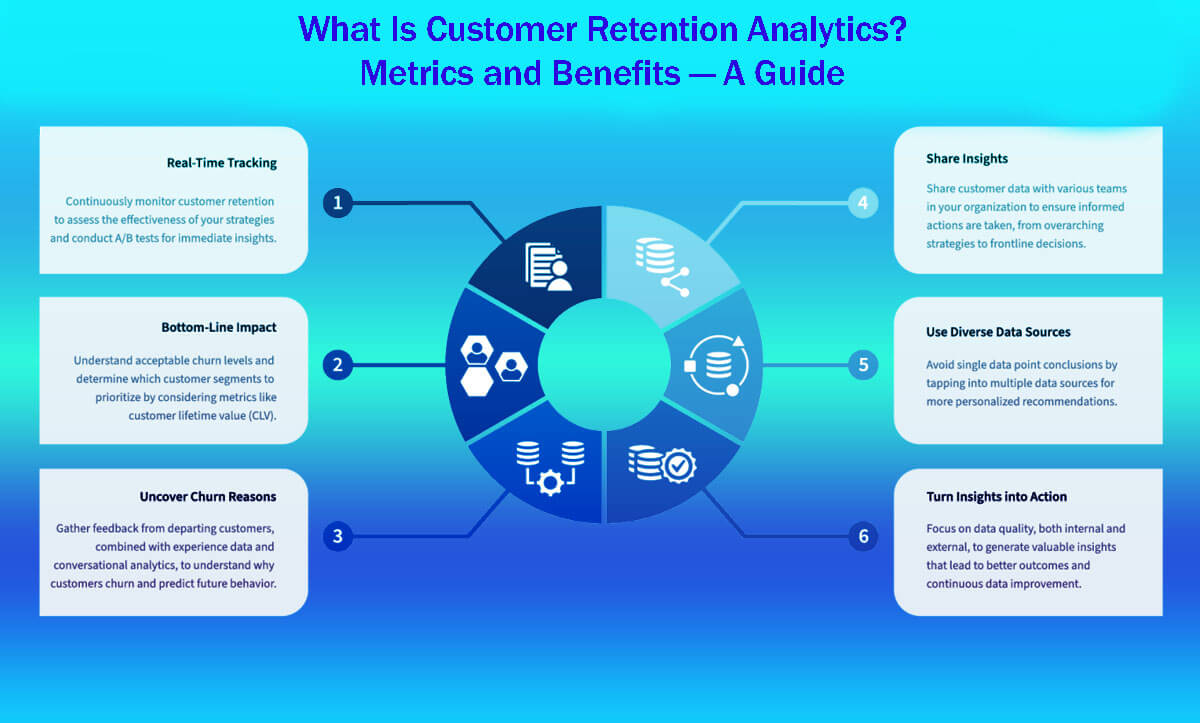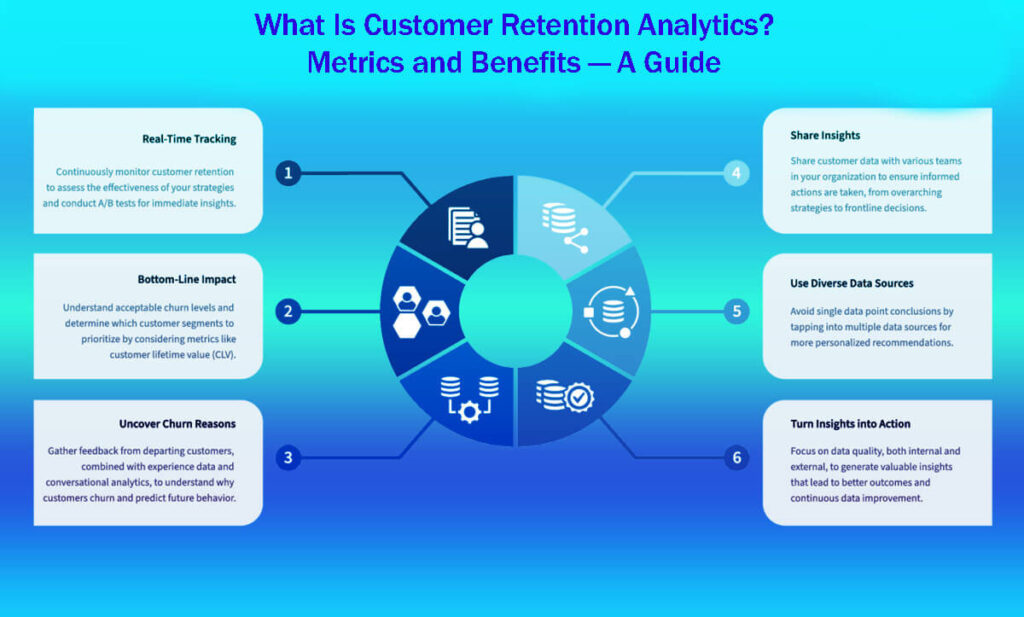





Let’s take a closer look at What Is Customer Retention Analytics. Metrics and Benefits — A Guide in 8 Easy Steps. In this guide, you’ll learn about key metrics such as churn rate, retention rate, and customer lifetime value (CLV or CLTV).
We’ll also cover tools such as the Net Promoter Score (NPS), repeat purchase rate, and customer loyalty analytics.
You’ll see how predictive and prescriptive analytics, customer segmentation, and practical retention strategies can help you improve customer engagement and satisfaction.
With a retention dashboard and loyalty program analytics, you’ll be ready to build stronger, lasting relationships with your customers.
A Practical Guide to Customer Retention Analytics
Customer retention analytics involves monitoring, measuring, and analyzing customer behavior to understand the factors that foster loyalty or lead to churn.
This process is important for businesses that want to build strong customer relationships and maintain steady revenue growth.
Customer retention analytics provides a data-based guide to help organizations keep customers engaged and satisfied.
Why Customer Retention Analytics Matters?
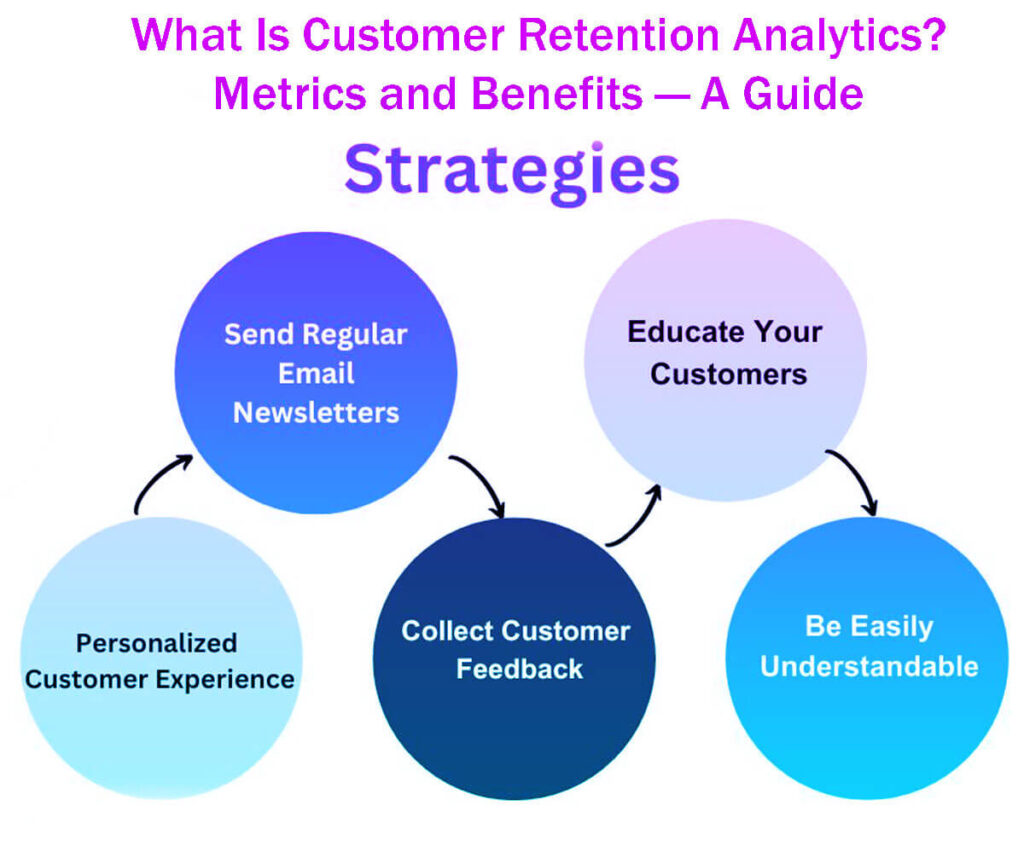
Imagine you’re running a successful eCommerce business.
Orders are coming in easily, your marketing team is great at bringing in new customers, and everything seems to be going well.
But when you examine your revenue reports more closely, you notice something concerning: even with many new customers, your total revenue isn’t increasing as expected. Customers arrive excited but leave just as fast.
This situation is common and affects many businesses today.
Research indicates that 68% of customers disengage from a brand due to a perceived lack of attention or care (HubSpot).
On average, eCommerce businesses retain only about 30% of their customers (Shopify), underscoring how tough it is to combat customer churn.
The main point is clear: getting new customers is important, but it’s not enough for long-term financial success.
That’s why customer retention analytics is a key part of growing your business.
When you keep more customers, you build a loyal group who buy often and recommend your brand to others, helping your business grow.
Harnessing Customer Retention Analytics
To reduce customer churn and build lasting loyalty, businesses need to use customer retention analytics.
Rather than guessing why customers leave, companies can use data to find real reasons and take action to improve results.
Here are some ways customer retention analytics can help your business:
Identify Churn Patterns: Examining past data helps businesses identify common reasons customers leave.
With this knowledge, companies can act early to prevent bigger problems.
Track Retention Trends: Watching how customer behavior changes over time helps businesses understand loyalty and adjust to customer preferences.
Enhance Customer Experience: Leveraging data enables companies to improve all stages of the customer journey, resulting in higher engagement, satisfaction, and revenue.
Understanding Customer Retention Analytics
What is Customer Retention Analytics?
Customer retention analytics includes several important steps to gather and examine data on how customers engage with your business.
Businesses can obtain valuable insights from this data by asking the right questions.
What percentage of customers make repeat purchases within a specific timeframe?
What particular factors contribute to the decision of customers to leave a brand?
How can the overall customer experience be refined to nurture stronger loyalty?
Which customer demographic segments exhibit the highest attrition risk?
By closely examining these questions, businesses can spot patterns, identify problem areas, and make changes that help them grow and stay competitive.
But getting useful insights can be hard when data is scattered across different systems.
Many companies collect data from many places, such as e-commerce platforms, CRM systems, marketing tools, and customer support channels.
Without bringing all this data together, it can be very difficult to derive useful insights.
Where Saras Analytics can help, Saras makes it easier to combine data from different sources and brings all your customer insights into one place.
With easier access to real-time retention data, businesses can spot trends, check customer engagement, and take steps to reduce churn.
A Case Study: Spotify
For example, Spotify, a top music streaming service, goes beyond just tracking songs played. They take a close look at user behavior as a whole.
They use advanced algorithms to create personalized playlists and suggest new music based on each user’s listening habits.
They also send targeted emails to users who seem to be losing interest.
This data-driven strategy has helped Spotify retain over 75% of its premium subscribers (Statista), underscoring the importance of robust customer retention analytics.
In short, understanding customer retention analytics is essential for any business that wants to grow and stay profitable over time.
By focusing on customer retention analytics, brands can build loyalty, improve satisfaction, and set themselves up for long-term success.
The Importance of Customer Retention Analytics
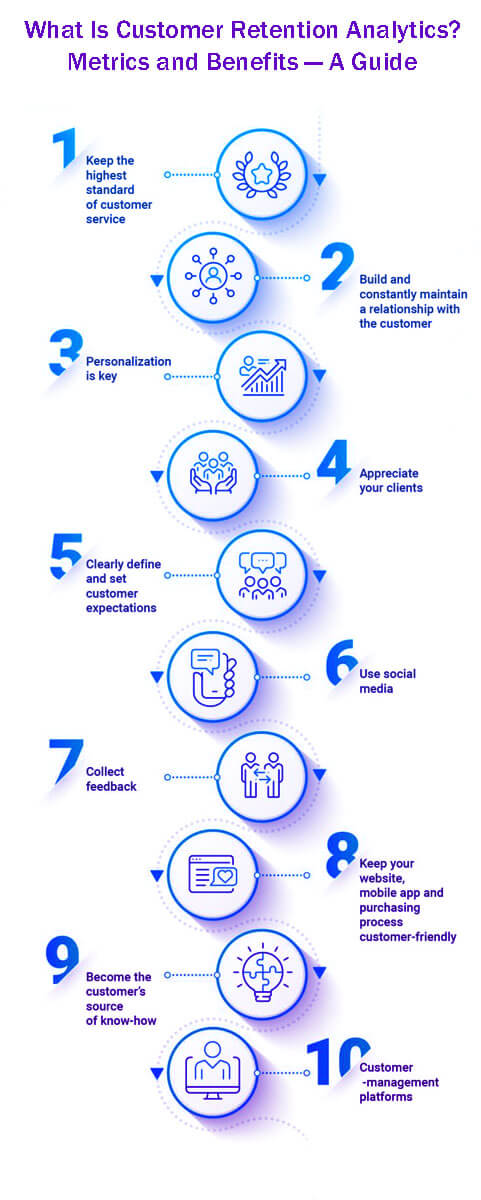
Getting new customers is important for any business that wants to grow.
But focusing only on finding new customers can end up costing more than expected.
Harvard Business Review says retaining current customers is more cost-effective than acquiring new ones. Investing in existing customers benefits your business.
Businesses that focus on keeping their customers protect their revenue and often grow faster than their competitors.
By taking care of their current customers, companies can increase the lifetime value of these relationships and boost profits without spending extra on finding new customers.
Here are some key ways Customer Retention Analytics can make a real difference:
1. Predicting Customer Churn Before It Happens
Churn is not just about losing customers. It also means losing revenue and missing out on future growth.
It is especially important for subscription businesses, where even a small increase in churn can lower the company’s value.
With the right tools, businesses can spot early warning signs and take action before problems grow.
How can analytics be used in this situation?
By closely watching things like fewer logins, less buying, or lower engagement, businesses can see which customers might leave soon.
This proactive approach helps businesses reach out to customers at the right time.
A Real-World Example:
Netflix exemplifies this strategy effectively.
If a user hasn’t watched anything for a while, Netflix sends a personalized email suggesting shows based on what they watched before.
Helps reduce cancellations and keeps subscribers interested and happy.
Key Metrics to Monitor:
Churn Rate: The proportion of customers who cease their relationship with the business during a specified timeframe.
Customer Health Score: A predictive metric assessing overall customer satisfaction and likelihood of retention.
Engagement Frequency: This metric reflects customers’ activity levels and helps identify those at risk of attrition.
2. Improving Customer Lifetime Value (CLTV)
A high CLTV means each customer generates more revenue, boosting profits without extra spending on new customers.
A study by Adobe found that returning customers account for 40% of a brand’s total revenue, even though they represent only 8% of all visitors.
So, how can businesses leverage analytics to increase CLTV?
By analyzing purchase history, browsing habits, and preferences, businesses can identify their most valuable customers.
They can then build stronger relationships with these customers through loyalty programs, targeted upselling, and personalized offers tailored to each person’s purchases.
This personalized approach helps keep customers coming back and encourages them to spend more.
Insightful Statistic:
Amazon Prime members are known to spend 133% more than non-members, according to Consumer Intelligence Research Partners.
By using retention analytics, Amazon personalizes its recommendations and adjusts prices to keep customers engaged.
Key Metrics to Monitor:
CLTV (Customer Lifetime Value): This metric measures the total revenue produced by each customer over the course of their relationship with the business.
Purchase Frequency: This tracks how often customers buy again over time.
Retention Rate by Customer Segment: This shows which customer segments are the most valuable.
3. Optimizing Marketing Spending and Return on Investment (ROI)
Many businesses spend millions, sometimes even more, to attract new customers.
But if those customers leave soon after, that money is wasted.
Businesses that focus on retention can cut marketing costs by 15-20% and still make more profit, according to Forbes.
For instance, if a business invests $50 to acquire a new customer who spends only $30 before discontinuing, the business incurs a loss.
Shows why customer retention analytics matter. They help businesses focus on finding loyal customers, not just more customers.
How can analytics help here?
Instead of sending out generic ads, businesses can use customer retention analytics to:
Target high-value customers who demonstrate a propensity to remain loyal.
Spend marketing money on channels that help keep customers, not just get new ones.
Improve messages and offers by looking closely at how customers behave.
A Real-World Example:
Sephora, in the fiercely competitive beauty sector, uses retention analytics to fine-tune its marketing strategies.
By analyzing customer data, Sephora creates personalized discounts, product recommendations, and loyalty rewards that align with each customer’s purchases. Leads to more repeat purchases and better retention.
Key Metrics to Track:
Customer Acquisition Cost (CAC) vs. CLTV: Comparing these shows how effective and profitable marketing efforts are.
Retention Rate by Acquisition Channel: This shows which marketing channels bring in the most loyal customers.
ROI of Loyalty Campaigns: This metric measures the success of loyalty-focused marketing campaigns.
In short, understanding and using customer retention analytics helps build stronger customer relationships and sets up a business for long-term growth and success.
4. Enhancing Customer Engagement and Experience
Today, customers care more about having a great experience than just finding good products or low prices.
A PwC study found that 73% of consumers say their overall experience with a brand matters more to them than price or product value.
Because of this change, businesses need to personalize every interaction to meet each customer’s needs.
To keep customers happy, companies should make personalization a core part of their customer engagement.
How to Leverage Analytics Here?
Customer retention analytics help companies understand what drives customer choices and preferences.
By examining these insights, businesses can spot problem areas in the customer journey that may hurt satisfaction or cause customers to leave.
When companies analyze customer data, they can create messages that match each person’s preferences and behaviors.
Personalizing in this way can greatly improve customer engagement and satisfaction.
Real-World Example:
Airbnb is a great example of a company using behavioral analytics to improve the user experience.
The platform tracks users’ search habits, past bookings, and reviews to offer personalized recommendations.
By improving its search algorithms with this data, Airbnb helps users find properties that fit their preferences.
This kind of personalization helps build customer loyalty, keeps people coming back, and encourages repeat bookings.
Key Metrics to Track:
Customer Satisfaction Score (CSAT): This metric measures customer satisfaction with their experience and provides direct feedback on service quality.
Net Promoter Score (NPS): This measures how likely customers are to recommend a brand, providing insight into loyalty and areas for improvement.
Engagement Rate: Tracking how customers interact with your brand helps you see if your engagement strategies are working.
5. Building Long-Term Brand Loyalty With Data-Driven Decisions
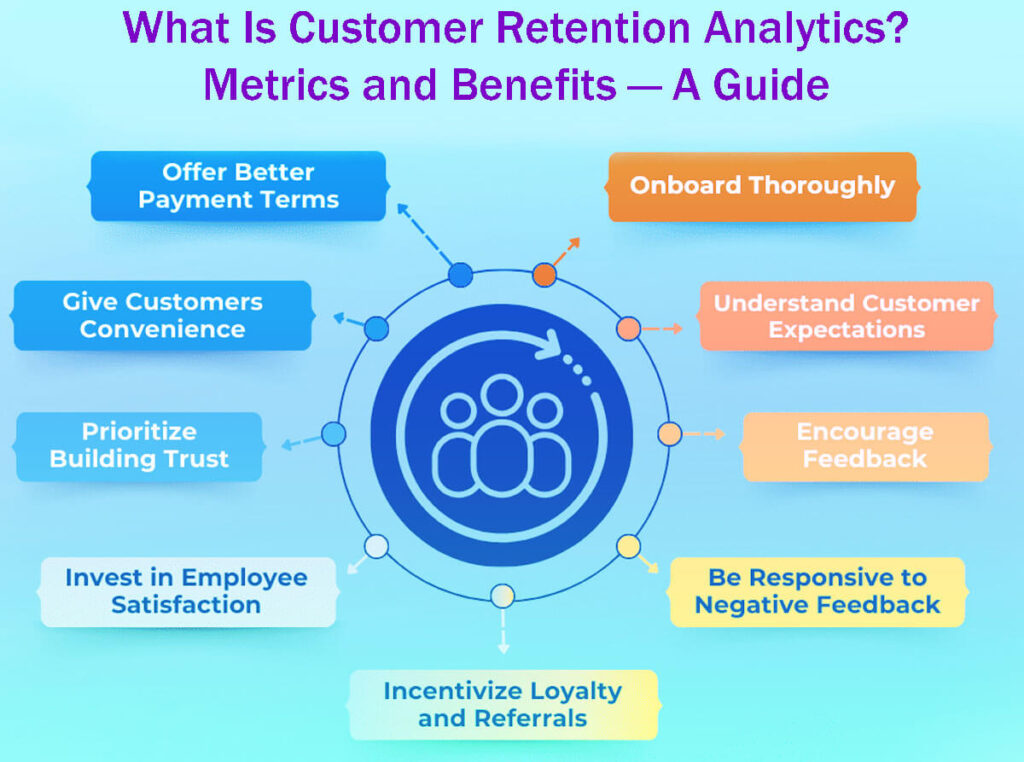
A loyal customer does more than buy again—they become a passionate supporter of your brand.
Did you know that, according to Forrester Research, loyal customers are five times more likely to come back again and four times more likely to recommend to their friends and family? It really shows how valuable it is to build strong relationships with your customers!
That’s why focusing on customer loyalty is key for businesses that want to reduce churn and grow over the long term.
How to Leverage Analytics Here?
Using customer retention analytics, businesses can find and support their most loyal customers and create loyalty programs based on real engagement data.
This data-driven approach strengthens customer relationships and encourages happy customers to promote the brand, helping it grow naturally.
Real-World Example:
Starbucks is a great example of using a loyalty-focused retention strategy with its popular Rewards Program.
Starbucks analyzes purchase data, visit frequency, and engagement to personalize rewards and special offers for members.
This personalized approach led to a 40% boost in revenue from loyalty program members, showing how customer data drives intelligent decisions.
Key Metrics to Track:
Customer Loyalty Index (CLI): This shows how engaged customers are over time and helps measure the strength of their relationship with the brand.
Repeat Purchase Rate: This shows how often customers return to buy, a key indicator of loyalty and satisfaction.
Referral Rate: This measures how often happy customers recommend the brand to others, giving insight into growth and advocacy.
Types of Customer Retention Analytics
It’s important to remember that customer retention analytics is not a one-size-fits-all solution.
Depending on their goals, businesses might track past trends, predict churn, or identify why customers leave.
Here are five main types of customer retention analytics and what they offer:
Periodic Customer Retention Analytics
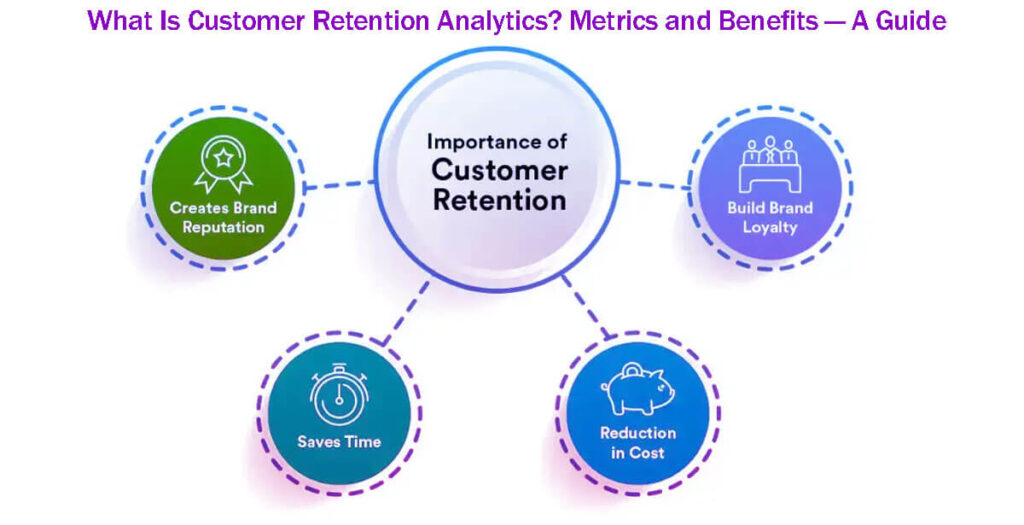
This analysis helps identify patterns and trends over defined periods, such as monthly, quarterly, or yearly.
By analyzing retention data over time, organizations can spot seasonal trends and assess how well their strategies hold up in the long run.
For example, Spotify diligently tracks its monthly active users (MAU) and subscriber churn rates every quarter, using this information to refine its content recommendations and engagement approaches.
Understanding these patterns helps businesses make better decisions to improve customer satisfaction and keep people engaged.
Applying these strategies and metrics helps businesses attract new customers and strengthen existing relationships, giving a competitive edge.
Retrospective Retention Analysis
Retrospective retention analysis means carefully reviewing past customer behavior and retention trends.
This analysis aims to understand why customers disengage from a brand, leading to potential revenue loss and decreased loyalty.
By looking at past data such as purchase history, customer interactions, and feedback, businesses can spot patterns that explain why customers stay or leave.
This information helps companies find out what works well and what needs improvement in their customer engagement strategies.
Insights from this analysis can guide future retention strategies, helping businesses build better customer relationships and encourage long-term loyalty.
Diagnostic Retention Analytics
Diagnostic retention analytics takes a closer look at customer data, examining specific behaviors, feedback, and engagement metrics to find out exactly why customers leave.
This method often uses customer surveys, behavioral analytics, and satisfaction scores to collect both qualitative and quantitative insights about the customer experience.
For example, Netflix uses diagnostic analytics to closely monitor how users engage with its service and identify moments that might lead to subscription cancellations.
By understanding why customers leave, businesses can act early to solve retention problems and improve customer satisfaction and loyalty.
Predictive Retention Analytics
Predictive retention analytics uses advanced machine learning and historical customer data to identify which customers are likely to leave.
By studying past behavior and interactions, businesses can create models that predict what customers will do next.
This proactive approach enables companies to tackle churn risks early by taking targeted actions, such as personalized marketing, enhanced customer support, or custom engagement strategies.
Predicting churn helps keep customers and can also boost overall satisfaction, making the customer base stronger.
Prescriptive Retention Analytics
Prescriptive retention analytics builds on insights from predictive analytics and goes further by offering clear, practical recommendations based on the data.
This approach provides businesses with clear steps to reduce churn, improve customer retention, and strengthen loyalty programs.
By combining insights about customer preferences, behaviors, and engagement, prescriptive analytics helps organizations improve support services, create better interactions, and adjust loyalty programs to fit changing customer needs and market trends.
Important Customer Retention Metrics to Track
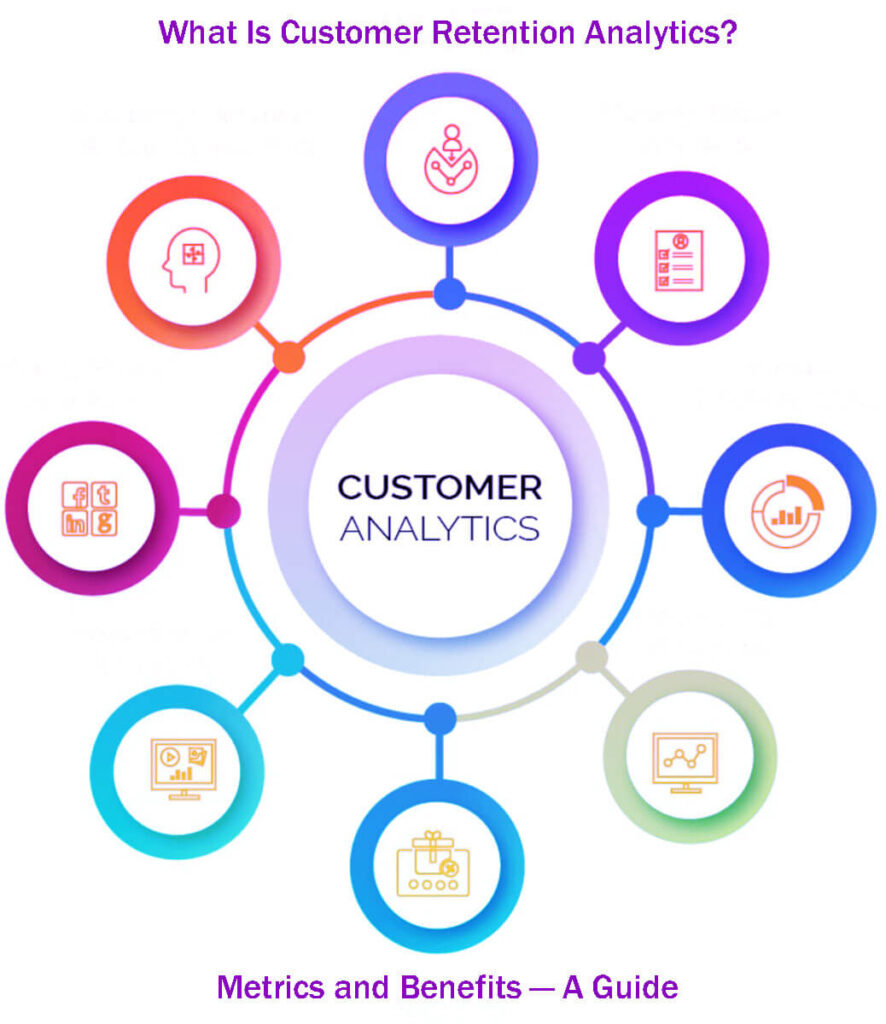
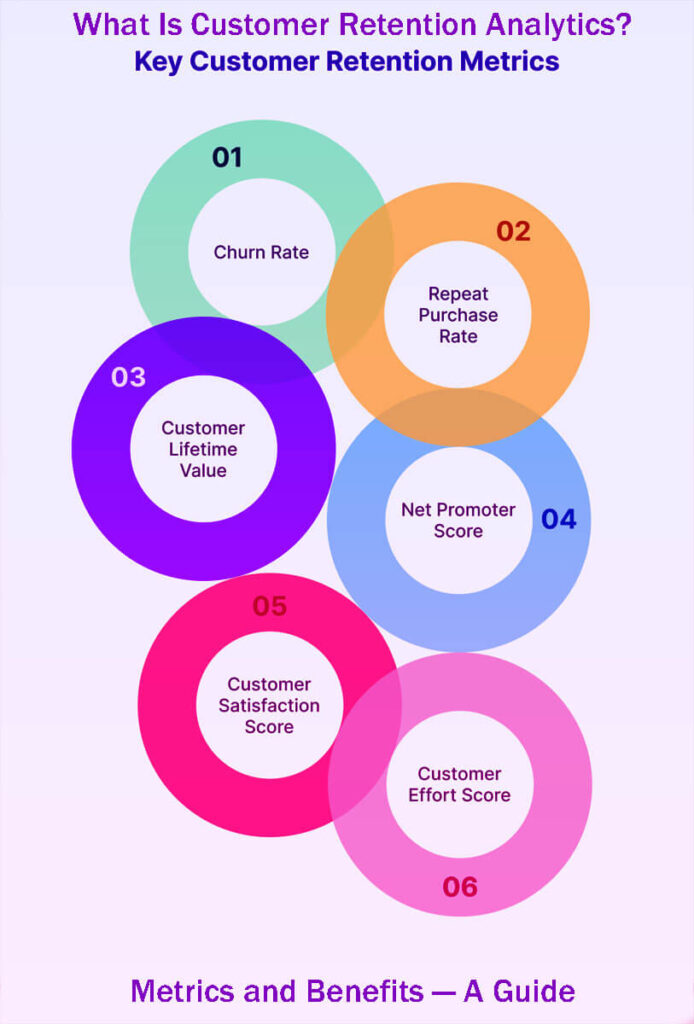
The success of retention analytics depends on which key performance indicators (KPIs) are tracked. Here are some important metrics that can shape retention strategies:
1. Churn Rate
The churn rate shows how many customers end their engagement over a given period, helping us better understand customer retention.
How to Calculate?
Churn Rate = (Customers Lost ÷ Total Customers at Start) × 100
Why is it important?
A high churn rate is a clear sign of retention problems that can hurt a company’s profits and revenue.
How can Saras Pulse help?
By regularly tracking churn patterns, organizations can create targeted strategies to reduce churn and support long-term financial stability.
2. Retention Rate
This metric shows what percentage of customers keep using a product or service over a set period, highlighting how well a business keeps customers engaged.
How to Calculate?
Retention Rate = [(Customers at the End – New Customers) ÷ Customers at the Start] × 100
Why is it important?
A high retention rate indicates strong customer satisfaction and often signals a higher customer lifetime value (CLV).
Also, retaining current customers usually costs less than acquiring new ones, so this metric is key to long-term growth.
3. Customer Lifetime Value (CLV)
Customer lifetime value estimates the total revenue a business can expect from one customer over their entire relationship.
How to Calculate?
Customer Lifetime Value (CLV) is calculated as the product of the Average Purchase Value, Purchase Frequency, and Customer Lifespan.
Why is it important?
A higher CLV means customers stay loyal longer and tend to spend more.
Focusing on ways to increase CLV is important for long-term financial success.
4. Net Promoter Score (NPS)
The Net Promoter Score measures how likely customers are to recommend a business to others, reflecting overall satisfaction and brand perception.
How to Calculate?
NPS = % of Promoters (ratings of 9-10) – % of Detractors (ratings of 0-6)
Why is it important?
A higher NPS indicates that more customers are likely to recommend the business, which supports word-of-mouth marketing.
NPS also helps companies predict customer behavior and identify areas for improvement, boosting customer loyalty.
By tracking key metrics and applying analytical approaches, businesses can enhance their retention strategies and build lasting customer relationships.
5. Repeat Purchase Rate
The Repeat Purchase Rate (RPR) is an important metric that shows how many customers return to make a second purchase after their first. It helps you understand customer behavior and loyalty.
Knowing your repeat purchase rate helps you measure customer satisfaction and plan ways to build long-term relationships with your clients.
How to Calculate the Repeat Purchase Rate?
Calculating the Repeat Purchase Rate is straightforward and can provide valuable insights into customer retention.
The formula is shown below:
[ \text{Repeat Purchase Rate} = \left( \frac{\text{Repeat Customers}}{\text{Total Customers}} \right) \times 100 ]
Where:
Repeat customers refer to the total number of unique customers who have made more than one purchase within a specified time frame.
Total Customers denotes the overall number of unique customers who have made at least one purchase within the same period.
This calculation gives you a percentage that clearly shows how well your business attracts customers to make repeat purchases.
Importance of Repeat Purchase Rate
A high Repeat Purchase Rate indicates that your customers are very satisfied with your brand and want to come back for more. It’s a wonderful sign of their trust and loyalty!
When customers come back to buy again, it shows they value what you offer and feel connected to your brand.
Generates a virtuous cycle where satisfied customers promote your business, leading to more new customers and sustained growth.
How Customer Retention Analytics Work?
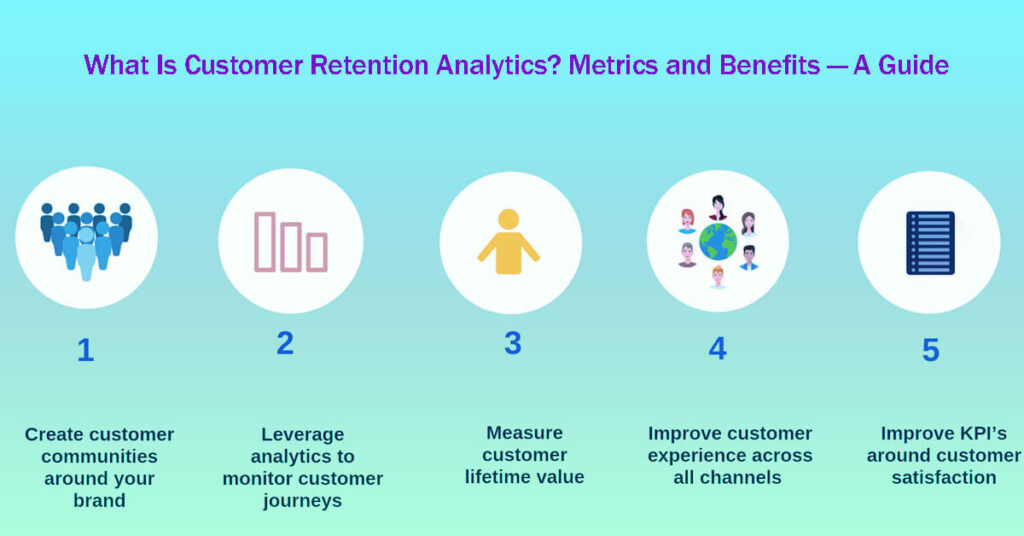
In today’s competitive market, businesses need to keep finding ways to improve customer experience and loyalty.
Good customer retention analytics can provide useful insights and help you develop more effective loyalty strategies.
Here’s how you can use these analytics effectively:
1. Identify Churn Points
It’s important to spot when and why customers stop engaging so you can reduce churn.
Businesses should examine factors such as customer behavior, engagement, and support interactions to identify key moments that might prompt customers to leave.
For example, eBay closely monitors inactivity trends, enabling it to proactively re-engage customers with tailored promotions.
Tools like Saras Analytics help by gathering customer data from different channels, making it easier to spot early signs of churn.
2. Analyze the Causes of Customer Churn
Looking more closely at your data can reveal important patterns that explain why customers leave.
Customers might leave because they use your product less, have poor customer service experiences, or are unhappy with pricing.
Once you know the reasons, you can create more focused, effective ways to retain your customers.
Taking Hulu as a case study, the service actively tracks cancellation reasons and adjusts its pricing models accordingly, a move that plays a crucial role in retaining its subscriber base.
Saras Analytics helps by collecting customer feedback, analyzing behavior, and combining churn data to identify the main reasons customers leave.
3. Enhance Retention Strategies
Many strategies exist to enhance customer retention, but choosing the right one for your business can be challenging.
By analyzing retention data, you can adjust your engagement strategies, loyalty programs, and customer support to meet your customers’ needs.
For example, Saras Analytics provides real-time dashboards and predictions that help businesses improve their retention strategies.
4. Incorporate Advanced Analytics for Improved Decision-Making
Customer retention analytics do more than track churn. They give businesses the tools to make smart, data-driven decisions.
For instance, Shopify merchants use advanced analytics to personalize customer interactions, ultimately reducing churn rates.
To succeed, you need a robust data system that consolidates all your retention data into a single place.
This setup helps you gain useful insights and supports AI-driven retention strategies, enabling you to improve customer retention with tools like Saras Analytics.
In summary, using the Repeat Purchase Rate and customer retention analytics can have a big impact on your business. They help you understand loyalty and build strategies that connect with your customers.
6 Comprehensive Steps to Perform Customer Retention Analytics
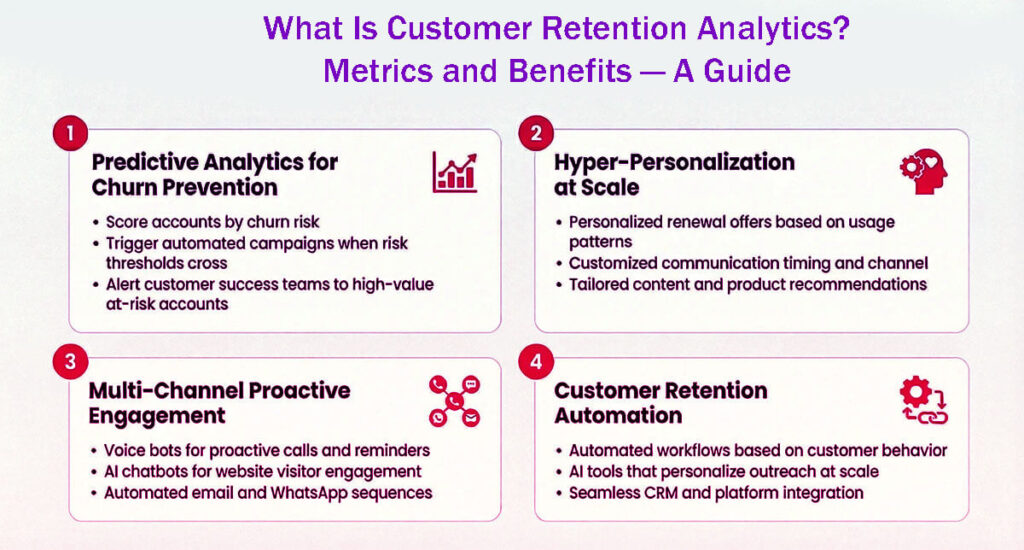
In today’s competitive e-commerce world, keeping your customers is key to making a profit and growing your business.
A key idea in customer behavior is the Pareto Principle. It says that about 80% of your profits come from just 20% of your customers.
Shows why it’s important to keep your current customers rather than focus on finding new ones.
Follow this step-by-step guide to understand better the factors affecting customer loyalty and the reasons behind customer churn, enabling more effective retention strategies.
1: Define Retention Goals
The first and most important step in customer retention analytics is to define your retention goals clearly.
You need to decide which metrics you want to track and why they matter for your business.
Common goals include reducing customer churn, increasing customer lifetime value (CLV), and increasing customer purchase frequency.
Setting clear goals helps you focus your analytics on the areas that will make the biggest difference.
For example, Dropbox has successfully focused on reducing churn among its free user base by rigorously analyzing conversion rates from free to paid subscriptions, enabling it to create targeted retention campaigns.
2: Collect Customer Information
Good retention analysis depends on collecting strong, reliable data.
It’s important to collect detailed customer information from many different sources.
Includes things like transaction history, engagement metrics, customer interactions, support tickets, and product usage.
Each of these data points can give you valuable insights into how your customers behave.
But having so much different data can be hard to manage.
Tools like Saras Daton can streamline this process by offering a centralized platform that aggregates fragmented data from multiple channels, including Shopify, TikTok Shop, and Amazon.
Having all your data in one place makes it easier to find and analyze the information you need for retention.
3: Segment Customers
Not all customers act the same way or want the same things.
To create effective retention strategies, you need to group your customers by factors such as engagement, buying habits, and demographics.
Segmenting customers helps you identify groups likely to stay and those likely to leave.
With tools like Saras Pulse, you can sort customers by retention trends, risk of leaving, and engagement levels.
For instance, Airbnb utilizes segmentation strategies to classify users based on factors such as trip frequency, booking habits, and travel preferences.
Helps them create targeted retention efforts that connect with different customer groups and build loyalty.
4: Analyze Reasons for Customer Churn
It’s just as important to know why customers leave as it is to know why they stay.
Looking closely at customer feedback, support tickets, and cancellation trends can show you why customers are leaving.
Customers might leave because they’re unhappy with the product or prices, or because they find better deals elsewhere. Finding these issues is key to building better retention strategies.
Using surveys or feedback tools lets you collect direct information from customers about their experiences and the reasons they left.
5: Develop and Implement Retention Strategies
Using these insights, you can craft personalized retention strategies that truly address the unique needs and concerns of each customer group, making your approach more effective and customer-friendly.
These strategies include personalized marketing, loyalty programs, improved customer service, and special offers for customers who are leaving.
The main goal is to use your data to create engagement that really connects with each customer group.
6: Measure Impact and Refine
Finally, it’s important to measure how well your strategies are working.
Track key metrics like repeat purchase rates, customer satisfaction, and customer lifetime value (CLV) to see how your efforts are paying off.
Keep reviewing your results to improve and adjust your retention strategies with real-time feedback.
Make changes to your approach if something isn’t working, so your retention efforts keep up with what your customers want and how the market changes.
By following these steps, you’ll better understand your customers and build stronger loyalty, helping your business perform better overall.
Analyze Retention Metrics
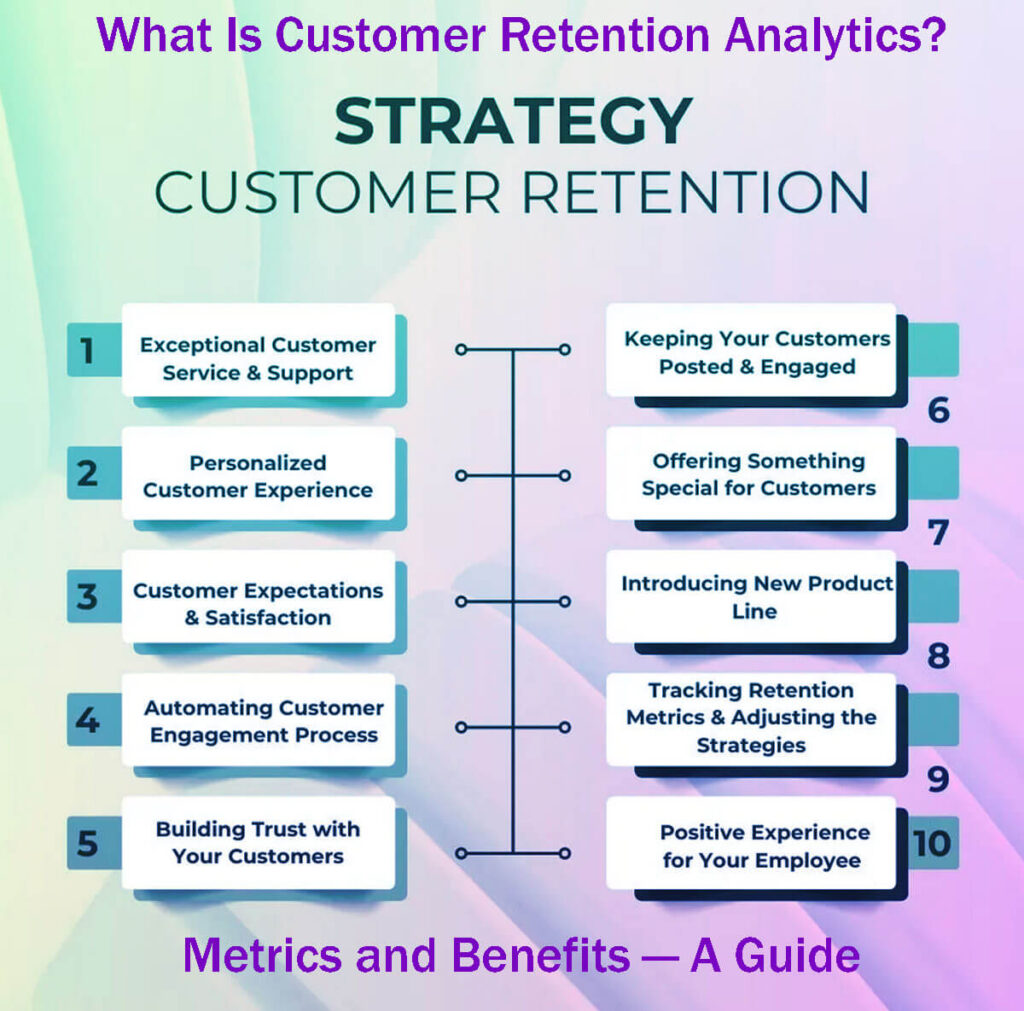
Begin by accurately measuring key performance indicators (KPIs) linked to retention to enhance customer retention efforts.
Metrics such as churn rate, CLV, NPS, and repeat purchase rate provide key insights into customer sentiment and behavior.
These indicators help us better understand their needs and preferences, allowing us to improve our service quality more effectively.
The Churn Rate quantifies the proportion of customers who cease utilizing your service within a designated time period.
Knowing your churn rate can reveal weak spots in customer relationships and show how healthy your business model is.
Customer Lifetime Value (CLV) denotes the total revenue expected from a customer throughout the duration of their relationship with your brand.
A higher CLV indicates that your engagement strategies are working and that customers keep returning.
Net Promoter Score (NPS) gauges customer loyalty by asking how likely they are to recommend your business to others.
A high NPS indicates customers have a positive experience and feel positively about your brand.
Repeat Purchase Rate tracks how many customers make more than one purchase.
A higher repeat purchase rate means your customers see value in what you offer and want to come back.
Comparing your retention metrics to industry standards is also helpful.
This comparison shows how you perform against competitors and highlights where you can improve.
Identify and Address Weaknesses
To improve customer retention, examine the factors that may lead to cancellations or inactivity.
Key questions to consider include:
Are users dropping off after the onboarding process?
Are there specific customer segments that are not returning after their initial purchase?
Asking these essential questions helps you identify the specific pain points in your customer journey.
For instance, Peloton observed a significant decline in engagement among casual users.
To address this, they offered more flexible subscription plans to better meet their customers’ needs.
If onboarding is a weak spot, try improving in-app tutorials or offering more proactive customer support.
Helps users feel supported from the start and can lead to higher retention rates.
Optimize Strategies and Track Results
Remember, improving retention is an ongoing process, not just a one-time effort.
E-commerce businesses should keep testing and refining engagement strategies, loyalty programs, and personalized offers.
Finding out which approaches work best for your customers means you need to keep analyzing and adapting.
Tracking the long-term results of your retention strategies helps make sure your improvements lead to lasting success.
Best Practices for Customer Retention Analytics
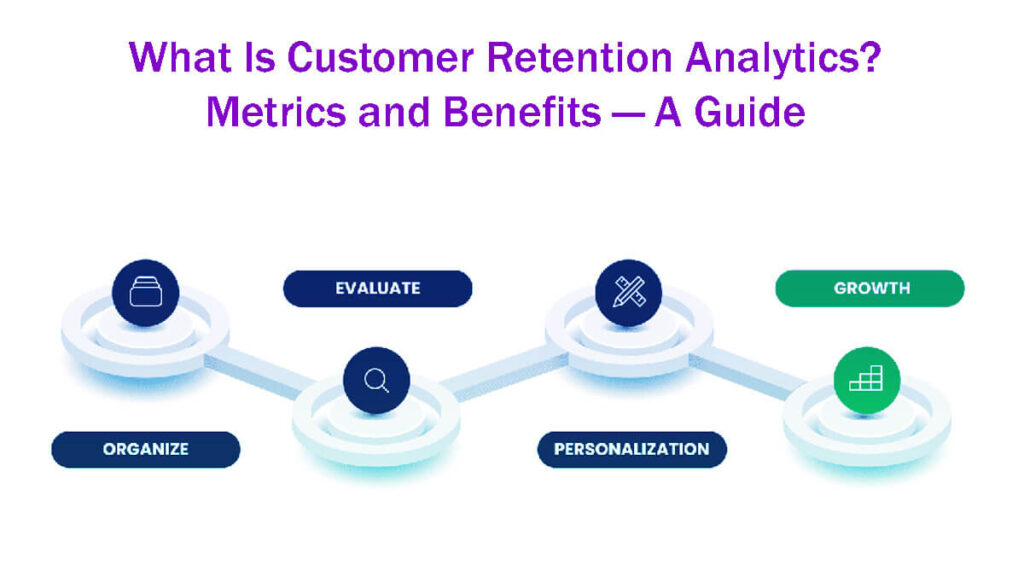
To get the most from your retention analytics and build stronger customer relationships, try these best practices:
Make the Most of Real-Time Data Analytics:
Using real-time data analytics helps businesses respond quickly to possible churn risks.
Instead of relying solely on quarterly reports, real-time insights enable companies to spot new trends and take action to improve retention.
Use Customer Segmentation:
Since one retention strategy rarely works for everyone, it’s important to segment your customer base.
This way, businesses can create personalized engagement strategies that align with each group’s needs and preferences.
Pro Tip: Implement RFM (Recency, Frequency, Monetary value) analysis.
This method groups your customers by how they engage, making your marketing efforts more targeted and effective.
Combine Quantitative and Qualitative Insights:
Numbers show you what customers do, but feedback explains why they do it.
Tools like customer surveys can give you deeper insights into customer experiences.
For example, Slack combines churn-rate analytics with actionable customer feedback, enabling them to improve their user experience.
Services like Saras Analytics help you combine data insights with feedback for a complete view of retention trends.
Implement Predictive Analytics:
Rather than just reacting to churn, it’s better to anticipate it before it happens.
Advanced AI-powered analytics let businesses predict which customers might stop engaging.
This proactive approach helps you reach out to customers who may be losing interest before they leave.
For instance, Netflix successfully employs AI-driven data models to predict viewer preferences and assess churn risks, thus preserving customer loyalty.
Pro Tip: Leverage machine learning models to assign churn risk scores to various customer segments.
Helps you create targeted strategies to address the needs of different customer groups.
Automate Reporting & Dashboards:
Tracking retention data by hand can be slow and inefficient.
Automating reports and dashboards makes insights easier to access, improves accuracy, and saves time.
Tools like Saras Pulse offer automated dashboards that track retention trends, predict churn, and show key retention KPIs for better analysis.
Maximize Customer Retention with Saras Analytics: A Complete Strategy
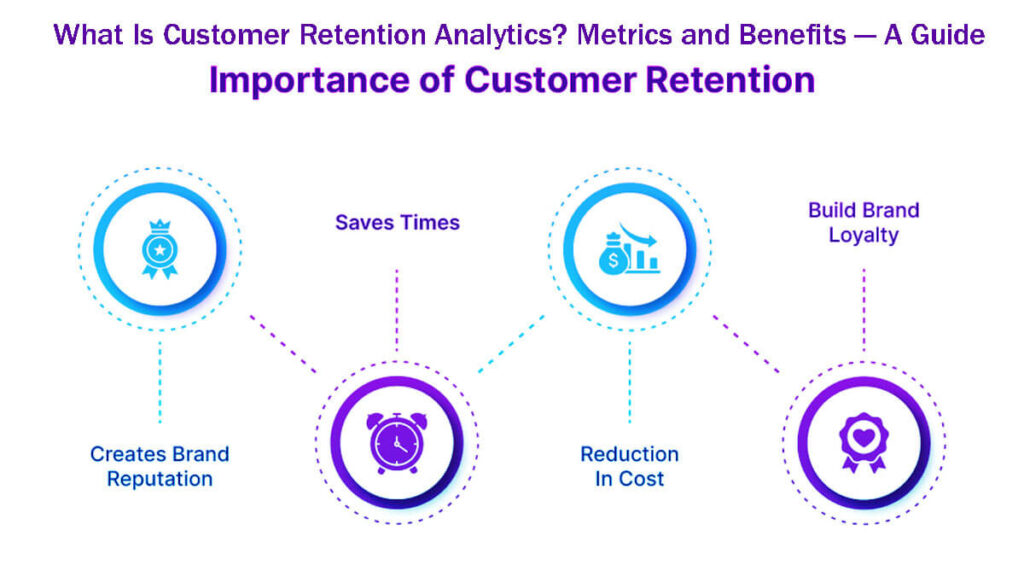
In today’s competitive market, it’s really important for businesses aiming for steady growth to focus on keeping their customers happy and loyal.
Keeping customers can seem challenging, but using advanced retention analytics turns this challenge into a real opportunity for growth.
Saras Analytics provides a platform that helps businesses actively monitor and analyze important retention metrics.
By closely analyzing retention data, companies can identify weak points in the customer journey and understand where customers might encounter issues.
It’s important to understand what drives customer loyalty and what causes customer disengagement.
With these insights, businesses can create personalized marketing strategies that connect with their audience, boost engagement, and build lasting relationships.
Saras Analytics stands out because its automation features make it much easier to track key customer retention metrics.
The platform removes the hassle of manual data collection and analysis, which can often lead to mistakes.
With Saras Analytics, businesses get real-time insights that give a complete view of their customer retention.
This clear view helps businesses spot new trends, track key metrics, and create strategies to reduce churn.
Saras Analytics also predicts churn risk, so businesses can act early before problems grow.
Helps keep loyal customers, increases customer lifetime value, and improves your bottom line.
Are you ready to improve your customer retention strategies and lower churn rates?
With Saras Analytics, you can start focusing on customer loyalty and satisfaction.
See the difference for yourself and put your business on the path to lasting success.
How to Remove Yelp Reviews: How to Delete a Yelp Review in 12 Easy Steps
Top 13 Best SEO Tools: Analysis and Rankings – A Complete Guide
What is a Brand Story? How to Tell Your Brand Story: 12 Easy Steps
Google Ranking Factors: A Complete Guide in 212 Easy Steps
How To Improve SEO Rankings: Boost SEO Performance in 15 Easy Steps