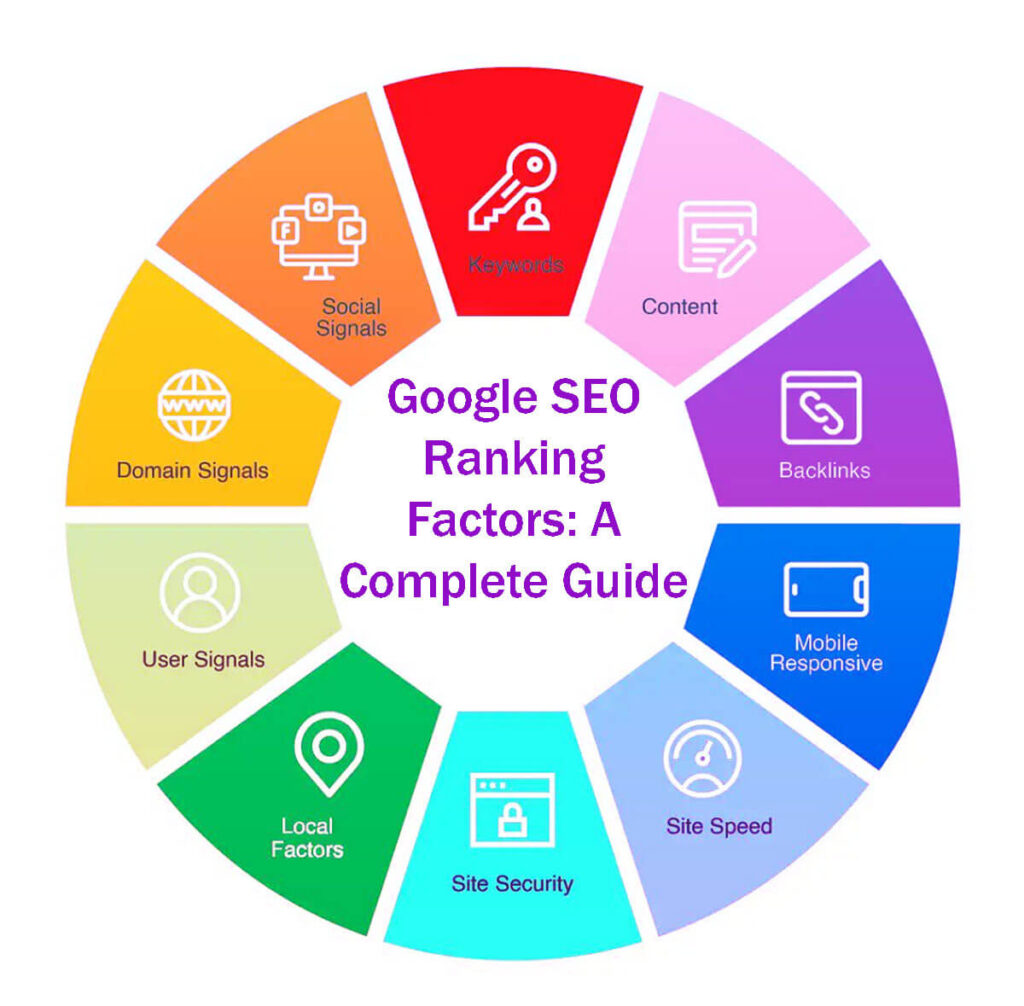





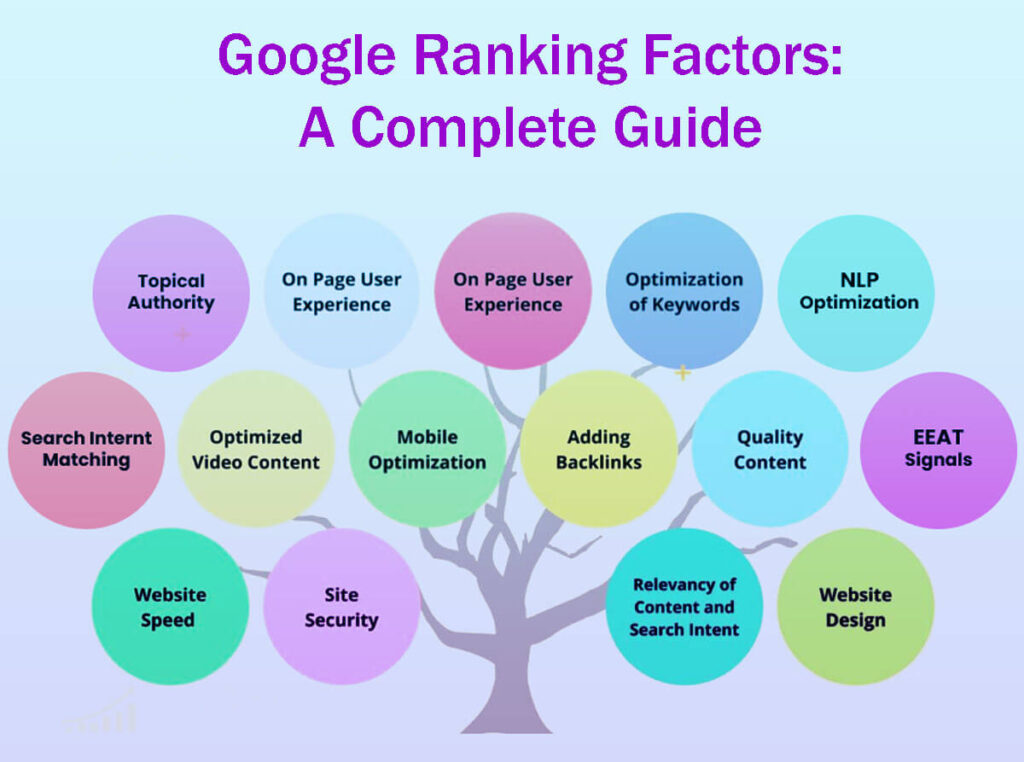
This guide breaks down Google ranking factors, including SEO best practices, technical SEO, backlinks, keyword strategies, and user experience. You’ll see how things like schema markup, site authority, content quality, mobile-friendliness, Core Web Vitals, and domain authority can help your site show up higher in search results.
Learn what Google looks for and get practical tips to improve your website’s ranking.
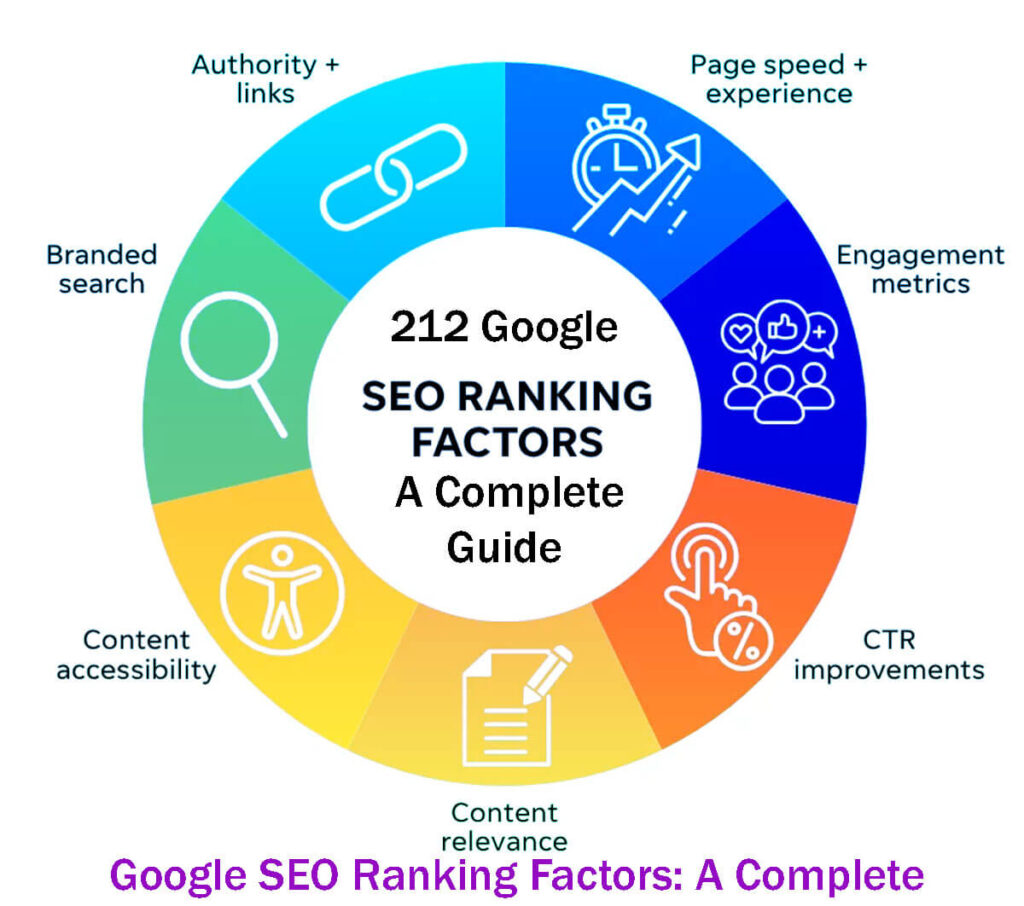
You might already know that Google’s search algorithm is complex. It uses over 212 different ranking factors to decide where websites appear in search results.
So, what does this system really involve? I’ve created a clear guide to the most important factors to help you improve your website’s visibility and engagement.
Some of these factors are backed by research, while others are still topics of discussion among SEO experts.
A few factors remain speculative, underscoring how SEO practices keep changing.
Although experts disagree on the importance of each factor, all of them affect how your website is perceived and ranked online.
I’ve updated this guide to help you stay informed. Let’s look at the details.
Google Ranking Factors: A Complete Guide in 212 Easy Steps
The 212 Most Important SEO Ranking Factors
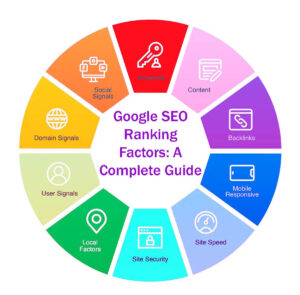
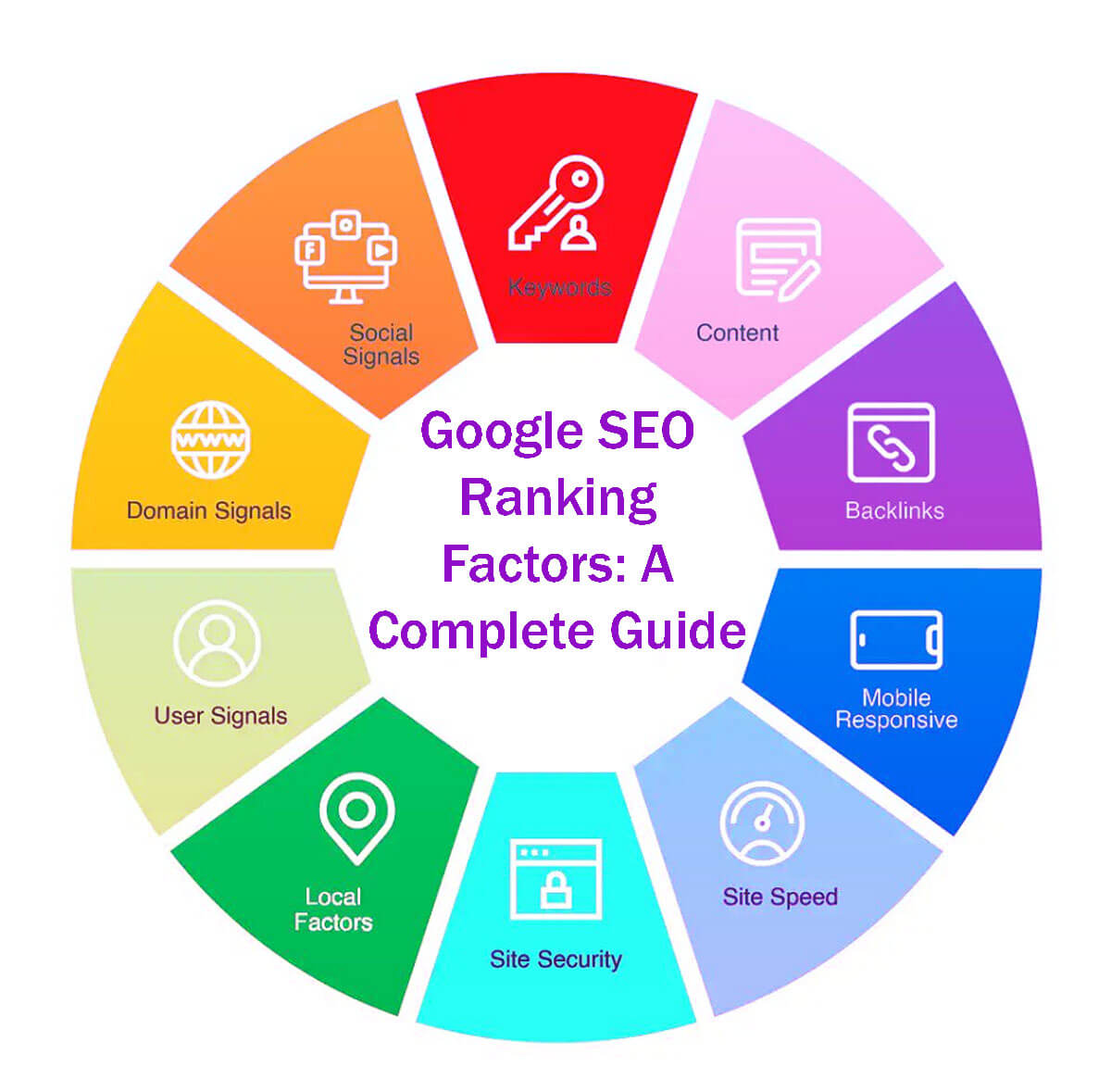
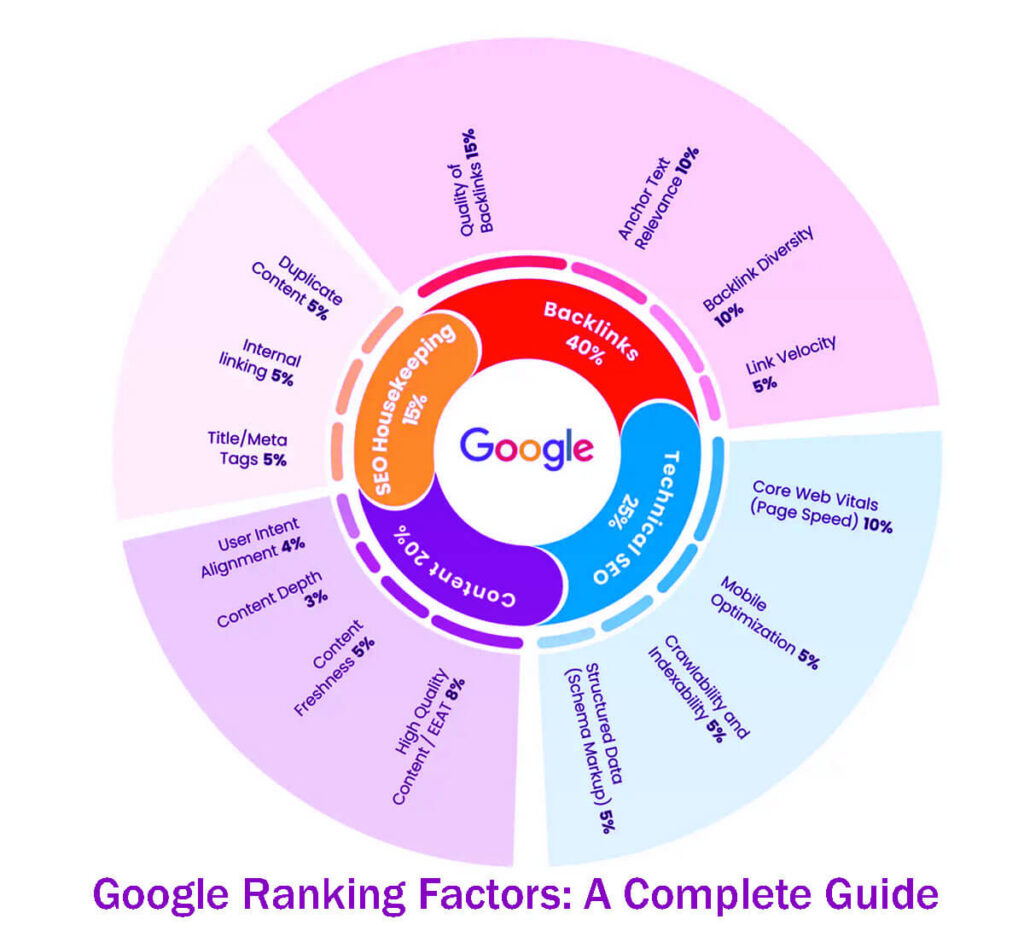
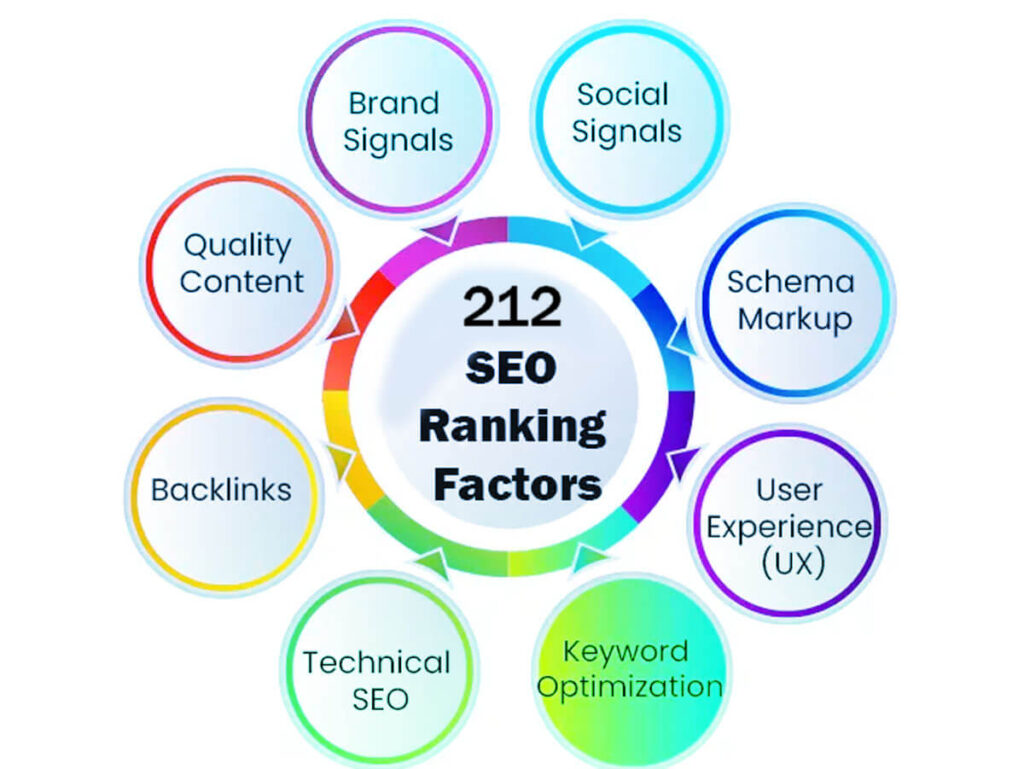
Google considers many factors when ranking websites, but eight main elements are especially important for a strong SEO strategy.
Concentrating on these elements can significantly improve your website’s search engine rankings.
High-Quality Content: Great SEO starts with creating content that is useful, informative, and engaging.
Google aims to deliver the most relevant results to users. That’s why creating content that answers people’s questions and fulfills their needs is essential for better rankings.
Means using clear language, conducting thorough research, and ensuring your content is original.
Backlinks: Links from other websites to yours; they act as endorsements.
They show that your site is trustworthy and relevant.
The quality and origin of backlinks are important. Links from reputable, relevant sites hold more value than numerous links from less trustworthy sources.
Having a variety of strong backlinks can really boost your search ranking.
Technical SEO: covers the behind-the-scenes parts of your website that affect how it works and performs.
Key aspects include ensuring search engines can easily navigate your site, optimizing for mobile devices, and improving load times to enhance the user experience.
Improving technical SEO helps search engines find and better understand your content.
Keyword Optimization: This means carefully using targeted keywords throughout your website’s content.
Using keywords effectively helps search engines understand what your site is about.
It’s important to research keywords and understand what users are looking for, so your content matches their needs.
User Experience (UX): It refers to how simple and enjoyable it is for users to navigate and interact with your website.
Google favors sites that are easy and enjoyable to use, since good UX usually means happier visitors.
Good UX comes from easy navigation, attractive design, clear content layout, and quick load times.
Schema markup involves incorporating structured data into your website, providing search engines with richer details about your content.
It can enhance your site’s visibility in search results by using rich snippets, which make your listings more detailed and appealing.
Social signals are likes, shares, and comments your content receives on social media.
These interactions can help your content reach more people and show search engines that it’s valuable and relevant.
Brand Signals: How people see your brand online is important for your ranking potential.
A good online reputation—built on trust, recognition, and respect—can help your search rankings.
To achieve this, promote positive feedback, remain active on social media, and effectively manage your online reviews.
Domain Elements: Domain Factors
To better understand SEO, it’s also important to look at domain-related factors that can affect your website’s ranking:
Domain Age: Many SEO experts believe that older domains seem more credible to Google.
However, domain age by itself doesn’t guarantee better rankings, as John Mueller has pointed out.
Keyword in Top-Level Domain: Having a keyword in your domain name can still show relevance, but it doesn’t boost rankings as much as it used to.
Domain Registration Length: Some Google patents suggest that registering your domain for a longer period might signal reliability and trustworthiness, which could help your site’s ranking.
Keyword in Subdomain: Adding relevant keywords to your subdomain can help search engines associate your content with specific topics and improve your SEO.
Domain History: Who owned your domain before, and its history can affect its reputation.
If a domain has changed owners often or has a bad history, it might lose credibility. Google could reset its reputation, potentially leading to the loss of good backlinks or the passing of penalties to new owners.
By grasping these essential factors, you can more effectively optimize your website to align with Google’s evolving standards and increase your likelihood of achieving higher rankings.
Exact Match Domain (EMD): Exact match domains include the exact keywords people often search for, which might seem like an easy SEO win. However, research shows that EMDs usually offer only minor direct SEO benefits.
If an EMD is paired with a low-quality website—such as one with poor content, too many ads, or unethical practices—Google’s EMD update might penalize it.
Google launched this update to promote higher-quality, more relevant content in search results. As a result, EMD sites with weak content might face greater scrutiny and see their rankings decline.
Public vs. Private WhoIs Information: Choosing between public and private WhoIs information can affect how transparent and trustworthy your website appears.
When site owners choose private WhoIs registration, their personal information is hidden from the public. Sometimes, this can raise suspicion.
Some users might interpret this as an attempt by the owner to conceal their identity or suggest other motives.
Matt Cutts, a respected SEO expert and former head of Google’s Webspam team, has talked about these issues. He suggests that hiding ownership can make people question a website’s legitimacy and quality.
Penalized WhoIs Owner: Google carefully reviews websites owned by people who have a history of spam or other penalties.
If someone has been penalized for unethical practices before, any new sites they own are likely to get extra attention from Google’s algorithms.
Means that past problems can affect other websites owned by the same person, even if those sites now follow SEO best practices.
Country TLD Extension: Using a Country Code Top-Level Domain (ccTLD), such as .cn for China, .pt for Portugal, or .ca for Canada, can help your website appear more prominently in that region.
Search engines often prefer ccTLDs in local search results, which can help your site rank higher for users in that country.
However, using a ccTLD can also limit your site’s reach. It may be harder to attract an international audience and get global exposure.
Page-Level Elements: Page-Level Factors
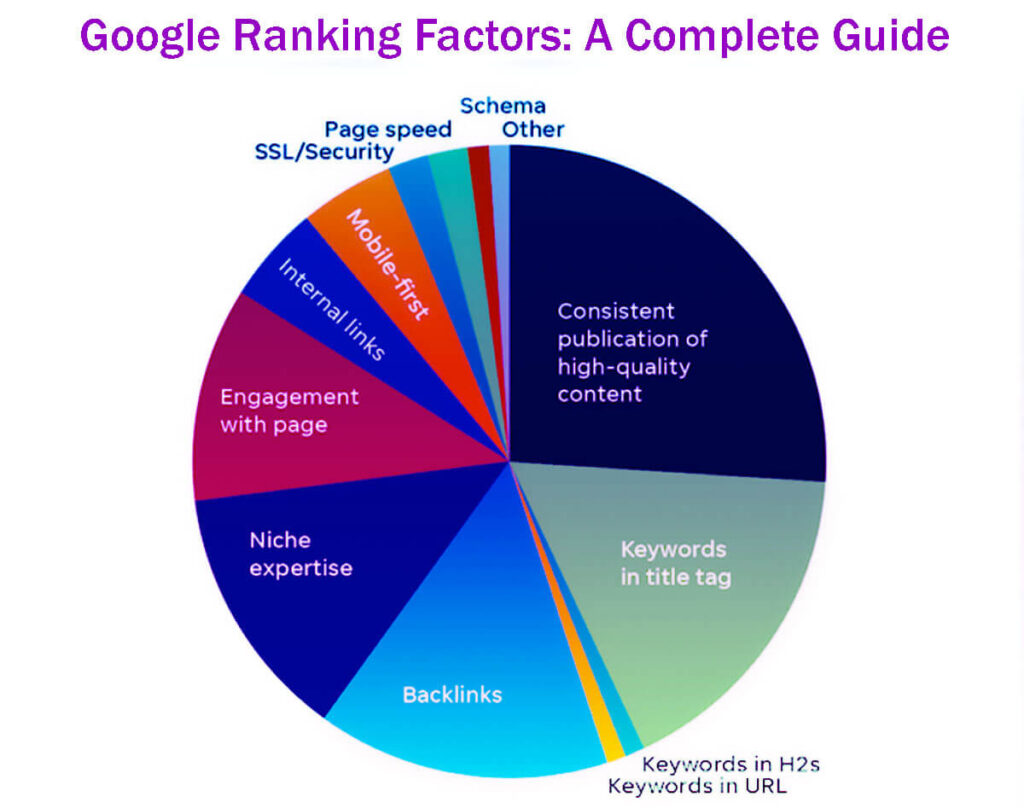
The keyword in the title tag remains an important on-page SEO factor, even though its influence has decreased over time.
Including keywords in your title tag helps search engines better understand your page’s content.
It can improve your rankings because search engines use title tags to decide how relevant your page is to user searches.
Title Tag starts with Keyword: Studies from Moz show that putting the keyword at the start of the title tag usually leads to better search results.
This approach makes your page more visible and can boost click-through rates, since users are more likely to click on titles that quickly show they match their search.
Keyword in Description Tag: The meta description tag does not directly affect Google rankings, but it can strongly influence click-through rates, which are important for overall ranking.
Writing a clear and interesting meta description can encourage more people to click your link in search results. Users are more likely to click links with helpful, engaging descriptions.
Keyword Occurs in H1 Tag: The H1 tag is the main headline on a webpage that signals to search engines how relevant your content is.
Studies show that Google does consider the H1 tag when evaluating a page’s content.
Using relevant keywords in the H1 tag signals to search engines and users the primary subject of your page, which improves the perceived relevance of your content.
TF-IDF (Term Frequency-Inverse Document Frequency): This method gauges the importance of a word by comparing its frequency on a specific page to its overall frequency across a larger collection of documents.
If a word appears more often on a page, it shows that the content focuses on that topic.
Google probably uses an advanced version of TF-IDF to better understand what a page is about and to show more relevant search results.
Content Length: Many studies show that longer articles usually rank higher in search results than shorter ones.
Search engines prefer in-depth articles that fully cover topics. Top-ranking content often exceeds 1500 words.
Shows why it’s important to write detailed articles that give real value to readers, which can help your search rankings.
Table of Contents: Including a linked table of contents on your webpage helps Google understand your content’s structure.
A clear table of contents makes it easier for users to find what they need and can also help generate sitelinks in search results.
Sitelinks are extra links shown beneath your main URL in search results. They enhance your page’s visibility and can lead to higher click-through rates, possibly boosting your rankings.
Using Latent Semantic Indexing (LSI) keywords in your content helps search engines understand the contextual relevance of your webpage.
LSI keywords are terms and phrases that are closely related in meaning to your main keywords.
They help search engines distinguish between similar words with different meanings. For example, they help decide if “Apple” means the fruit or the tech company.
Using LSI keywords effectively enhances your content’s relevance and indicates to search engines that your page thoroughly covers the topic, potentially boosting your rankings.
LSI Keywords in Title and Description Tags: Adding LSI keywords to your title and meta description tags is also important for SEO, just as it is in your main content.
These tags help Google figure out what your page is about and distinguish between words with multiple meanings.
By adding relevant LSI keywords to these tags, you send better signals to search engines and improve your chances of ranking higher.
Increase your page’s visibility to attract more users to click your link in search results.
Page Covers Topic in-Depth: Research shows that Google ranks pages higher when they cover a topic in depth.
Pages that explore a subject fully and cover all important points are more likely to rank well than those that only touch on the basics.
When you provide detailed, useful information, you meet users’ needs and signal to search engines that your page is a valuable resource.
Page Loading Speed via HTML: Page speed is now a key factor for search rankings, and both Google and Bing consider it.
Google measures loading speed using real user data from the Chrome browser, underscoring the importance of performance to user experience.
If your page loads slowly, users may leave quickly and feel frustrated, which can hurt both engagement and SEO.
So, make sure your webpage loads fast by optimizing HTML and other parts. Helps both user experience and your search rankings.
Use of AMP (Accelerated Mobile Pages): Using AMP may not directly affect search rankings, but it’s important for sites that want to appear in the mobile Google News Carousel.
AMP makes pages load faster on mobile devices and greatly improves the mobile user experience.
Better mobile search performance can help your site appear more often in news searches, bringing in more visitors and readers.
Entity Match: Ensuring your content matches the specific people, places, or things users are searching for.
An entity is a clear and recognizable concept, person, place, or thing that people want to learn about.
If your webpage closely matches the entities people are searching for, it’s more likely to rank higher for related keywords.
Indications to search engines that your webpage is pertinent and valuable, thereby enhancing its visibility and authority within search rankings.
Google Hummingbird: When Google launched the Hummingbird algorithm, it changed how search queries are processed and understood.
Instead of just looking at keywords, Hummingbird helps Google understand the full intent and context of a user’s search.
This update lets Google deliver more accurate, relevant search results, so users find content that really matches what they’re looking for.
By focusing on context rather than just keywords, Hummingbird makes search results more relevant and satisfying for users. Shows why it’s important to create detailed, context-rich content.
Duplicate content: a major challenge for websites seeking visibility in search engine results.
This issue can happen even with minor content modifications. Search engines may find it difficult to choose which version to display and index when there are several similar versions.
This confusion can lead to ranking penalties, which may reduce your website’s traffic and visibility.
Web admins should regularly check their content for duplicates to fix any issues and keep their site’s search engine credibility.
Rel=Canonical: tag is a useful way to reduce problems caused by duplicate content.
When used correctly, this tag tells search engines which version of a page to index.
Helps avoid duplicate content penalties and combines ranking signals for the main page.
Make sure to use canonical tags correctly across your site so search engines understand which pages are most important.
Image Optimization: Images are an important part of any webpage and can greatly improve its relevance and SEO performance.
Optimizing images means more than just making files smaller. It also includes using clear file names, alt text, and adding helpful titles, descriptions, and captions.
All these details help search engines index images and understand their placement and usage.
When images are well-optimized, users have a better experience, and the site is more likely to appear in image search results, increasing visibility.
Content Recency: In SEO, having recent content is important, especially for searches that need the latest information.
The Google Caffeine update demonstrated the importance of having new or recently updated content.
Search results sometimes show when a page was last updated, which can encourage more people to click and engage with the content.
Website owners need to regularly review and update their content, particularly in rapidly evolving industries.
Magnitude of Content Updates: The changes you make to a webpage affect how fresh it appears to search engines.
Significant updates, such as the addition of new sections or the removal of outdated information, hold greater importance than minor modifications, including typographical corrections or text reorganization.
Making major changes signals to search engines that your content is up to date and relevant, which can help your page rank higher.
When updating pages, content creators should make meaningful changes to keep their material relevant to current topics and what their audience wants.
Historical Page Updates: How often a webpage is updated also affects how fresh it appears to search engines.
Pages that get updated regularly, whether weekly, monthly, or yearly, seem more current and relevant than those updated only every few years.
Regularly updating content indicates to search engines that you are dedicated to offering fresh information, potentially improving your page ranking and drawing more visitors.
Keyword Prominence: To help a webpage rank well in Google, it’s best to use the main keyword early in the content.
Putting the keyword in the first 100 words helps search engines quickly understand what the page is about.
Using keywords early gives context and signals relevance, which can improve the page’s search ranking.
Keywords in H2, H3 Tags: Using keywords in subheadings, such as H2 and H3 tags, might seem helpful, but it can sometimes make the content less focused.
According to Google’s John Mueller, using keywords in subheadings may not affect rankings as much as people think.
Web admins should focus on writing content that uses keywords naturally, making it easy to read and helpful to users, rather than just putting keywords in subheadings.
Outbound Link Quality: Outbound links matter for SEO. Many experts say that linking to trusted, high-authority websites can make your site look more credible to Google.
When you link to reliable sources, your website appears more trustworthy and knowledgeable, which can improve your search rankings.
So, web admins should choose relevant and trustworthy outbound links to make their content more reliable.
Outbound Link Theme: It’s also important that outbound links match the theme of your content.
The Hilltop Algorithm suggests that Google considers the topics of the pages you link to when evaluating the relevance of your content.
For example, if your site mostly links to movie pages, Google might think your content is about movies too.
Keeping a consistent theme in your outbound links helps focus your content and can improve your ranking chances.
Good grammar and spelling are crucial for SEO because well-written content signals to search engines that your site is high-quality.
High-quality writing makes your site more trustworthy and gives users a better experience, both of which help with SEO.
Web admins should spend time editing and proofreading to make sure their content looks professional.
Syndicated Content: Original content is key to getting good search rankings.
Content that is syndicated or very similar to what’s already online often struggles to rank and may not get indexed.
Search engines prefer unique content because it gives users more valuable and varied information.
Content creators should work on original ideas and insights to make their content stand out from the competition.
Mobile-Friendly Update (Mobilegeddon): In April 2015, Google released an important update that many people called “Mobilegeddon.”
This update aimed to give higher rankings to websites that work well on mobile devices, as more people were using smartphones and tablets to go online.
Responsive websites, meaning they adjust smoothly to different screen sizes and layouts, get ranked higher in search results.
This change made mobile-friendly design much more important for getting noticed in Google’s search results.
Mobile Usability and the Mobile-First Index: When Google introduced the “Mobile-first Index,” mobile usability became a top SEO priority.
Google primarily relies on the mobile version of a website’s content for ranking and indexing pages rather than the desktop version.
Fast-loading, user-friendly websites on mobile devices have a competitive edge.
Google’s algorithm prefers sites that offer a smooth, efficient experience across all devices, which can help keep users and improve rankings.
“Hidden” Content on Mobile: In the past, content that was not immediately visible on mobile devices, like information behind expandable menus or tabs, was often not indexed or valued as much as content that was always visible.
Recently, though, a Google representative said that hidden content is now acceptable as long as important information is easy for users to find.
This change shows how important it is to place key information where users can easily find it, while still keeping the site easy to navigate.
Helpful “Supplementary Content”: Google’s Rater Guidelines say that adding useful extra content to a webpage can greatly improve its quality.
This kind of content can help a page rank better by giving users more value.
Examples of valuable supplementary features are currency converters, loan calculators, and interesting recipes. These tools boost the site’s engagement and can motivate users to spend more time on the site, thereby decreasing bounce rates.
Content Hidden Behind Tabs: Webmasters should know that important information behind tabs may not be indexed well by Google.
Google has said that this kind of content “may not be indexed,” which can hurt your site’s visibility.
To achieve the best search visibility, ensure important information is easy to find and immediately visible, matching what Google looks for when indexing pages.
Number of Outbound Links: Having too many dofollow outbound links (OBLs) on your website can hurt your search rankings.
Happens because too many links can “leak” PageRank, spreading your site’s authority too thin and possibly lowering your own rankings.
So, it’s best to balance linking to useful external sites with maintaining your site’s authority.
Multimedia Elements: Adding things like images, videos, and interactive features can make a webpage’s content much richer.
These features help engage users and make the page seem more valuable and high-quality.
Google often prefers pages with rich media because they usually provide a better user experience.
Number of Internal Links to a Page: This metric shows a webpage’s importance within a website by assessing its internal linking structure.
Internal links are links that take users from one page to another on the same website.
If a page has more internal links pointing to it, it usually means that the site considers it more important or valuable than other pages.
Happens because internal links help share page authority throughout the website and guide both users and search engines to key content.
Pages with more internal links tend to rank better in search results, increasing their visibility.
The number and quality of internal links indicate a page’s importance within your website.
Pages with more internal links are usually seen as more important and are more likely to rank well.
But the quality of these links matters too. Links from strong, high-PageRank pages are more valuable than those from less trusted sources.
So, it’s a good idea to build strong internal linking strategies.
Broken Links: Broken links or 404 errors on your site can give the impression that it is poorly maintained and may indicate to Google that the site is being neglected.
Google’s Rater Guidelines indicate that broken links can affect how your website’s quality is evaluated.
Shows why it’s important to regularly check and fix links so users have a smooth experience.
Reading Level: Some evidence suggests that Google looks at how easy content is to read, which can affect search rankings.
Experts still debate how much this matters, but most agree that simpler, easier-to-read content can reach more people.
However, be careful not to make your content too simple, or it might seem like it comes from a “content mill” with little real value.
Affiliate Links: Having affiliate links on your site doesn’t automatically hurt your rankings, but too many can draw extra attention from Google’s algorithms.
In these cases, Google is more likely to favor sites with strong quality signals and content that truly helps users.
This difference is important to prevent your site from being seen as a “thin affiliate site,” which usually offers little value and might be penalized by search engines.
HTML Errors and W3C Validation: Websites with many HTML errors or poor code are often seen as low-quality by both users and search engines.
Many SEO experts say that following W3C standards and keeping your code clean demonstrate quality, help users, and reduce technical problems.
Even though some people debate this, it’s generally best to keep your code clean for better site performance.
Domain Authority: How much authority your domain has plays a big role in how well it can rank in search results.
A page on a well-known, trusted domain is more likely to rank well than a similar page on a less trusted domain, if everything else is equal.
Tools that measure domain authority can help you see how well your site might do in search results.
PageRank: While PageRank doesn’t always directly decide rankings, pages with high link authority usually rank better than those without.
Shows why getting good backlinks is so important. Building a strong backlink profile can really boost your site’s visibility and authority.
URL Length: The length of a URL may substantially affect the ease with which your webpage appears and ranks in search engine results. Maintaining concise URLs can enhance your page’s visibility and search performance.
Research in digital marketing shows that very long URLs can hurt a webpage’s search ranking.
Long URLs are less user-friendly and harder for people to remember or share.
Shorter URLs usually improve user experience by providing a simple link. They also make it easier for search engines like Google to index the page.
In general, short URLs can give websites an edge and help them rank higher in Google search results.
URL Path: The structure of a webpage within a website, particularly its URL path, can greatly affect how search engines assess its authority.
Pages that are closer to the homepage in a website’s structure often get a small boost in authority.
This occurs because search engines give higher importance to a site’s navigation, making pages that are more accessible appear more significant.
So, placing important pages higher in your site’s structure can help search engines see them as more valuable.
Human Editors: Google has tested using human editors in its search results, as described in a patent application, but this idea remains theoretical and unproven.
Adding human oversight could bring a new way to check content quality and relevance in search results.
For now, Google’s algorithms mostly depend on automated systems.
Page Category: The category assigned to a webpage acts as a crucial signal for search engines, helping them determine the page’s relevance to specific search queries.
A clear category helps pages with related content stand out over those that are misclassified or not relevant.
This structure yields more accurate search results, thereby improving user satisfaction and engagement.
Keywords in the URL: Including relevant keywords in the URL signals to both users and search engines what the page is about.
A Google representative has called URL keywords a “very small ranking factor,” but they are still an important part of a larger SEO strategy.
This minor signal indicates to Google how closely the content aligns with user search queries.
URL String: Google looks at the URL’s categories, which can summarize the page’s main topic.
This structure enables search engines to grasp the primary topic and helps users quickly assess the page’s relevance.
References and Sources: Like in academic writing, citing reliable sources is a sign of high-quality content online.
Websites that prioritize accuracy and reliability often align with Google’s Quality Guidelines, which value expertise and trust.
Google has said that external links do not directly affect rankings, but high-quality external references remain important for building a site’s reputation.
Bullets and Numbered Lists: Using bullet points and numbered lists makes content easier to read and navigate.
This formatting breaks information into smaller parts, making it easier for users to find key points.
Google tends to prefer these formats because they improve user experience.
Page Priority in Sitemap: The priority you set for pages in your sitemap.xml can affect how they rank in search results.
Pages marked as higher priority are considered more important and are more likely to appear in search results.
This hierarchy in sitemaps helps search engines find the most valuable content on a website.
Too Many Outbound Links: Google’s Quality Rater guidelines warn against having too many outbound links, as this can hurt a website’s credibility.
Having too many outbound links can divert users’ attention and diminish the site’s credibility.
So, it’s important to control both the number and quality of outbound links to keep a strong online presence.
User Experience Signals from Keyword Rankings: A webpage that ranks well for several keywords sends good signals to Google about its quality.
Google’s recent “How Search Works” report says that this kind of performance can improve a page’s reputation and help its ranking.
Page Age: How old a webpage is, and how often it’s updated, can affect its search ranking.
Older pages that are frequently updated may have an advantage over newer ones.
Shows that Google values both fresh content and the reliability of older, well-kept pages.
User-friendly Layout: A neat, attractive layout improves the user experience and aligns with Google’s Quality Guidelines.
Websites that prioritize user-friendly design often achieve better search rankings because they are easier to navigate and more enjoyable to use.
Parked Domains: A major Google update in December 2011 led to a big drop in search visibility for parked domains, which are websites without active or engaging content.
This change shows how important it is to keep your website full of good content if you want to stay visible in search results.
Useful Content: Google distinguishes between content that is just “quality” and content that is truly “useful.”
Jared Carrizales points out that websites with only generic or copied information, especially thin affiliate sites, can be penalized.
Indicates that websites must provide unique, valuable content to prevent falling in search rankings.
Site-Level Elements: Site-Level Factors
Content Offers Value and Unique Insights: Google closely watches and penalizes websites that are not original or useful.
They pay special attention to sites with thin content, such as basic affiliate pages that offer nothing new.
Ensuring your content offers real value is essential to maintaining a strong ranking in search results.
Contact Us Page: Google’s Quality Rater Guidelines state that websites with sufficient contact information are ranked higher in search results.
The contact details on a website should match the information in WHOIS records. Helps build credibility and trust with users.
Making contact information easy to find can help your website seem more trustworthy.
Domain Trust/TrustRank: TrustRank is a key concept for understanding how search engines evaluate websites and determine their rankings.
SEO experts point out that a website’s credibility can have a big impact on how visible it is in search results.
Google backs up this idea with a patent called “Search result ranking based on trust.”
The patent shows that a site’s trustworthiness matters when search engines rank it. More trust can mean better rankings.
Site Architecture: A well-organized site structure, often using a silo format, is important for making your website more visible to search engines.
This setup helps Google understand and sort the topics on your site.
A clear, step-by-step structure makes it easier for users to navigate and helps Googlebot, Google’s web crawler, find and index all your pages.
Can boost your site’s visibility in search and help improve your rankings.
Site Updates: Many SEO professionals believe that regularly adding new content makes a website seem fresher and can help boost its rankings.
However, Google has said that how often you publish new content does not directly affect your search rankings.
It’s still good to update your content often to keep it relevant and engaging, but remember that search rankings depend on many different factors.
Sitemap Presence: Including a sitemap on your website facilitates search engines in discovering and indexing all your pages, thereby enhancing your site’s visibility.
Sitemaps help search engine crawlers move through your site’s structure, so all your pages get found and indexed.
Still, Google recently said that while sitemaps are helpful, HTML sitemaps don’t have much direct effect on your site’s SEO.
So, it’s important to pay attention to your content’s quality and structure, not just having a sitemap.
Site Uptime: Keeping your website online and running smoothly is key to maintaining steady search rankings.
If your site is down for a long time or has ongoing server problems, it can hurt your rankings and might even get your site removed from search results if not fixed.
It’s important to regularly check your site’s performance to keep it reliable and user-friendly, since search engines prefer stable websites.
Server Location: Your website’s server location is important for search rankings, particularly for local searches and location-based queries.
Businesses serving local customers can benefit significantly by hosting their servers close to their customers.
Having servers nearby can make your site load faster and work better, which helps user experience and search visibility in those areas.
SSL Certificate: Google has made it clear that using HTTPS is a ranking factor. It also makes your website more secure and builds trust with users.
However, HTTPS mostly acts as a tiebreaker between sites of similar quality. While it’s good for security, it won’t guarantee higher rankings on its own.
E-A-T stands for Expertise, Authoritativeness, and Trustworthiness. It’s especially important for websites that share health or sensitive information.
Google prioritizes content that demonstrates strong expertise, authority, and trust.
So, websites that prove they are credible and know their subject well are more likely to rank higher, since Google wants to give users reliable information.
Duplicate Meta Information On-Site: Having the same meta information on multiple pages can really hurt your site’s visibility.
Can confuse search engines, making it hard for them to decide which pages to show in search results.
As a result, your rankings and organic traffic can drop. To avoid this, ensure each page has its own unique, relevant meta tags.
Breadcrumb Navigation: Adding breadcrumb navigation makes it easier for visitors to find their way around your site.
Breadcrumbs help users know where they are on your site and also help Google show your pages better in search results using breadcrumb markup.
It can enhance your site’s search visibility and improve user engagement.
Mobile Optimized: Since most web searches now happen on mobile devices, Google favors mobile-friendly websites in its rankings.
Websites that aren’t mobile-friendly can get lower rankings, so it’s important to use a responsive design.
A mobile-optimized site is easier to use and can help lower bounce rates while boosting user engagement.
YouTube often gets special treatment in search results, likely because Google owns the platform.
Research from Search Engine Land found that YouTube traffic jumped after the Google Panda update, showing how well YouTube fits into Google’s search system.
Shows why it’s important to optimize your video content for search and use YouTube as a key marketing tool.
Site Usability: If your website is hard to use or navigate, visitors may leave quickly, view fewer pages, and your bounce rate can go up.
Google’s RankBrain algorithm looks at these negative user signals, which can hurt your site’s rankings.
To make your site easier to use, focus on a user-friendly design and simple navigation for all devices.
Some people believe that integrating Google Analytics and Google Search Console improves indexing and ranking performance; however, Google clearly states that this is a misconception.
These tools are great for tracking your site’s performance and user behavior, but they don’t directly impact your search rankings.
Instead, they help website owners improve their strategies and make better content.
User reviews/Site reputation: A site’s reputation, especially through user reviews on sites like Yelp.com, probably affects how it ranks in Google’s algorithm.
Google has openly said it considers user reviews when evaluating a site’s credibility, especially after past fraud cases.
Good, positive reviews can boost your site’s reputation and help your rankings, so it’s important to create great user experiences.
Core Web Vitals are important user experience metrics that Google uses to help decide website rankings.
These metrics are more than just tiebreakers—they show how much website performance matters for search rankings.
Factors such as loading speed, interactivity, and a seamless and engaging user experience. When these elements come together well, users are more likely to feel comfortable and satisfied with their experience.
Improving these elements can enhance your website’s visibility and climb search engine rankings.
Linking Domain Age: A domain’s age plays a key role in the strength and authority of its backlinks.
Older domains usually have a longer history of backlinks, which can make them seem more credible and trustworthy to search engines.
Building up high-quality links over time can help a site rank better in search engines, so older domains are often more valuable than new ones.
Linking Root Domains: Studies of millions of Google Search results show that having links from many different websites is one of the most important factors for ranking well.
Getting backlinks from a variety of different websites makes your site look more credible and can boost its visibility in search results.
This variety shows that different sources value your content, which helps build your website’s authority.
Links from Separate C-Class IPs: When backlinks come from many different C-Class IP addresses, it means a wide range of unique websites are linking to your site.
Matters because it demonstrates that your site is considered valuable and relevant across various areas, which can boost its ranking.
Having links from different IP addresses signals to search engines that your site is influential across many platforms.
Linking Pages: The number of unique pages that link to your site can greatly affect your search rankings, even if they all come from the same website.
Illustrates the importance of widespread recognition: when your site is linked from numerous different pages, even on the same website, it is perceived as more trustworthy and authoritative.
Backlink Anchor Text: Anchor text isn’t as important as it used to be and can look spammy if overused, but it still helps indicate what the linked content is about.
Using keyword-rich anchor text wisely can help search engines understand your content and support your SEO efforts.
Alt Tag (for Image Links): Alt text acts as a label for images, helping search engines interpret their content.
These descriptions help your images appear in search results and make your linked pages more relevant to your site’s content.
Good alt tags also improve the experience for users with visual impairments who use screen readers.
Links from .edu or .gov Domains: Former Google engineer Matt Cutts has said that a site’s top-level domain doesn’t automatically make it more valuable. However, many SEO experts still believe that links from .edu and .gov sites are especially powerful.
Because these domains are associated with education or government, links from them are regarded as more trustworthy and can enhance your site’s authority.
Authority of Linking Page: The authority of the page giving you a backlink, often measured by things like PageRank, is still very important for how much that link helps your ranking.
Links from high-authority pages are usually more valuable than those from less-trusted pages because they convey more credibility and relevance.
Authority of Linking Domain: The overall authority of the website linking to you also affects the value of that backlink.
Links from trusted, high-authority sites can make your page seem more credible and help it rank higher.
That’s why getting backlinks from reputable sites should be a top goal if you want to improve your search rankings.
Links from Competitors: Getting backlinks from competitor websites that target the same keywords can really help your search rankings.
These links usually appear in relevant places, making them even more valuable.
Links from competitors can serve as endorsements, signaling to search engines that your site is important in your industry.
Links from “Expected” Websites: Some SEO experts think Google looks for backlinks from well-known, trusted sites in your industry before it fully trusts your website’s authority.
This pattern of expected backlinks could help search engines judge how credible and relevant your site really is.
Links from Bad Neighborhoods: Getting backlinks from so-called ‘bad neighborhoods’—sites known for low-quality or spammy content—can hurt your search rankings.
Google may penalize sites that get links from these domains, so it’s better to focus on quality over quantity.
Guest Posts: Backlinks from guest posts can still help, but they usually aren’t as strong as links you get naturally through editorial mentions.
Doing too much guest posting can actually hurt your site’s credibility.
So, it’s important to make sure your guest posts are high-quality and relevant, so the backlinks boost your site’s authority rather than hurt it.
Links From Ads: Google has set clear rules for links that come from ads.
These rules say that links from paid ads must use either the “nofollow” attribute or the “rel=sponsored” attribute.
The goal is to prevent people from using paid links to unfairly boost their website’s search rankings.
When web admins use these attributes, they tell search engines not to give the linked page ranking credit.
Google also uses advanced algorithms to spot and filter out followed links from ads. Helps keep search results fair and unbiased.
This system guarantees that organic search rankings are based on authentic relevance and authority, rather than just advertisers’ payments.
Homepage Authority: Links pointing to a website’s homepage can be important for assessing the site’s overall authority and trustworthiness.
Means a link’s value depends not just on its own features, such as relevance or content quality, but also on the strength and reputation of the referring site’s homepage.
If a homepage is seen as reliable, contains high-quality content, and has a robust backlink profile, it can increase the significance of the pages it links to.
So, search engines look at a site’s overall link structure and reputation to judge the value of specific links, which helps them assess the site’s credibility and ranking.
Nofollow Links: Google suggests using ‘rel=sponsored’ or ‘nofollow’ tags for links that come from ads.
Even with these tags, Google can often spot and ignore improperly marked paid links.
Shows why it’s important to follow best practices when placing paid links.
Diversity of Link Types: Links pointing to a site’s homepage are often especially important for judging its overall authority, which can strengthen those backlinks.
If your homepage has strong authority, it can make all your other pages seem more credible, too.
There’s still debate in SEO about how search engines treat nofollow links.
Google says nofollow links don’t always pass PageRank, but they can still help make your link profile look more natural and diverse.
Using nofollow links the right way can demonstrate that your link building is genuine.
If your backlinks come from a single source, such as forum profiles or blog comments, search engines might view this as spammy.
A healthy link profile should include links from many different sources, which helps your site grow naturally and look more credible.
“Sponsored” or “UGC” Tags: Links marked as ‘rel=sponsored’ or ‘rel=UGC‘ are treated differently by search engines than regular or nofollow links.
These tags tell search engines what kind of link it is, which helps them decide how much authority and relevance to give it.
Contextual Links: Links that are naturally included in a page’s main content usually count more than links placed in less visible spots or on separate pages.
When links fit well with the surrounding text, they can have a bigger impact on search rankings because search engines prefer links in meaningful content.
Excessive 301 Redirects to Page: Using too many 301 redirects can weaken the PageRank passed through your links, according to a Webmaster Help Video.
So, it’s best to use redirects sparingly to maintain your site’s authority and link value.
Internal Link Anchor Text: Using effective anchor text for your internal links helps search engines grasp how your pages are interconnected.
A smart internal linking strategy makes your site easier to navigate and can also boost your overall SEO.
Link Title Attribution: The text that appears when you hover over a hyperlink, known as the title attribute, is a simple yet useful way to indicate how relevant a link is.
This short description gives users an idea of what they will find if they click the link.
Writing clear, relevant titles helps web admins improve the user experience and explain the link’s purpose. It can lead to more clicks and better SEO results.
Country TLD of Referring Domain: To boost your website’s ranking in a certain country, try to get backlinks from domains that use that country’s top-level domain extension (TLD).
For example, a link from a .de domain shows relevance to Germany, a .cn domain to China, and a .co.uk domain to the United Kingdom.
These backlinks help prove your site’s local credibility and show search engines like Google that your content is useful for people in those countries. Can improve your local SEO.
Link Location in Content: Where you place links in an article can significantly impact their SEO value.
Links that appear near the start of the text usually matter more because they are easier for both readers and search engines to notice.
Placing links early in the content can signal their importance and relevance, helping both the linked page and your own page rank higher.
Link Location on Page: Where a link appears on a webpage matters a lot for its impact.
Links placed in the main content area are usually more important than those in sidebars or footers.
Since users focus more on the main section, placing links there can boost engagement and indicate to search engines that these links matter to the user experience.
Linking Domain Relevancy: How closely the source website matches your page’s topic determines the strength and effectiveness of the link.
Links from websites in your niche or industry are usually more valuable than links from unrelated sites.
For example, a backlink from a well-known cooking blog to your recipe site is more valuable than one from a tech site because it matches your topic.
Page-Level Relevancy: Links from pages that match your content’s topic are usually more helpful and can improve your SEO.
Tells search engines that your content fits a specific niche, which can improve your rankings.
Having thematically relevant links builds your authority and credibility, making them important for good SEO.
Keyword in Title: Google often gives more weight to links from pages whose titles use the same keywords as your page.
This match shows the content is focused and relevant, supporting the idea that trusted sources should link to related topics.
So, using the right keywords in your page titles can improve your backlinks and help your site get more traffic and visibility in search results.
Positive Link Velocity: When a website steadily gains more backlinks, it indicates to search engines that the site is growing and becoming more popular.
This growth can lead to better rankings, which signal greater trust and authority.
It’s important to build backlinks naturally, so they reflect genuine interest in your content.
Negative Link Velocity: On the other hand, if a website loses backlinks over time, this is called negative link velocity and may indicate a drop in popularity.
It can cause your search rankings to fall, as it signals problems with your site’s relevance and authority.
To fight negative link velocity, focus on improving your content and engaging users to attract new backlinks.
Links from “Hub” Pages: The Hilltop Algorithm highlights the importance of getting backlinks from trusted “hub” pages in your field.
These hubs are known for having lots of high-quality, relevant information, so links from them are especially valuable.
Getting backlinks from these pages boosts your site’s authority and makes it more credible to search engines.
Link from Authority Sites: A backlink from a respected authority site can greatly improve your website’s authority and search ranking.
These links act like endorsements, telling search engines your content is trustworthy and relevant.
Building relationships with authority sites in your field can help you get high-quality backlinks.
Linked to as Wikipedia Source: Despite what many think, getting a link from Wikipedia usually does not give your site extra authority or trust with search engines.
Even though Wikipedia links seem prestigious, Google has said that its nofollow attribute reduces their direct SEO value.
Still, a Wikipedia link can attract more visitors and increase visibility, which helps build brand awareness.
Co-Occurrences: Google better understands your page by looking at the words and phrases that often appear near your backlinks.
Helps show the overall context and relevance of your page.
Watching these co-occurrences can help you plan your content and keyword strategy, making your backlinks better match what users are looking for.
Backlink Age: Research shows that older backlinks often have more ranking power than newer ones.
A Google patent supports this idea, highlighting that long-lasting backlinks help build trust and authority.
Building long-lasting backlinks strengthens your SEO efforts, so it’s important to focus on acquiring links that will last.
Links from “Splogs” vs. “Real Sites”: Because there are so many spam blogs, or “splogs,” Google prefers real backlinks from genuine websites instead of those from questionable blog networks.
Google probably uses brand reputation and user interaction signals to tell real sites from fake ones, so it’s important to focus on quality and authenticity in your backlink strategy.
Natural Link Profile: Maintaining a diverse, organic backlink profile is key to achieving higher search rankings.
Sites that use manipulative or black hat tactics risk getting penalized or hurt by search engine updates.
A balanced and sustainable linking strategy is better for long-term success and helps protect against search engine changes.
Reciprocal Links: Exchanging links is common, but engaging in excessive link trading can look like a link scheme to Google and should be avoided.
Keeping your linking strategy balanced and natural is important for long-term SEO. Focus on creating real value, not just trading links for numbers.
Links to User-Generated Content: Google can distinguish between backlinks from user-generated content and those from the site owner.
For example, a backlink from a subdomain like besttoasterreviews.wordpress.com is more valuable than a direct link from the main WordPress.com site.
Knowing this difference helps you judge the quality and trustworthiness of backlinks from user content.
Links from 301 Redirects: Links that come through 301 redirects might be a bit less powerful than direct links, but experts like Matt Cutts say they can still have a strong SEO effect.
Knowing how redirects work and how they affect link value is important for improving your linking strategy.
Schema.org Usage: Adding Schema.org microformats to your web pages can help improve your search engine rankings compared to pages without this structured data.
Schema.org provides a standardized method for adding metadata, helping search engines better understand your content.
Pages that use these microformats often get higher click-through rates (CTRs) in search results.
A higher CTR increases your website’s visibility and attracts more visitors, as users are more inclined to click on rich snippets and clear search results.
TrustRank of Linking Sites: “TrustRank” is about how credible and reliable the websites linking to your site are.
Links from reputable, trusted sites improve your site’s authority in search engines’ eyes.
So, a link from a respected industry leader or a top news outlet is more valuable.
These links can make your site seem much more trustworthy than links from lesser-known or questionable sources.
Impact of PageRank and Outbound Links: PageRank relies on the concept that the quality of your outbound links affects your page’s ranking.
A page with fewer outbound links usually keeps a higher PageRank than one that links to many external sites.
Demonstrates why focusing on the quality of your links is better than focusing on quantity.
Choosing a few strong, authoritative outbound links can boost your page’s authority and relevance more than linking to lots of low-quality sites.
Value of Forum Links: Recently, forum links have become less useful because many forums are overwhelmed with spam and low-quality content.
Google has noticed this, so backlinks from forums are now less valuable.
Web admins should look for link opportunities from more trustworthy, relevant sources to secure better-quality backlinks.
Word Count of Linking Content: The context around a hyperlink plays a big role in its effectiveness.
For example, a link in a short 25-word snippet is usually less valuable than one in a detailed, 1000-word discussion.
Longer, more detailed content gives better context and relevance, and linking seems more important to search engines.
Quality of Linking Content: The quality of linked content directly affects its effectiveness.
Links from poorly written or badly structured content are not as valuable as those from well-written, authoritative, and engaging pages.
To get the most from backlinks, focus on creating high-quality content that attracts links and keeps readers interested.
Sitewide Links and Their Value: According to SEO expert Matt Cutts, backlinks that show up across many pages of a website are often considered “compressed.”
Their effect on your site’s ranking is similar to that of a single link, which limits their influence.
So, it’s better to get a variety of well-placed backlinks rather than rely on sitewide links for SEO.
Google’s AI Algorithm – RankBrain: RankBrain is Google’s advanced AI algorithm that helps decide how search results are ranked.
It examines how users interact with search results and adjusts rankings based on how effectively those results satisfy user needs.
Means that websites that engage users and meet their search goals are ranked higher, since RankBrain continues to learn from user behavior.
Organic Click-Through Rate for Specific Keywords: Google has said that web pages with higher click-through rates (CTR) for certain keywords are more likely to rank higher for those keywords.
This emphasizes the need to optimize your content for relevant keywords, as these metrics indicate to Google that your content is both relevant and engaging.
Organic CTR for All Keywords: The organic click-through rate for each keyword your site ranks for is a key sign of user engagement.
A higher CTR shows your content matches what people are looking for, which signals quality and relevance to Google.
Bounce Rate Significance: Experts still debate how much bounce rate matters for SEO, but there’s a good chance Google uses it as a quality signal.
Pages with high bounce rates might not answer user questions well, which can hurt their search rankings.
A SEMrush study also found that high bounce rates may be associated with lower rankings, underscoring the importance of strong user engagement.
Direct Traffic as a Quality Indicator: Recent research suggests Google uses data from the Chrome browser to see how often and how many people visit websites.
Sites that receive significant direct traffic are usually perceived as more trustworthy than those with less traffic.
The SEMrush study mentioned earlier also showed that direct user engagement can boost a site’s authority and improve its Google rankings.
Repeat Traffic and Rankings: Websites that attract returning visitors usually rank higher in Google.
Frequent repeat visitors suggest that your content is both valuable and engaging, indicating to search engines that your site is high-quality and relevant.
Understanding “Pogosticking”: “Pogosticking” is when users quickly click through several search results to find the information they want.
This behavior can hurt rankings because it signals to search engines that the first result didn’t meet the user’s needs.
Knowing about this behavior is important for making your content better match what users are looking for.
Blocked Sites and Ranking Factors: Although Google removed the option to block sites in Chrome, the Panda algorithm once used this kind of data to judge content quality.
It’s possible that Google still uses a similar method, looking at user actions to judge how reliable and trustworthy content is.
Chrome Bookmarks and Page Boost: Google collects extensive usage data from the Chrome browser, including information about bookmarks.
Pages that are often bookmarked become more noticeable because this suggests users consider them useful and relevant.
It can influence how search engines assess the value of those pages when ranking them.
Number of Comments: A high number of user comments on a webpage can be a strong sign of high-quality content and strong user engagement.
A Google employee once said that user comments can help boost rankings, showing that interaction and community involvement are important for content value.
Monitoring Dwell Time: Google closely tracks “dwell time,” which is the amount of time users spend on a page after clicking on a search result.
This measure, sometimes called “long clicks vs. short clicks,” demonstrates the importance of user engagement.
If users stay longer, it means they find the content relevant and interesting, which can help your rankings.
Detailed Special Google Algorithm Guidelines
Query Deserves Freshness: Google focuses on providing users with the most up-to-date and relevant information, especially for certain types of searches.
If a search is about recent news or events, Google’s algorithm will show newer pages higher in the results.
This way, users get updated information rather than outdated content, which aligns with how quickly things change online.
Diversity in Search Results: For searches with more than one meaning, like “Ted,” “WWF,” or “ruby,” Google tries to show different types of content in the results.
This approach helps users find what they’re looking for, whether the search is about a person, an organization, or a word with several meanings.
User Browsing History Influence: Many people notice that the websites they visit often appear higher in their search results.
Happens because Google’s algorithm adjusts search rankings based on each person’s browsing history.
So, sites you visit often are ranked higher for you, making your search results more personal.
Impact of User Search History: The order in which you search for things can affect the results you see next.
For example, if you search for “reviews” and then “toasters,” Google understands the connection between your searches.
It will likely show you toaster review sites first. Helps make the results better fit your interests and needs.
What Triggers Featured Snippets?: Featured Snippets are special boxes that Google shows at the top of the results to answer certain questions right away.
Google picks these snippets based on factors like content length, whether the page uses lists or tables, how trustworthy the page is, and whether the site uses HTTPS.
SEMRush research highlights these factors, showing that getting a Featured Snippet is not easy.
Geo Targeting Preferences: Google often prefers websites hosted locally and using country-specific domains like .uk or .ca.
It is especially important for local intent searches, as it helps users find businesses and services near them.
As a result, users see results that match their location.
Safe Search Filters: Google’s Safe Search option helps keep users safe by filtering out explicit content or language.
It is especially helpful for parents and teachers who want to make the internet safer for kids by blocking inappropriate content.
Stricter “YMYL” Keyword Standards: For topics about money or life decisions, Google uses strict quality rules to protect users from bad information.
Covers topics that affect your health, finances, or safety, so pages on these subjects must be accurate and trustworthy.
Consequences of DMCA Complaints: If a page gets a valid DMCA complaint, it may drop in Google’s search rankings because Google follows copyright rules.
This rule punishes sites that infringe copyright, underscoring the importance of copyright to search rankings.
Domain Diversity in SERPs: After the “Bigfoot Update,” search results now show a wider variety of websites.
This update prevents a single website from dominating search results, giving users more choices and viewpoints.
Variations in Transactional Searches: When people search for things to buy, like flights or products, Google adjusts its results to better match their shopping needs.
Helps users make quick buying decisions and makes shopping online easier.
Emphasis on Local Queries: For local searches, Google usually puts local business results above regular listings.
Makes it easier for users to find local services and supports local businesses.
Top Stories Box Activation: The Top Stories box appears in search results for specific keywords, highlighting recent news articles.
This feature activates for specific searches, keeping users updated on breaking news and current events.
Preference for Major Brands: The Vince Update changed Google’s ranking to favor big, well-known companies.
Gives major brands better visibility for certain keywords, making it easier for users to find trusted companies online.
Inclusion of Shopping Results: Sometimes, Google adds Google Shopping results right into the regular search results to make shopping easier.
By showing product listings and prices in search results, Google makes it simpler for people to shop.
Presence of Image Results: Google often shows images along with regular text results, making searches more visual.
Assists users in viewing images related to their searches, enhancing comprehension and engagement.
Discovering Easter Egg Results: Google sometimes hides fun, playful features in its search engine, known as “Easter Eggs.”
For example, if you type “Atari Breakout” in Google Image Search, you can play a game. Shows Google’s playful side and gives users a bit of fun while searching.
Single Site Results for Brand Names: When you search for a brand or website name, you’ll often see several results from that same site.
Shows the brand’s importance and gives users more ways to find related content from that brand.
Payday Loans Update: This update targets spammy content about payday loans and other high-transaction searches.
With this update, Google removes low-quality results so users find more trustworthy sources.
Brands Signals: A Complete Guide
Strong Brand Name Anchor Text: Using branded anchor text signals to search engines that your brand is relevant and credible.
When a website uses its brand name as anchor text, it tells search engines like Google that the brand is important and well-known in its industry.
This approach helps the brand rank higher in search results by linking the brand’s name directly to its content.
Popularity of Branded Searches: How often people search for a brand is a key indicator of its legitimacy and market recognition.
When users search for a brand by name, Google recognizes that the brand has earned trust and authority.
Boosts the brand’s visibility and ranking, since search engines favor content that matches what users are looking for. It also shows potential customers that the brand is credible.
Brand and Keyword Search Trends: Examining search trends where people add a brand name to specific terms (e.g., “Backlinko SEO” or “Backlinko Google ranking factors”) can yield useful insights.
This type of search shows a strong connection between the brand and those topics, which can help it rank higher even without including its name.
These patterns suggest that people view the brand as an expert on certain topics, so search engines may adjust rankings to reflect this relevance.
Social Media Engagement Metrics: Social media engagement is a strong sign of a brand’s online presence and how interested people are in it.
Brands that receive many likes, shares, and comments on Facebook are considered highly engaging.
This demonstrates to Google and other search engines that your brand is significant and well-regarded by your audience.
A robust social media presence can boost a brand’s visibility in search results, helping it stand out online.
“X” Profile and Followers: An active Twitter profile with many followers indicates that a brand is trustworthy and well recognized in its industry.
Brands that use Twitter well can talk directly with customers and answer questions quickly, building community and trust.
This kind of engagement builds brand loyalty and also tells search engines that the brand is a trusted authority.
Corporate LinkedIn Official Company Page: Most legitimate businesses set up an official company page on LinkedIn.
LinkedIn lets brands show their services, share updates, and connect with others in their industry.
Keeping a LinkedIn page up to date helps a brand look credible and professional, and it signals to search engines that the business is legitimate.
Being active on LinkedIn can help a brand become more visible and seen as trustworthy.
Known Authorship Recognition: Recognized authorship is extremely important in content marketing.
Eric Schmidt, the former CEO of Google, highlighted this point in February 2013, noting that search engines may prioritize content from authors known and respected in their fields.
If a brand’s content is linked to well-known authors, it will likely show up more frequently in search results.
This recognition makes the content more trustworthy and signals to Google that it should rank it higher because it comes from credible authors.
By leveraging these signals, brands can build a stronger online presence, improve search rankings, and encourage greater customer engagement and loyalty.
Search Engine Ranking Factors and Webspam Concerns
User Behavior on Search Results: Research indicates that users generally click the top search results, particularly when they are labeled as verified or trustworthy.
When content is verified, users tend to trust it more. This trust often leads to more clicks and higher engagement.
Because search engines highlight verified results to improve user experience, both individuals and businesses need to build a strong online reputation.
Legitimacy of Social Media Accounts: How real a social media account appears can vary widely, and this can have a big effect on a brand’s reputation.
For example, if an account has 10,000 followers but only two posts, people might question whether it’s genuine.
On the other hand, an account that posts often and interacts with followers usually seems more authentic.
Google has noticed this trend and is working on ways to check if social media profiles are real. This is exemplified by a patent application that elucidates the methodology for evaluating the credibility of a social profile.
Brand Mentions in Top Stories: Prominent brands often gain visibility in the news sector, particularly in Top Stories across various platforms.
Many businesses highlight their news or media mentions on their websites. Shows how important media coverage is for building a brand’s visibility and authority online.
Doing this not only promotes the brand but also helps keep it part of public conversations.
Unlinked Brand Mentions: Brands can also get noticed when they are mentioned online, even without a link to their website.
These mentions, even without links, can signal to search engines like Google that a brand is credible and part of ongoing online discussions.
This kind of recognition can boost a brand’s authority and online presence.
Physical Presence of Businesses: Many real businesses have physical locations, and Google may use this information when judging a website’s credibility and popularity.
Where a business is situated can influence its perceived legitimacy and its ranking in local search results.
On-site Webspam Factors
Panda Penalty: Websites that feature a significant amount of low-quality or thin content, particularly those resembling content farms, may be subject to a Panda penalty.
Google uses this filter to reduce the visibility of these sites and ensure higher-quality content appears in search results.
Inbound Links to “Bad Neighborhoods”: If a site contains inbound links to dubious or disreputable sources—often referred to as “bad neighborhoods,”
For example, links to sites that promote payday loans or fake pharmacies can hurt your website’s visibility in search results.
The quality of links directing to your website is crucial for establishing authority.
Redirect Practices: Using tricky redirects goes against Google’s rules in a big way.
If Google identifies these tactics, your website could be removed from search results, and you may incur financial penalties.
Popups and Distracting Advertisements: Google’s official guidelines say that too many pop-ups and annoying ads are signs of a low-quality website.
These practices can hurt your site’s reputation and lower its search rankings.
Interstitial Popups: Websites that show full-page popups to mobile users risk penalties from Google because these popups can frustrate visitors.
Site Over-Optimization: Websites that use too many optimization tricks, such as keyword stuffing, can be penalized by Google.
Search engines favor content that feels natural and is easy for users to read, rather than content explicitly designed to rank higher.
Gibberish Content: Google uses advanced algorithms to spot “gibberish” content, like text that’s poorly rewritten or automatically generated.
This type of content is filtered from search results to maintain quality.
Doorway Pages: Google does not tolerate doorway pages that trick visitors by sending them to unexpected destinations.
These tactics are discouraged and can worsen the user experience.
Ads Above the Fold: Websites with too many ads at the top of the page, especially if there’s not much quality content, can be penalized by Google’s Page Layout Algorithm. This algorithm rewards sites that balance content and ads.
Hiding Affiliate Links: If you use too many tricks to hide affiliate links, like cloaking, search engines may penalize your site. Being transparent is important for staying visible in search results.
Fred Algorithm: The Fred algorithm is a set of updates Google introduced in 2017 to target websites with low-value content that prioritize profit over user experience.
Sites that prioritize profit over quality content might struggle to rank highly in search results.
Affiliate Site Scrutiny: Google is usually careful with sites that primarily make money through affiliate marketing.
These sites are typically watched more carefully, so they should focus on quality and authentic content.
Autogenerated Content: Google strongly dislikes content generated automatically.
Websites with large amounts of computer-generated content risk severe penalties or even removal from search results entirely.
Excessive PageRank Sculpting: If you try too hard to control PageRank, for example, by avoiding outbound links, search engines may see it as manipulative and lower your site’s visibility.
Spam-tagged IP Addresses: If your server’s IP address is marked as a spam source, all sites sharing that IP might lose visibility in search results, potentially affecting traffic and rankings.
Meta Tag Spamming: Meta tags may contain excessive keywords.
If a website tries to game the system by overusing keywords in titles and descriptions, Google may penalize it.
Off-Site Webspam Factors
Hacked Websites: If a website gets compromised, it might be completely removed from search results.
For example, Search Engine Land was completely removed from search results after it was hijacked.
Unnatural Link Floods: A sudden, unnatural increase in links can appear fraudulent to search engines and usually raises red flags.
Penguin Penalty: The Google Penguin update made it much harder for sites using manipulative link-building tactics to show up in search results.
Sites that focus on quality and follow ethical SEO practices usually rank higher.
By understanding these factors and applying effective strategies, web admins and marketers can enhance their SEO and boost their chances of ranking higher.
Poor-Quality Link Profile and Low-Quality Links: A poor-quality link profile is composed mostly of low-quality links.
These links often come from sources associated with black hat SEO, such as forum profiles and blog comments.
Having this kind of link profile can make search engines suspicious and suggest you’re trying to manipulate rankings.
Low-quality links are usually neither relevant nor authoritative, which can hurt your website’s credibility.
If your site has too many of these links, search engines may penalize you, lowering your visibility and search performance.
Links from Unrelated Websites: If many of your backlinks come from sites unrelated to your content, this can be a major issue.
Google pays close attention to this, since these links can make your site seem less credible or trustworthy to its algorithms.
Can increase your risk of receiving a manual penalty, which may hurt your rankings and search visibility.
Google Search Console Alerts: Google often sends alerts in Search Console to point out unnatural links.
These notifications are important indicators and may signal that your website’s ranking is dropping.
Keep in mind that while these alerts sometimes happen when rankings drop, the connection is not always direct.
By checking these alerts regularly, you can act quickly and prevent bigger problems.
Low-Quality Directory Links: Backlinks from poorly managed or low-quality directories can directly hurt your site’s search performance.
Google warns you to be careful with these links because they are usually low in credibility and authority online.
Using these links can hurt your website’s reputation and may even lead to Google penalties due to their association with shady directory practices.
Automatically Generated Widget Links: Google strongly discourages the use of automatically generated links, especially those embedded in user widgets.
These links are often seen as spam and can make your link profile look unnatural, potentially damaging your site’s reputation.
Instead, work on getting real links in natural ways that connect with your audience and fit your content.
Links from the Same Class C IP: If your site receives many backlinks from sites sharing the same Class C IP address, Google might interpret this as suspicious.
This pattern can make Google think your site is part of a blog network, which could lead to a detailed review and serious penalties.
Make sure to get backlinks from a variety of sources to keep your link profile looking natural.
“Poison” Anchor Text: Links with “poison” anchor text, especially those related to sensitive topics like pharmaceuticals, can seriously hurt your site’s search rankings.
These links can be a sign of spam or a hacked website, and having them in your backlink profile can cause your rankings to drop a lot.
Be sure to monitor the anchor text used in your incoming links.
Unnatural Link Spike: A 2013 Google Patent explained how the search engine analyzes sudden jumps in a page’s backlinks.
If the increase seems unnatural, Google may ignore these links, which can hurt your rankings.
By regularly checking your backlink profile, you can avoid sudden spikes and keep your link growth steady.
Links from press releases and article directories: Google considers links from these sources “link schemes” because they are frequently misused.
If you depend too much on these types of backlinks, you risk getting penalized.
It’s better to focus on quality and relevance in link-building methods rather than just quantity.
Manual Actions: Google uses different manual actions to find and penalize sites that use black-hat linking tactics.
These actions follow shady tactics meant to boost rankings unfairly.
Following ethical SEO guidelines is key to keeping a good relationship with Google and avoiding penalties.
Selling Links: Selling links can seriously damage your search visibility.
Google strongly opposes this, viewing it as an attempt to manipulate search results.
If Google finds out you’re selling links, your site’s ranking could drop sharply.
To keep your site safe, avoid any link-selling schemes.
Google Sandbox: New websites often experience a drop in search visibility at first, a phenomenon known as the “Google Sandbox.”
After a big increase in backlinks, Google may temporarily review a site to check if it’s legitimate.
Knowing about this process can help if you face a setback early in building your site’s authority.
Google Dance: “Google Dance” means your website’s rankings can go up and down from time to time.
Let’s Google it to see if a site is trying to game its ranking system.
If you notice your rankings are unstable, take time to review your tactics and rethink your SEO strategy.
Disavow Tool: If your site is affected by negative SEO or bad backlinks, the Disavow Tool can help remove manual or algorithmic penalties.
This tool lets you instruct Google to ignore specific links that may be harming your site, helping you recover your rankings gradually.
Reconsideration Request: If you’ve fixed the problems that caused a penalty, you can submit a reconsideration request to get your site back on track.
After reviewing your request, Google may remove the penalties, helping you regain your site’s previous ranking and visibility.
Temporary Link Schemes: Google has noticed that some people create spammy links to remove them shortly after, a practice known as a transient link scheme.
These tactics are usually easy to spot and can lead to penalties from Google.
It’s important to use link-building strategies that focus on quality and longevity.
In Conclusion
In summary, these key points offer important insights and tips about SEO practices that can greatly affect your website’s ranking and performance.
Overview of the Top 212 Google Ranking Factors:
Quality Content: Ensure your content is high-quality, valuable, informative, and engaging for your audience.
Backlinks: Aim to get high-quality backlinks from trusted websites to boost your credibility in your field.
Technical SEO: Guarantee that your website is swift, mobile-compatible, accessible to crawlers, and technically optimized to augment user experience and elevate search visibility.
Keyword Optimization: Use relevant keywords consistently throughout your content to enhance discoverability and make it easier for users to find your pages.
User Experience (UX): Design a user-friendly, mobile-compatible website to ensure a smooth visitor experience and improve search rankings.
Schema Markup: Enhance your website with schema markup to improve search engine understanding, boost visibility, attract more visitors, and make your site more inviting and easier to find.
Social Signals: Get people to interact with your content on social media, since more engagement can boost your visibility and relevance.
Brand Signals: Build a strong online presence and a good reputation to help your brand rank higher in search results.
By following these tips and guidelines, you can handle SEO challenges more effectively.
Semrush is a top digital marketing platform known for its in-depth SEO insights and effective strategies.
Semrush is committed to sharing high-quality content that’s both insightful and based on real-world experience.
Unless noted otherwise, you can trust that all articles and resources are created by Semrush’s expert team or experienced professionals who share their knowledge.
Their focus on quality and practical advice makes Semrush a great resource for anyone wanting to learn more about SEO and digital marketing.
How To Improve SEO Rankings: Boost SEO Performance in 15 Easy Steps
15 Best Call Center Software for Your Business: Compare Prices & Top Sellers
Review Your Products, Get Customers, and Generate Social Proof in 10 Easy Steps
12 Best Telemarketing Services for Your Business: An Effective Marketing Tool
Free Keyword Research Tool: Google Keyword Planner and Analysis in 8 Easy Steps