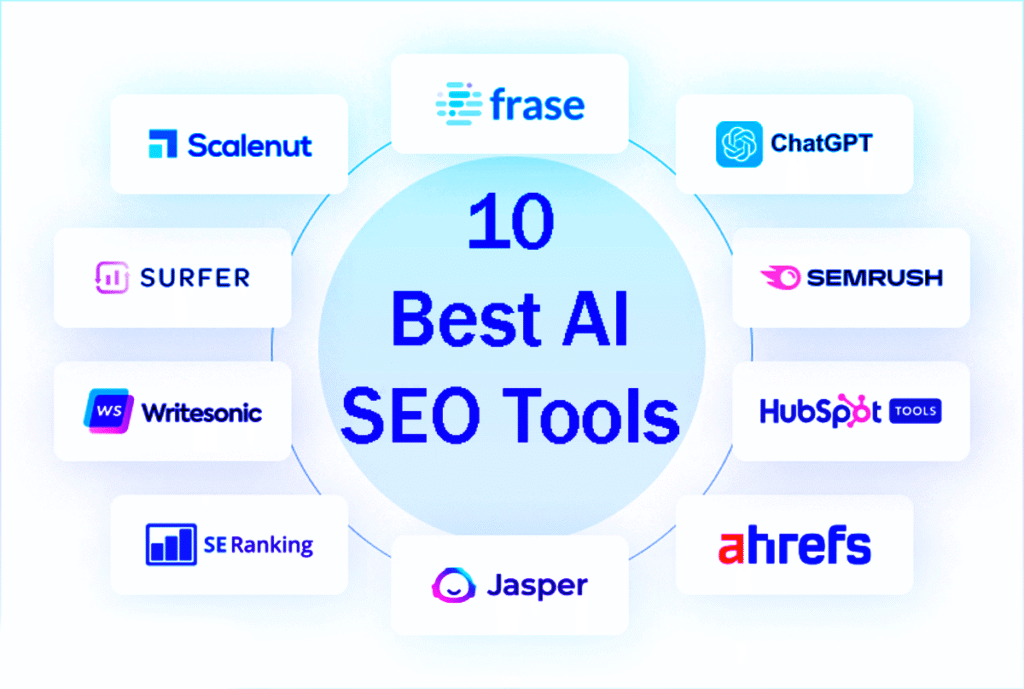





Explore the top 10 Best AI SEO tools of 2026, along with easy, step-by-step guides to maximize their features and see how they can benefit you!
I may receive commissions from links on this page because This Online Web is reader-supported. This does not affect my editorial assessments or viewpoints.
Most marketers keep a few SEO tools open throughout the day, including keyword tools, site auditors, and rank trackers.
While these tools remain important, the top AI SEO tools in 2026, you’re not just competing for a spot in traditional search results.
You are also vying for visibility on platforms such as ChatGPT, Perplexity, Gemini, Claude, and Google AI Overviews and AI Mode.
The goal of this guide is to compare the best AI SEO tools and demonstrate how they can be integrated with traditional SEO strategies to help future-proof your website’s content.
This approach addresses the need for a holistic SEO strategy.
The Top 10 Best AI SEO Tools to Use in 2026
If you prefer a quick overview, here is a short list I would review first.
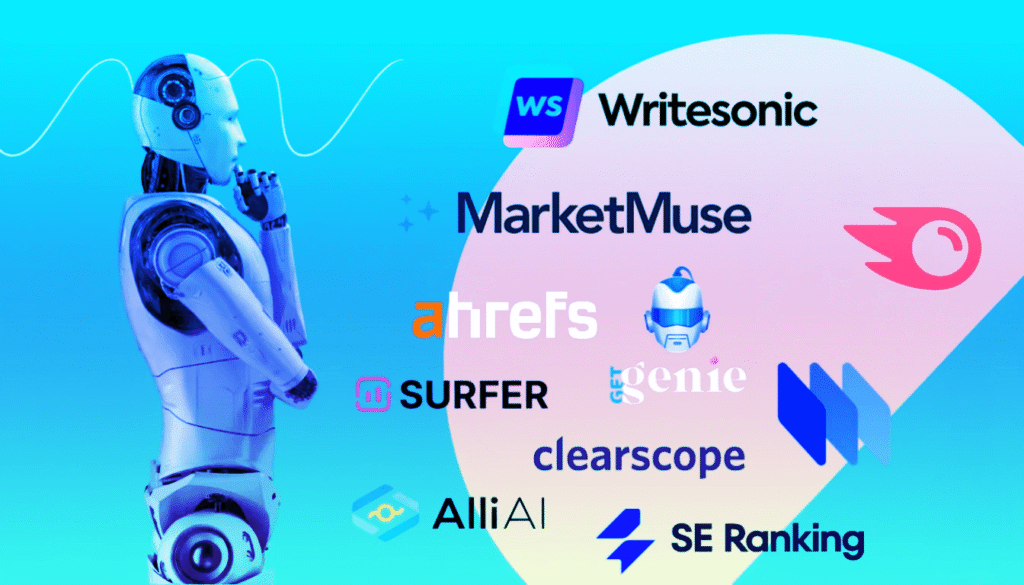
1. Semrush – With AI visibility tools for Google AI Overviews and AI Mode, Semrush is the ideal all-in-one SEO platform for most teams.
Check out Semrush’s AI Overviews study and Google’s AI Mode guide for more information.
2. Ahrefs – Renowned for its excellent resources on backlinks, competition analysis, and SERP analysis, Ahrefs provides solid data to support any AI workflow, although it is less focused on AI marketing.
See my comprehensive summary in the Top 5 Best SEO Tools.
3. Surfer SEO – This AI-powered writing and content optimization tool helps you design, develop, and enhance content that aligns with what is already ranking.
Use their Surfer AI and AI Detector for support, and explore the latest updates on Surfer AI’s AI Tracker.
4. Clearscope – If your team writes well and seeks accurate, AI-assisted recommendations, Clearscope provides best-in-class content optimization designed to help content rank highly in both AI and Google searches.
Learn more about their methodology at Clearscope.io.
5. Frase – This program combines AI drafting and SEO research, making it particularly useful for those who want a streamlined process that prioritizes both Google and AI search rankings from the planning stage through drafting and optimization. Check it out at Frase.io.
6. Your preferred AI model (like ChatGPT, Claude, or Gemini) is more of a co-pilot for outlines, FAQs, and content updates than a “traditional SEO tool.”
7. RankIQ: Improve Your Content, Find Low-Competition Keywords, and Get Writing Tips
8. Moz Pro Tools: Achieve SEO Success
9. MarketMuse: Improving Content Quality
10. Chat GPT: Unlocking SEO Potential with Conversational AI
Initially, you don’t need to use every tool mentioned here.
A solid foundational platform, along with one or two AI-powered content solutions that complement your existing workflow, will help you feel more in control of your SEO journey.
How AI Is Transforming SEO Tools (Simple Explanation)
Traditional SEO tools were primarily focused on helping you rank in blue links.
However, as of 2026, this role has divided into two categories:
Traditional SEO: This includes rankings, clicks, and conversions from Google and Bing search results.
AI Discovery: This includes references and mentions found in AI Mode, AI Overviews, and search engines such as Perplexity and ChatGPT.
Today, tools like Semrush track which websites are cited and the frequency with which AI Overviews appear in your niche.
Surfer’s AI Tracker monitors mentions in Perplexity, ChatGPT, and other assistants, while Frase focuses on content that ranks in Google and is mentioned by AI.
This is why I have been dedicating time to creating tutorials on topics such as programmatic SEO for the AI era, optimizing your website for AI search engines, and formatting blog posts to increase the likelihood of being cited by AI assistants.
Despite the evolving technologies, the core objective remains the same: to provide the most insightful response on a significant topic.
Before Buying Anything, Make Sure Your Core Stack is Solid
AI SEO tools are multipliers; they enhance solid fundamentals and strategies.
They do not fix a disorganized website or a poor content strategy. Thus, you can feel confident that they complement your existing efforts rather than replace them.
Before investing in AI add-ons, you should have:
A reliable all-in-one SEO platform (in my roundup of SEO tools, I compare Ahrefs, Semrush, and others)
A clear topic-cluster strategy based on entities, not just keywords. If you need a refresh, refer to my tutorial on entity-first SEO and how to build an SEO plan from scratch.
A process for updating content to keep your top pages current and competitive. If you don’t have a Content Refresh Playbook, consider using this one.
Basic technical hygiene practices, including fast hosting, proper cache and CDN configuration, and a mobile-friendly website.
Once established, AI technologies can become a true asset rather than just another subscription you regret.
Category 1: All-in-one SEO platforms with AI Visibility Tools
If you can only invest in one tool from this list, choose this category. Your primary SEO software should help you understand both traditional SERPs and AI-driven results.
Semrush is Currently The Best All-In-One SEO Platform in the AI era.
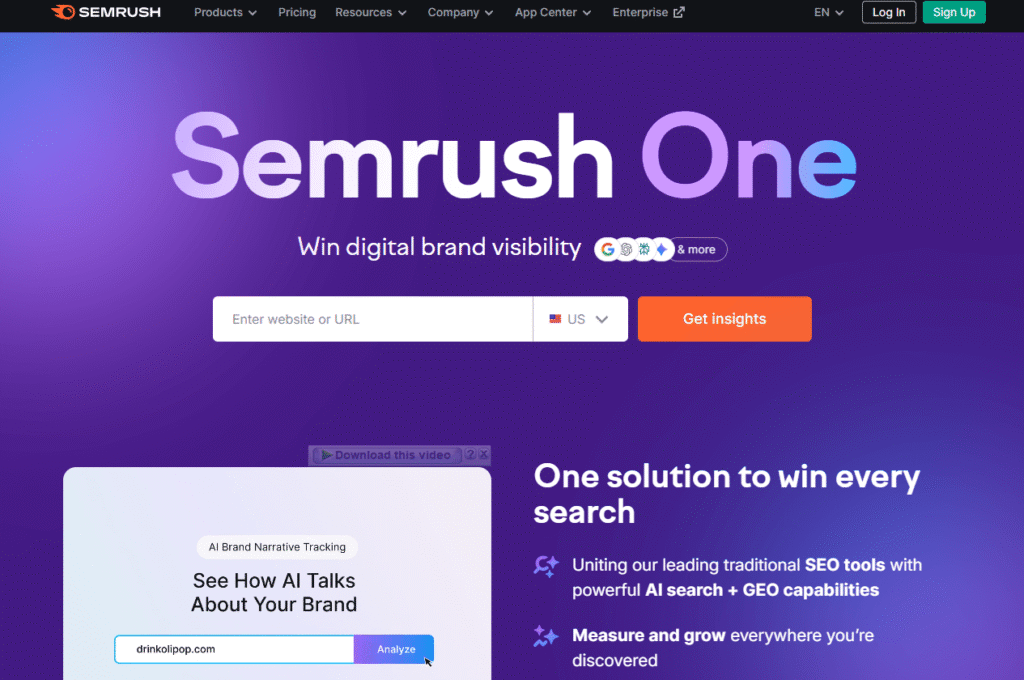
There’s a reason it has been recognized as a leader in its field.
Clustering and Keyword Research:
- Tracking rankings
- Technical health and site audits
- Analyzing backlinks
- Researching topics and content
The extent to which teams relied on AI for search varied significantly. Key areas of focus included:
- In-depth coverage of AI Overviews and their frequency in specific domains.
- The Semrush AI Overviews report summarizes research on the impact of AI Overviews across millions of queries.
- The Google AI Mode guide outlines new tools and dashboards.
- Workflows enhanced by AI support for reporting, content briefs, and keyword research.
Semrush is a strong option for SEO teams seeking insights into both traditional rankings and new AI-driven layouts.
For a comparison with Ahrefs and other tools, see my analysis of the best SEO tools.
Ahrefs: Provides Vital Competitive Insights That Are Perfect for Boosting Any AI Workflow
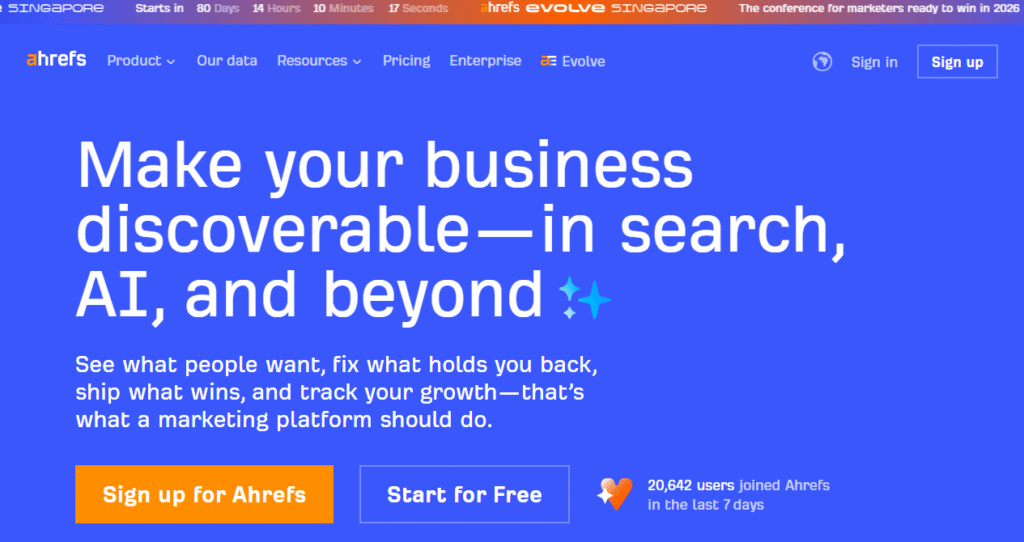
Ahrefs provides essential connections and competitive data for all AI workflows. Despite marketing “AI features” at a slower pace than some competitors, Ahrefs remains one of the most reliable data sources available for:
- Backlink profiles
- Identifying link gaps and content from competitors
- Historical traffic and rank data
- Advanced SERP analysis
This is significant for AI SEO as the websites most frequently referenced by AI tools typically have extensive content libraries and robust, diverse backlink profiles.
You can create fresh, high-authority content that ranks and receives citations by addressing your link and content gaps.
Ahrefs is an essential tool for identifying where AI-optimized content can have the greatest impact, even if it is not your primary content editor.
Category 2: AI Content Optimization Platforms
Marketers have observed notable changes during this period. Instead of writing in a blank document and guessing, you can now use tools that show, in real-time, how your material compares to current top results and relevant AI responses.
Surfer SEO and Surfer AI: AI-Powered Content Drafting and Optimization
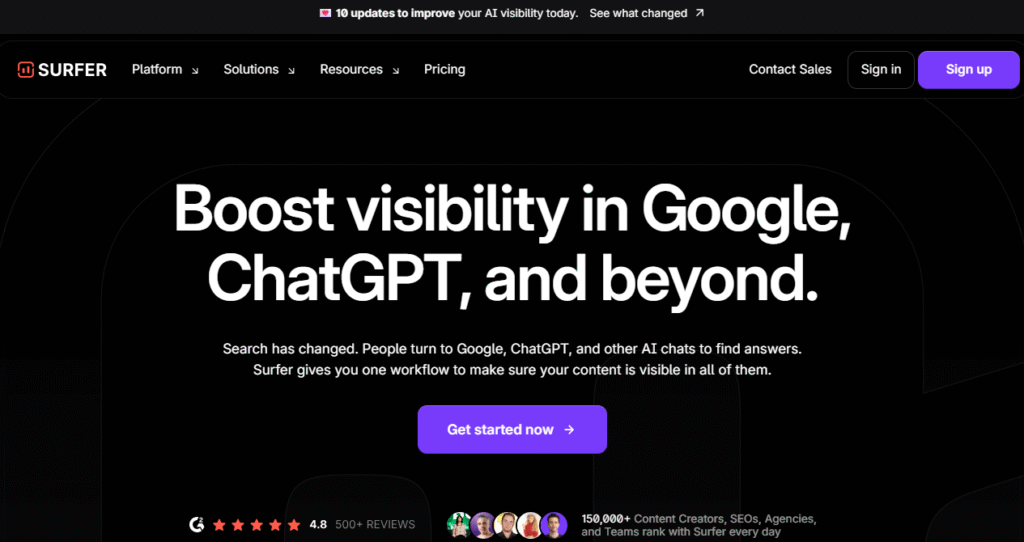
The core components of Surfer SEO include:
An optimization process that leverages content that already ranks for a specific term to enhance your draft.
Surfer AI, which generates optimized drafts for search engines that you can revise. More information can be found on Surfer AI’s website.
The AI Detector flags content that appears overly machine-generated.
The AI Tracker, which monitors instances where your work appears in overviews and AI assistants, as outlined on their updates page.
How to Use Surfer Without Compromising Quality:
Create an initial layout and a rough draft for the essential sections using Surfer AI.
Using my AI-friendly blog structure, rewrite key passages in your own words to ensure they are easily citable.
Utilize the Content Editor as a checklist to ensure important terms and subtopics are covered, rather than as a rigid guide.
Apply your own discretion and use the AI Detector to review your final draft, avoiding overly generic AI-generated content.
Surfer is most effective if you want to consistently develop and enhance each item in a data-driven manner while producing substantial amounts of content within the same topic.
Clearscope: Precise Optimization For Teams That Already Write Well

Clearscope focuses on helping skilled writers produce competitive content rather than serving as a standalone AI writing tool. Its strengths include:
Explicit suggestions for relevant titles, queries, and terms.
Grading content that encourages the production of thorough, readable pieces.
Integrations with WordPress and Google Docs to avoid being restricted to a different editor.
Clearscope can enhance your work with both AI and Google by:
Ensuring coverage of subtopics and co-occurring concepts that AI assistants seek.
Facilitating the creation of high-quality, well-structured content that is easy to quote and summarize.
Clearscope is a superior option to fully automated writers when you have a capable editing team and seek smart, AI-driven guidance.
Frase: Brief to Draft From AI SEO workflow
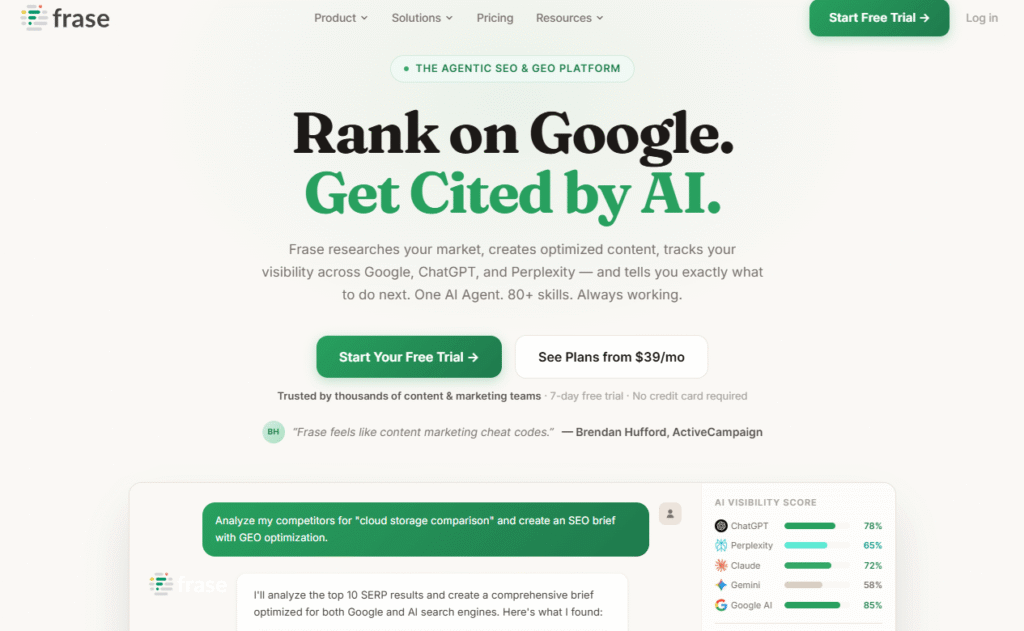
Frase is designed for producing content that ranks and is referenced by AI, targeting Google and AI search. Its ideal clients are teams that want a unified environment to:
- Research a subject and its competition.
- Utilize AI for outline creation.
- Draft content using the tool along with real-time SEO advice.
- Refresh previous posts based on changes in SERPs.
Frase is most useful when you want your team to create SEO content consistently at scale.
Keep in mind this rule from my programmatic SEO and AI guide: AI-generated text still needs editing, changes, and real examples to avoid being seen as thin content.
Type 3: AI Writing Assistants as Co-Pilots Rather Than Ghostwriters:
Category 3: AI Writing Assistants Serve As Co-Pilots Rather Than Ghostwriters
General AI models like ChatGPT, Claude, and Gemini are not sold as “SEO tools,” but they still support many modern SEO workflows by:
Creating clearer frameworks from unprocessed research.
Generating FAQs based on actual user inquiries.
Providing recommendations for heading structures that align with user intent.
By understanding these capabilities, you can effectively integrate AI writing assistants into your SEO strategy, enhancing both productivity and content quality.
Investigating Your SEO Strategy with AI Tools
Research Your Topic and Keywords
Use tools such as Ahrefs or SEMrush to explore your topic and identify relevant keywords.
Outline Creation
Utilize these keywords and entities to create an outline with the help of your AI model. Revise this outline to suit your needs.
Content Development
Write important passages yourself and use AI to highlight any ambiguities or omitted sub-questions.
Additional Content Elements
Generate alternate headlines, frequently asked questions, and meta descriptions with AI assistance.
Final Refinement
Use Surfer, Clearscope, or Frase to polish the final document, and include guidance on how to measure their impact for optimal SEO results.
Remember that while you can benefit from AI’s speed, you remain responsible for the quality, details, and real-world examples to ensure the content remains authentic and effective.
Category 4: On-Page Assistants and AI-Aware CMS Features
Several solutions now integrate AI capabilities directly into your CMS, enhancing speed and consistency, though they do not replace comprehensive SEO suites. For example:
In my HubSpot CMS review, I covered built-in SEO guidance, AI-assisted authoring, A/B testing, and analytics.
WordPress, combined with a quality SEO plugin such as Rank Math or Yoast, provides structure for managing metadata, schema, and titles.
For more information, see my evaluations of the top content management systems and my justification for using WordPress.
AI website builders are still best suited for simple websites, but many now include basic SEO tools.
If you’re considering one, check out “Best AI Website Builders in 2026” first.
Keep in mind that your CMS serves as the canvas, not the blueprint, for effective SEO.
AI assistants within your CMS can help your team confidently apply the strategies and structures you create, enhancing their skills.
RankIQ: Improve Your Content, Find Low-Competition Keywords, and Get Writing Tips
RankIQ is a new platform designed to help improve your content strategy by finding low-competition keywords that can boost your online visibility.
Unlike most keyword research tools, RankIQ also gives you writing recommendations to help make your content more engaging and effective.
The platform uses advanced algorithms to analyze both how easy it is to rank for keywords and how relevant they are to your audience.
This helps your content get found on search engines and connect with readers.
By focusing on both ranking and relevance, RankIQ helps increase reader interaction and keeps people coming back for more.
Moz Pro Tools: Achieve SEO Success
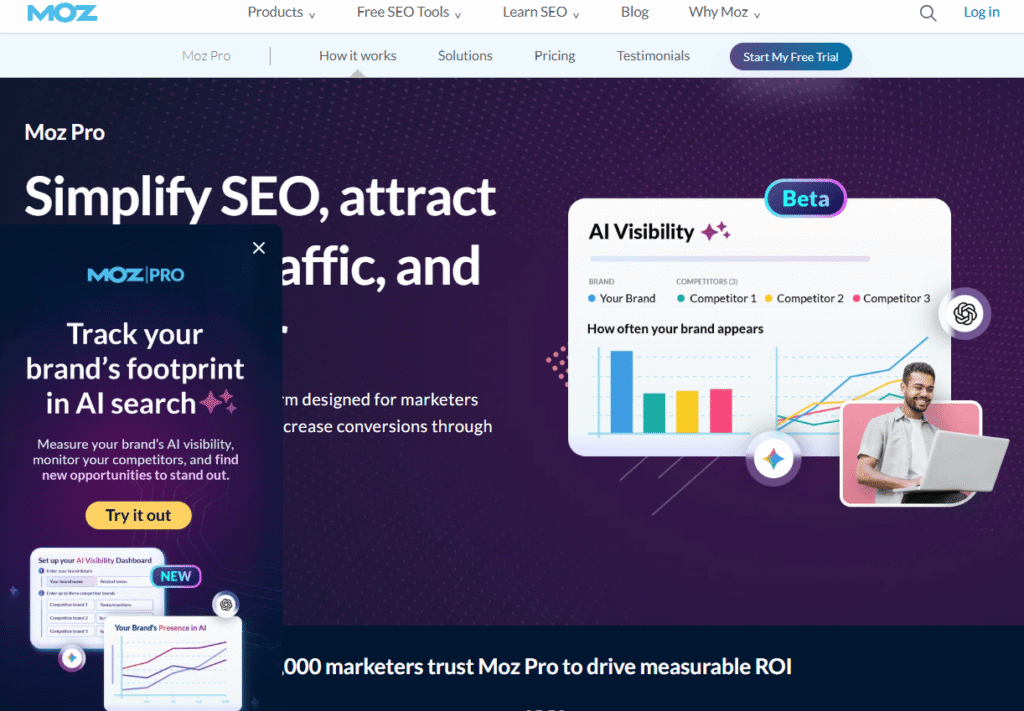
Moz Pro is a top digital marketing platform that provides a comprehensive suite of advanced SEO tools.
It includes tools for keyword research, link-building, and site audits, helping marketers better understand their online presence.
Moz Pro uses artificial intelligence to simplify data analysis, turning complex information into clear strategies.
This helps users make better decisions using detailed reports and insights.
The easy-to-use interface lets marketers improve their online visibility, attract more visitors, and build their brand.
MarketMuse: Improving Content Quality
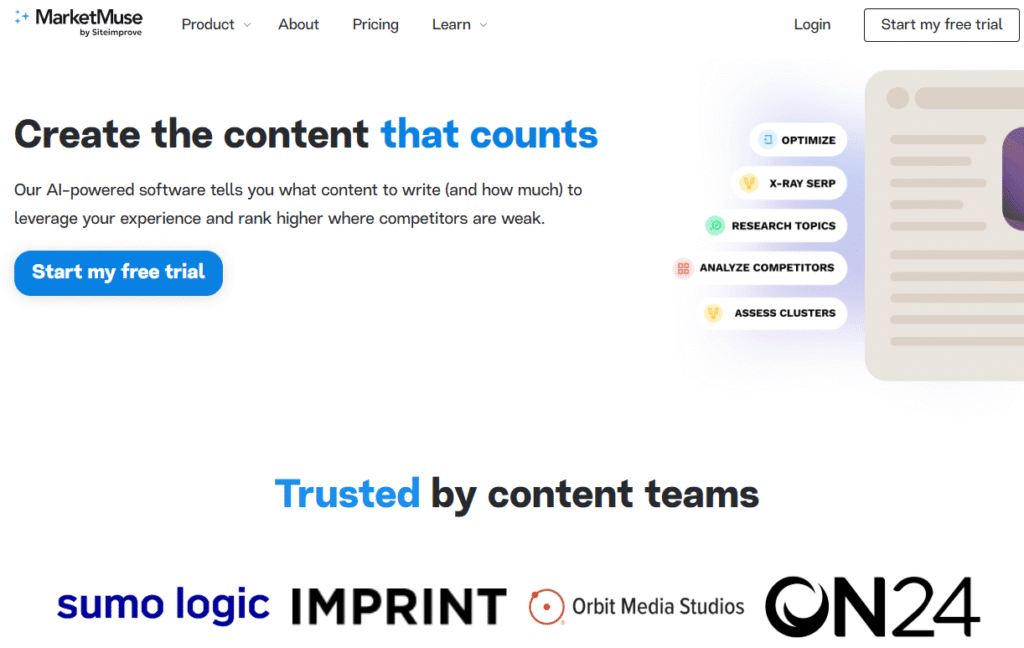
MarketMuse uses advanced artificial intelligence to carefully review and improve the quality of your content.
It offers personalized suggestions on topics that match your niche and are relevant to your audience.
MarketMuse helps you create detailed, useful content that stands out in a competitive market.
By helping your writing match your audience’s interests, MarketMuse builds your brand’s authority and trust in your industry.
Chat GPT: Unlocking SEO Potential with Conversational AI
ChatGPT is a flexible AI tool that helps you generate new ideas, create engaging content, and spot emerging search trends as they happen.
Its flexibility and creativity make it a valuable assistant for SEO professionals seeking new solutions and strategies.
With ChatGPT’s many features, users can stay up to date online, create stories that attract new audiences, and keep current users engaged.
This flexibility helps marketers stay ahead and keep their content both relevant and effective.
How to Choose the Best Stack of Right AI SEO Tools for 2026
Instead of asking, “What is the best AI SEO tool?” consider asking, “What purpose will I serve with this tool?” Your stack will vary greatly depending on your situation.
For Very Small Teams or Solo Creators
Priorities:
- One primary SEO platform (Ahrefs or Semrush).
- One AI content optimizer (Frase or Surfer).
- A general AI assistant like Gemini, Claude, or ChatGPT.
- This combination is sufficient to make a significant impact.
For In-House Marketing Teams
Priorities:
- The main analytics and AI visibility hub is Semrush.
- Use Surfer or Clearscope to establish team-wide standards and optimize content.
- Document workflows for using AI in briefs, drafts, and refreshes.
- Aim for clear quality standards, shared processes, and fewer tools.
For Content-Heavy SaaS or Media Brands
Priorities:
- An enterprise-level platform with insights into AI Overview and AI Mode, such as Semrush.
- Use Surfer or Clearscope for on-page optimization at scale.
- Implement programmatic templates and refresh cycles with Frase or a similar tool.
- Maintain a consistent refresh schedule to keep your top pages competitive with Google and AI.
At this level, the question is not “Which tool?” but rather “Are we using these techniques to improve revenue and rankings regularly?”
How to Use AI SEO Tools Without Risk or Dilution
There is no risk of Google penalizing you for using AI SEO tools; Google has emphasized that useful information is more important than production quality. The real danger lies in producing an excess of content that:
- Sounds repetitive.
- Fails to enhance the SERPs in any meaningful way.
- It is flagged as inadequate or useless during subsequent quality updates.
To avoid these pitfalls, structure your AI SEO techniques within this framework:
Focus on Entities and Intent
Use Semrush or Ahrefs to understand the search and AI ecosystem before determining the entities and queries you want to target.
Plan for Both Humans and AI
Design the post’s structure with both human readers and AI in mind. Refer to the default template in “How to Structure Blog Posts So AI Assistants Actually Cite You.”
Leverage AI as a Helper
Use AI tools to aid your thought process, not replace it. Allow tools like Surfer, Clearscope, and Frase to manage outlines, checklists, and drafts, but always include your insights, data, and real-life examples.
Refresh Rather Than Continuously Add
Run your primary SEO platform and top URLs through Surfer, Clearscope, or Frase quarterly to track progress and build confidence in your ongoing efforts.
Monitor AI Visibility Over Time
Use Semrush’s AI Overview and AI Mode reporting in conjunction with Surfer’s AI Tracker to identify which topics and URLs are visible and which are not.
By following this approach, AI SEO tools can help elevate your content quality rather than diminish it.
A Simple 60-Day Plan to Implement AI SEO Techniques
This practical method allows you to get started without overwhelming your team.
Days 1 to 15: Priorities and Baseline
Select or Verify Your Primary Platform: Choose between Ahrefs or Semrush as your main tool.
Examine Your Top 20 URLs: Focus on the URLs that generate the most revenue and traffic.
Test a Content Optimizer: From days 16 to 30, select one content optimizer from Frase, Surfer, or Clearscope.
Run three updates and create three new content items using this tool.
Analyze the effects on performance, coverage, and structure.
Days 31 to 60: Standardizing AI Workflows
Standardize your AI workflows to increase your confidence in managing AI tools effectively and consistently.
In briefings, drafts, and edits, note when and how AI can enhance your expertise and improve your results.
If you’re using Semrush, configure its AI visibility tracking, and set up Surfer’s AI Tracker if you opt for that tool.
Choose ten to twenty priority pages to monitor for AI citations and rankings closely. This will ensure your efforts are concentrated on the most impactful content.
By the end of the sixty days, you will understand which tools truly make a difference for your website, rather than speculating based on feature pages.
Frequently Asked Questions (FAQ)
Can I Utilize My Current Stack, or Do I Need a Specific AI SEO Tool?
Yes, you can achieve better results by combining smart processes with your existing tools.
However, having at least one tool that optimizes content in real time against current SERP data—while also providing insights into how AI-driven overviews or answer engines utilize your content—will give you a significant advantage.
Typically, using Semrush along with Surfer, Clearscope, or Frase is sufficient.
Will Using AI Writing Tools Result in Penalties from Google?
No, as long as you focus on creating helpful, people-first content according to Google’s guidelines. The problem arises when pages:
Don’t provide additional value compared to existing rankings.
They are designed solely to increase content volume, not quality.
It comes across as low-effort AI-generated spam.
To avoid penalties, adhere to the guidelines outlined in “Programmatic SEO in the Age of AI.”
Are AI SEO Strategies Enough to Receive Citations in Gemini, Perplexity, and ChatGPT?
Citations are not guaranteed by any tool. However, AI tools can:
Help you explore subjects in more detail.
Make it easier for AI to understand your content structure.
If you are already being cited, this will be displayed to you.
The rest of the information comes from the principles shared in my AI blog-structure playbook and AI search optimization guide.
What is the Minimal Stack You Would Suggest for 2026?
Keeping it simple, I would recommend:
Using Semrush as your primary platform for SEO and AI visibility.
Utilizing Clearscope or Surfer for on-page optimization.
Employing ChatGPT or another AI assistant for outlines, frequently asked questions, and edits.
Top 15 Best CRM Software: Follow Easy Steps
Top 11 Best Direct Mail Services: Follow Easy Steps
Top 10 Best Auto Dialer Software: Follow Easy Steps
13 Best Digital Asset Management Software Easy Steps
Best Monthly Web Hosting Plans: 5 Best Web Hosts