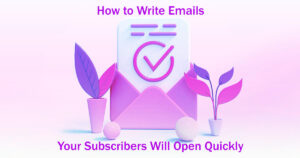


How to Write Emails Your Subscribers Will Open Quickly? Try these 8 easy steps to help more people open your messages. You’ll pick up useful tips for writing catchy subject lines, using smart email marketing techniques, and engaging your readers more.
No matter if you’re new to email marketing or want to get better results, these practical ideas can help you create newsletters people love and choose subject lines that stand out.
Some links in this post may earn me a commission, which helps keep This Online Web running thanks to readers like you.
Still, my opinions and recommendations are always my own and not influenced by these partnerships.
Marketing has changed a lot, and today’s challenges are more complex than ever.
As a marketer today, your job isn’t just to create great content.
You also need to know how to promote it and turn visitors into loyal email subscribers.
When done well, email marketing is one of the most profitable channels and often brings a better return on investment than other strategies.
It’s a key way to build your own audience—people you can contact whenever you want. This direct line is invaluable for building relationships and trust.
But getting subscribers is just the beginning.
It’s just as important to nurture the relationships you have with your subscribers.
Your real goal is to make sure your audience doesn’t just tolerate your emails—they actually look forward to them and can’t wait for the next one.
Today, traditional metrics like “average open rates” aren’t as reliable, especially since privacy features like automated image loading can make it hard to know who’s really engaging.
Instead of focusing on these sometimes misleading numbers, aim for more meaningful metrics like clicks, replies, and conversions. Use opens only as a rough guide.
Remember, features like Apple’s Mail Privacy Protection can make your open rates look higher than they really are, giving you a false sense of engagement.
Think about your own experience: would you be happy if only a small part of your email list actually cared about your content?
It’s important to remember that just opening an email isn’t real engagement.
What really counts are the clicks, replies, and other actions your emails inspire.
Many marketers feel frustrated by low interaction rates.
But if you avoid common mistakes and focus on sharing valuable, engaging content, you can see much better results.
Email marketing has a long track record of delivering great results, often beating industry benchmarks.
The biggest benefits show up when 50-60% of your active subscribers regularly engage with your emails.
In this post, I’ll share strategies to help you reach these impressive engagement levels.
8 Easy Steps to Follow: How to Write Emails Your Subscribers Will Open Quickly?
Let’s Set the Scene: What Happens After Someone Signs Up?
Congrats on turning a visitor into a subscriber! That’s a big win.
You probably offered them something valuable, like great content updates or a tempting lead magnet.
In today’s fast-paced world, it’s crucial to deliver that lead magnet within minutes of someone subscribing.
Most email services let you set up automations so you can send a welcome email or autoresponder right away.
Responding right away is key to building a real connection with your new subscriber.
It might seem like a small thing, but reaching out quickly really matters today. People’s attention spans are short.
A loyal reader might already know your brand, but most new subscribers are still getting to know you.
Sending your first email quickly can help build a lasting relationship—or, if you wait too long, your emails might end up ignored or in the spam folder.
Think back to a time when you accepted a free offer from someone you didn’t know.
If they delivered what they promised right away, you probably felt good about it. You knew who they were and why they contacted you.
But if there was a delay—even just a few hours or a day—you might have wondered, “Who are these people again?”
Keep in mind that your subscribers are careful about what lands in their inboxes.
Some might ignore emails from unknown senders, while others could get suspicious or annoyed if you’re not quick to follow up.
So, make it a priority to deliver on your promise as quickly as possible.
It’s a straightforward step, but it can have a significant impact.
After you’ve delivered what you promised, the next step is to set clear expectations.
Use your first follow-up email—usually the one people are most likely to read—to explain how readers can set their preferences, what kind of value they’ll get from you, and how often you’ll email them, whether that’s weekly, every two weeks, or monthly.
Being clear about these things helps build a strong foundation for a good relationship based on trust and engagement.
So, what should you share with subscribers when they first join your list?
How someone joins your mailing list shapes both the structure and tone of your first email to them.
If someone signed up for a specific offer, like a series of classes or a helpful guide, they probably know what to expect next:
regular updates or useful lessons sent straight to their inbox, designed to help them learn more.
For these engaged subscribers, it’s important to consider how often you email them and to use strategies that improve their experience.
You might ask them to add your email to their contacts so they don’t miss messages, invite them to reply with a quick hello, or let them pick their favorite topics using a simple preferences link.
Instead of only thinking about what’s in each email—like lessons, updates, or special tips—focus on making the whole experience smooth and interactive.
But if someone joined your list for a free report or course, they might not clearly remember signing up.
Right after signing up, new students get a warm welcome email to start their learning journey.
It’s designed to make new subscribers feel good and informed. In this email, he uses a few key strategies:
Personal Introduction: Brian introduces himself in a friendly, down-to-earth way, so subscribers remember who he is and feel connected right away.
Friendly Visuals: He adds a warm headshot of himself, which makes the email feel more personal and helps build trust.
Course Overview: He gives a clear and enthusiastic summary of his course, keeping it simple so new subscribers don’t feel overwhelmed.
Expectation Setting: He clearly states that this email marks the start of a series of lessons, so subscribers know what to expect from the beginning.
Strategic Positioning: By making this first email a key part of his strategy, Brian grabs the attention of almost every new subscriber and shows he’s committed to helping them learn.
Jon Morrow offers another important lesson, especially for those using one-time downloads as lead magnets, like his popular “Headline Hacks.”
He adds a reminder in each email’s postscript to help subscribers remember who he is.
Imagine a lively, engaging welcome email from Jon Morrow, a smart marketer known for his strategy.
This short postscript gently reminds subscribers what they signed up for.
It’s common for new subscribers to download your lead magnet, enjoy it, and then forget who you are after a few days.
When this happens, people can get confused, unsubscribe, mark your emails as spam, or reply saying, “I never signed up for this!”
By adding this simple reminder to your emails, you build stronger relationships with subscribers, get less negative feedback, and avoid confusion.
Now, let’s look at how to write emails your subscribers will look forward to.
Step 1: Start with an Engaging Subject Line
Once you’ve completed the setup, focus on crafting emails that capture your subscribers’ attention and keep them engaged.
Start with a subject line that stands out, interesting preview text, and a friendly sender name.
Think of your subject line like a blog post headline—this is your chance to be creative. It’s good to spark curiosity, but always make sure your message is clear.
Subject Line Strategy #1: Use Numbers to Grab Attention

If you’ve read my This Online Web blog, you know I enjoy using numbers in headlines, especially for lists. Numbers are eye-catching, easy to read, and naturally attract attention.
Even respected publications like The New Yorker recognize the power of numbers in headlines.
Things that break the pattern or stand out from the background grab our attention when we’re scanning for content.
Numbers break up a crowded list of headlines and stories, making them easier to notice.
A headline with a strong number is much more likely to stand out, get noticed, and lead to more opens and engaged subscribers.
Adding numbers to your subject lines is more than just a tactic. It’s one of the most effective ways to boost your email open rates, as long as your email content delivers on what the numbers promise.
Using specific numbers, such as “5 tips” or “3 strategies,” gives readers a clear idea of what to expect right away.
Subject Line Strategy #2: Spark Curiosity and Ignite Interest
Curiosity serves as a potent tool in email marketing.
It encourages readers to open your email because they want to learn something new.
Creating a great subject line takes creativity and some fine-tuning, but when you get it right, the results can be impressive.
The key is to grab attention with an interesting idea while keeping some details a secret.
This approach gets people interested without turning into clickbait, and encourages them to see what’s inside your email.
Imagine getting an email with the subject, “This one tactic drove 60,000 visitors to a new blog in just two months.”
You’d probably want to click and find out what made that possible.
This strategy leverages the appeal of “one-trick pony” promotions, but your content must align with the promise in the subject line.
Subject Line Strategy #3: Keep It Short
Studies show that shorter subject lines work better.
They’re easier to read quickly and less likely to get cut off on mobile devices, where most people check their email.
Focus on being clear and concise.
Cut out any extra words and get straight to your main point.
Short subject lines are easier to read and can pique people’s curiosity.
They get your message across clearly, which helps you connect better with your audience.
Subject Line Strategy #4: Use A/B Test with Different Subject Lines
Testing different subject lines is important for every email marketer, whether your campaigns are big or small.
Even small changes can make a big difference in how people respond.
The basics of A/B testing are simple: pick your best subject lines based on results like click-through rates or conversions, not just open rates.
Test only one thing at a time and make sure you have enough data for reliable results.
Start by sending different versions of your subject line to a small group of your audience.
Once you know which one works best, use it for your whole audience.
Many email marketing tools, like AWeber, let you test different subject lines, preview text, and sender names to see what works best.
Keep careful records of your tests, making sure each version has its own subject line and matching content.
Use the data you collect to decide which approaches your audience likes best.
Step 2: It’s All About Value — The Value Proposition
When new subscribers open your first email, remember that they’re looking for real value.
At this point, your relationship is still new and mostly transactional.
What you offer, whether it’s helpful information, a useful resource, or a practical tool, is exactly what they want.
Sometimes it’s okay to introduce your services right away, but you should be careful.
People are usually more open to promotions if they feel they’re getting real value in return.
But if your marketing feels too pushy or comes too soon, you might turn people away before you build a real connection.
Finding the right balance between offering value and promoting your services is key to building long-term relationships with your audience.
Think of every new subscriber like a new bank account, full of potential and opportunities.
Whenever you improve their experience by sharing useful insights, helpful resources, or interesting content, treat it like a deposit.
These deposits help your subscribers see your brand in a better light and build their trust in you.
On the other hand, if you push a hard sales pitch or don’t keep your promises, it’s like making a withdrawal from that account.
If you take out more than you put in, you risk losing that account, which means losing trust and engagement.
Building trust takes time and steady effort, more like running a marathon than a sprint.
To earn this trust, keep giving real value that matters to your subscribers. Helps them see you as someone they can count on.
Your subscribers should feel that you genuinely want to help them, not just sell to them.
He’s built a strong reputation by sharing in-depth guides and unique content you won’t easily find anywhere else.
His blog covers viral marketing and has attracted a large audience, making him a respected expert in his field.
When Glen sends out an email, his subscribers look forward to getting helpful tips to improve their marketing.
Because he always focuses on delivering value, his audience feels respected and informed, leading to high engagement.
To give value fast, try sharing a useful story, a simple template or checklist, or a short video tutorial.
Make sure you’re adding value to your relationship with subscribers before you ask them for anything.
Step 3: Personalize Your Customization
Building relationships with your subscribers is a lot like getting to know new people.
As you share personal stories and insights over time, your subscribers get to know you better, and your connection grows stronger.
At first, you and your subscribers might share an interest in your topic, but over time, your relationship can become much more meaningful.
Share Personal Stories to Foster Connection and Understanding
To build this relationship, try sharing more of your own stories.
One of the best ways to connect with your audience.
Emails are a great place for this, just as friends share personal stories in casual messages rather than formal posts.
These stories give readers a peek into his life and also share useful lessons that connect to his main message.
Try writing a sample email that shows a high level of personalization.
Talk to One Person: Add Personality
Speak with One Person and Infuse Personality. Your subscribers want authenticity.
They prefer a conversational tone over a formal, corporate one.
Write your emails as if you’re chatting with a friend.
Use direct words like “you” and “I,” and don’t be afraid to add some of your personality or casual language.
If you’re struggling with the right tone, try writing your email in Gmail as if it’s a private chat.
Once you’re happy with how it sounds, copy and paste it into your email platform.
Be smart about using personalization tokens, and always have a backup in case the main details aren’t available.
Also, group your audience by what they’re really interested in, not just by their names or basic info.
If You Hurry, You’ll Upset Others
Don’t rush into building deeper relationships too fast.
People usually value depth over speed when building relationships, as in the famous scene in “How I Met Your Mother” where Ted Mosby says too much on a first date.
It takes time to build a real connection. Share your personal insights little by little—new subscribers don’t need your whole life story right away.
Instead, share a small detail that shows something interesting about you, like a fun fact or a quick story that gives a peek into your personality.
Step 4: Write Cliffhangers
Use curiosity to your advantage by adding cliffhangers to your emails. Readers love suspense and look forward to what’s coming next.
Think of each email as a chapter in a larger story, flowing smoothly into the next.
End your emails with a hook or a bit of suspense that hints at what’s coming in your next message.
For instance, you might say, “In my next email, I’ll reveal the strategy that drove a remarkable 50% increase in traffic in just one month.”
Cliffhangers like this keep readers excited and eager to see what happens next in your story.
Creating Compelling Cliffhangers in Email Marketing
Cliffhangers are a great way to keep your audience interested and engaged in your email marketing.
One effective method is to explore a topic your subscribers are already curious about.
This approach grabs readers’ attention and leaves them eager for the next email, thereby increasing engagement.
He teases his audience with a hint about a pricing strategy that could triple their revenue.
By saving the details for the next email, he encourages readers to keep following along.
This simple cliffhanger keeps them curious about what comes next.
You can also use subtle hints in your emails to create gentle cliffhangers.
Ramit Sethi does this well by asking questions that make his readers think.
This approach gets readers more involved and makes them look forward to his next emails, as they wait for his answers or insights.
Step 5: Make Your Emails Into Two-Way Conversations
Let’s look at an important question:
Do you really value what your subscribers think?
Hopefully, your answer is yes.
If you want to help your audience, ignoring their feedback won’t get you far.
Sadly, many email lists feel like one-sided conversations where the sender talks and the readers listen. This approach doesn’t work well.
So, how can you fix this? The answer is to engage your readers and start real conversations.
Many marketers find it hard to get subscribers to join in.
It’s like when a teacher asks a question, and the whole class stays quiet, waiting for someone else to answer.
But there’s a better way to get real engagement.
Here are the main reasons why subscribers don’t respond:
Reason 1: They’re Afraid of Being Wrong
Even if you’re an expert, your subscribers might be afraid to share their thoughts because they don’t want to be wrong.
To help with this, try these ideas:
Allow anonymous feedback: Give people the option to share their thoughts without using their names.
For example, you can share a Google Form link so subscribers know their answers are private. Makes them more likely to be honest.
Share your own struggles: Talk about your own challenges with the topic to make your content more relatable.
Saying things like “Not many people get this right on the first try” can help readers feel more comfortable and willing to join in.
Provide other ways to give feedback: For example, invite subscribers to leave comments on your website instead of replying to your emails.
Helps people feel included without feeling rushed to respond right away.
Reason 2: Clear answers
Sometimes, you might ask questions that seem obvious to you, but your subscribers might not answer because they think their input doesn’t matter.
The main point: don’t try to trick your audience into joining in.M
Instead, ask questions that matter to them and match their interests.
Reason 3: Irrelevant Responses – They Don’t Care About the Question
Sometimes, marketers ask off-topic questions, which can make readers lose interest.
Remember, readers are more likely to respond when your questions match their main interests and the topic of your emails.
Reason 4: Feeling They Are Insignificant
When your list is big, people can feel anonymous and disconnected from the group.
To help with this, try reaching out to smaller groups within your list to make them feel special.
Instead of asking everyone, “What tactics have you used to boost your conversion rate?” try a more specific question:
“What specific strategies have you implemented that yielded immediate results?” Makes people feel their unique ideas matter.
When you encourage real conversations and thoughtful engagement, you build a lively community of readers who connect with your content and want to share their own ideas.
This kind of engagement will improve your email marketing and help you build long-lasting relationships with your subscribers.
What strategies can you implement to significantly enhance your conversion rate if you manage a website that attracts over 20,000 monthly visitors?
A good way to improve results is to make your communication more personal.
When you adjust your messages to connect with each person, you help visitors feel like they belong.
It can turn casual visitors into active members of your community.
Building this kind of connection makes people more loyal and more likely to come back, since they feel noticed and appreciated.
You can also make readers feel important by involving them.
For example, you might feature their ideas in a future email or blog post.
Asking for input shows you care about their opinions and helps start a real conversation.
This kind of back-and-forth can make your audience feel like they play an important role in what you create.
Make sure your audience never feels ignored or that their feedback is overlooked.
Always let people know you value their thoughts.
At the very least, show that you appreciate their ideas and take time to read every message.
Replying to people can take time, but it’s one of the best ways to build real relationships and keep your audience loyal.
Step 6: Understand That Bigger Isn’t Always Better
In email marketing, longer messages can work for some people, but you shouldn’t assume they’re always the best choice.
Some marketers do well with emails over 1,000 words, but longer content only works if it’s interesting and useful.
If people read a long email and don’t find much value, they’ll be less likely to read your long emails in the future.
Sending long emails several times a week can overwhelm your audience, especially if the content isn’t engaging.
Writing long, well-organized emails takes time and skill. Marketers who succeed with long emails are usually strong writers.
If your message isn’t especially important or interesting, it’s usually better to keep your emails short and to the point.
Short, focused emails let people scan, click, and take action quickly. Especially important for mobile users, who may find long texts hard to read.
Step 7: Focus on Readability Instead of Looks: Function Over Form (Make It Readable)
You might learn a lot by looking at your email bounce rates. They can tell you how well your messages are working.
Even well-written emails can fall flat if they’re hard to read or slow to load.
Tip 1: Go Fancy Formatting And Light on Images
Blog posts often use visuals to look better, break up text, and highlight key points. But with emails, it’s better to keep things simple and focus on clear writing.
Avoid sending entirely image-based emails, and ensure the ALT text accompanying graphics is both descriptive and informative for those who may not see the visuals.
Large graphics can obscure your main call to action and slow email load times, especially on mobile devices with varying internet speeds.
Choose simple, clear layouts that highlight your main message.
Tip 2: Optimize Your Format for All Devices
Approximately 50% of all emails are accessed on mobile devices, though this percentage varies by audience.
So, it’s important to make sure everyone can access your content easily.
Ensure that your emails are compatible with dark mode and smaller screens.
Don’t use complex CSS, as it might not render correctly in many email clients.
By making these changes, you’ll help more people engage with your content, no matter what device they use.
Recommended Practices for Mobile-Friendly Email Formatting

To make your emails easy to read and engaging on mobile devices, try these best practices:
Optimize Line Length and Wording: Write clear, concise sentences that are easy to follow.
Begin with important keywords to grab your readers’ attention right away, and avoid using long or complicated phrases.
Keep your lines between 40 and 75 characters so your emails are easy to read and important information stands out.
Limit Image Use: Adding visuals can strengthen your message, but too many images can cause formatting issues and slow page load times on mobile devices.
Also, using too many images can trigger spam filters and cause your emails to be missed.
Pick a few high-quality images that support your message instead of overwhelming your text.
Ensure High Contrast and Dark Mode Compatibility: Clear visuals are key for effective emails.
Make sure there is a strong contrast between your text and background colors so your emails are easy to read.
Since many people use dark mode, test your emails in both light and dark settings.
Adjust your colors if needed to keep your emails readable and visually appealing.
Use Button-Style CTAs: Bold, button-style calls to action that are easy to tap on small screens.
Make your buttons at least 44 pixels tall and use action words like “Shop Now” or “Learn More” to encourage clicks.
This approach makes your emails easier to use and can help increase your click-through rates by giving users clear options.
Provide a Plain-Text Version: Always include a plain-text version of your emails to make them more accessible and easier to deliver.
Helps you reach more people, including those whose email clients do not support HTML.
A plain-text version ensures your message gets through, no matter which email service your recipient uses.
Tip 3: Make Links Clear and Easy to Click
Because your emails often guide readers to a webpage, it’s important to make your links easy to see and use.
Small links are hard to tap on mobile screens, so making your links more visible can help boost your click-through rates.
Strategies to Enhance Link Visibility:
Separate Each Link: Put each link on its own line to make tapping easier and reduce accidental clicks.
Bold Your Links: Make your clickable text stand out by bolding it.
Diverse Anchor Text: Use several links with different anchor texts in the same email.
Gives readers more context about what to expect and can help increase engagement.
You can easily add these strategies to your email layout.
For example, I like to use three different anchor texts that all link to the same place, with one link standing out on its own line for extra emphasis.
Step 8: Deliver on Your Claims and Maintain Consistency. Send Consistently
You start building trust with your subscribers as soon as they sign up for your newsletter.
Be clear about what your subscribers can expect from your emails, including how often you’ll send them and what they’ll contain.
Consistency matters. If you avoid emailing your audience frequently, they could lose interest and stop engaging with your brand.
Aim for a schedule you can keep up with. Weekly emails often work well, so stick to that.
When your audience looks forward to your emails, make sure your content matches what you promised in your subject lines and insights.
It’s also crucial to consider what occurs when someone clicks a link in your email.
If the page they land on doesn’t meet their expectations, you could lose their trust.
However, when your links direct them to a page that fulfills or surpasses their expectations, you strengthen your relationship with your audience.
For example, Brian Dean gets high engagement from his audience even though he only sends emails once a month.
His subscribers remain interested and loyal because he consistently shares useful, informative content.
Being honest about where your links lead is important. Even if it means fewer clicks, it’s better than misleading your subscribers with big promises.
Chasing quick wins can be tempting, but it often results in decreased engagement over time.
In Conclusion
Email marketing is still one of the best ways to grow your audience and boost sales.
As you use these eight strategies in your campaigns, remember they are guidelines, not strict rules.
Adjust these basic principles to fit the unique style and needs of your emails.
Keep providing real value, personalize your messages thoughtfully, and make sure your emails are delivered reliably.
If you stick with these practices, you’ll build a more engaged subscriber list and see better results for your business.
10 Best Tools to Track Your Brand With AI Overview & Chat Assistant
8 Easy Steps: How to Remove Personal Information From Google
How to Remove Google Search Results: Follow 9 Easy Steps
6 Easy Steps: How to Test New Marketing Channels Find More
20 Ways To Social Proof Your Brand For Marketing Success