




Here are 8 easy ways to create content that Google wants to rank and that can help you rank higher. You’ll find tips on understanding Google’s ranking factors, improving your content quality, and using SEO best practices, including keyword research and a strong content structure.
You’ll also learn how to write for people first, build your authority, and make sure your site works well on mobile devices.
We’ll cover how to promote your content and track its performance.
Whether you’re updating old posts or aiming for top search rankings, these strategies will help your blog posts stand out and improve their ranking organically.
Some links in this post may earn me a commission, since This Online Web is supported by its readers.
Still, my opinions and recommendations are always honest and unbiased.
Might not be what you want to hear, but your content might not be ready for a top search engine ranking yet.
Out of all the search results, only one can take the top spot.
Google and other search engines aim to show users the most relevant and helpful content for their questions.
Google’s algorithm has become much more advanced over the years.
It considers many factors to assess how useful, detailed, original, and relevant a web page is.
It also checks if the content shows real experience and expertise on the topic.
With recent updates, Google has improved how it measures its search results, using search quality raters and specific criteria.
These assessments don’t directly set your website’s ranking, but they help Google improve its ranking system.
It’s no surprise that top-ranking content always meets high-quality standards.
In the past, people could boost their rankings with backlinks or technical tricks, even if their content wasn’t great. That doesn’t work anymore.
Recent updates now target manipulative tactics such as mass-producing AI-generated content, abusing expired domains, and misusing site reputations.
Google’s main algorithm updates now focus more on ranking people-first, helpful content.
So, content that’s truly helpful and based on real experience gets rewarded, while weak or copied summaries lose visibility.
I understand how tough it is to lose the rankings you worked hard for.
It’s normal to feel discouraged when your traffic drops after losing the top spot.
But this is a good chance to reflect.
Does your content truly deserve the #1 spot?
Maybe it did before, but now a competitor has created something more valuable.
The good news is, with effort and creativity, you can win back your spot.
How? By making your content as thorough, helpful, and reader-focused as possible.
Focus on giving real value, without extra fluff or filler.
Putting in the work is worth it, since a lot of website traffic still comes from organic search.
Now, let’s look at the best ways to create content that targets your keywords.
I’m ready to share five strong methods to improve your content and boost your search traffic.
When you pair these with smart marketing, your website can grow a lot.
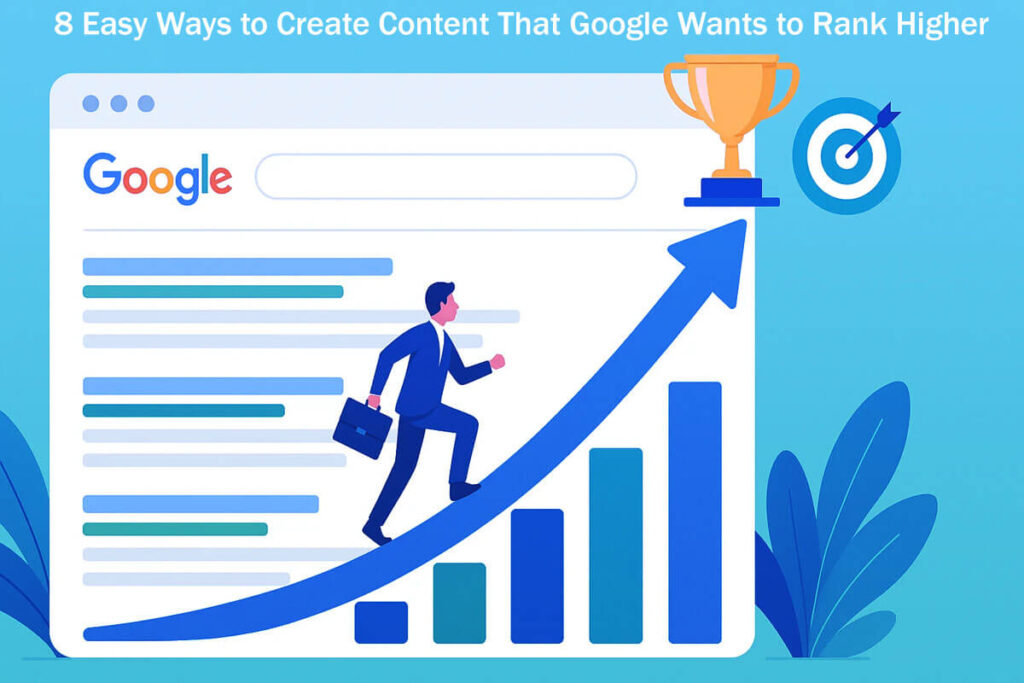
8 Easy Ways to Create Content That Google Wants to Rank Higher
1. Bigger is Usually Better
First, keep this in mind: longer content is often more helpful.
Think about when you’re looking for advice on something complex, like email marketing or SEO.
Which would be more helpful to you?
A short list with three vague tips, or a well-researched list with over 20 practical ideas and insights?
Most people find detailed information more valuable.
Making your content longer and deeper is often the easiest and best way to improve it, especially if you add fresh ideas, strong examples, and facts your readers can’t find elsewhere.
But just making your content longer doesn’t automatically make it better.
In fact, many studies show that in-depth content that really answers what users are looking for ranks higher and gets more engagement than shallow posts.
In my experience with This Online Web, longer and more detailed posts generally generate higher engagement on social media platforms such as Facebook and X (formerly Twitter) than shorter posts.
The truth is, people are more likely to share detailed content.
That’s why many (This Online Web) articles go deep into topics and often rank high in search results.
To make your posts better and more detailed, try these two main strategies:
Option #1 – Add more items: Expand your list of tips. If your post is titled “8 Ways to Improve X,” expand it to 20 practical ideas.
Do solid keyword research to find out what people want to know and what they value.
If you want your content to connect with your audience, start by finding keywords that include strong, interesting words.
These should spark curiosity and encourage people to get involved.
Try using strong words such as:
- Advice: Tips and guidance to help people make decisions.
- Tactics: Practical steps you can take to reach a goal.
- Strategies: Plans that show how to achieve long-term goals.
- Concepts: Basic ideas that support different topics.
- Methods: Step-by-step ways to get things done well.
Using tools like Google Keyword Planner can really help you research these words.
When you combine these phrases with your specific niche, like marketing, SaaS, health, or another area, you can find great new content ideas.
For example, looking into broad phrases like “health tips” can help you find lots of popular keywords with little competition.
These are perfect for creating list-style posts that attract more readers.
When you use Google Ads Keyword Planner, make sure to be thorough.
Look at each keyword one by one and check which pages rank highest in the search results.
If you see that the top posts are missing details or aren’t very thorough, that’s your chance to create better content. Focus on clarity, detail, and completeness.
Option #2 – Add more detail: Another good approach is to include more useful, detailed information in your posts.
Many list-style blogs skip important details.
A tip like “weigh your food” doesn’t help much unless readers know why it matters, how to do it, and what tools they need.
Which would you find more helpful: a vague statement or one with clear examples, step-by-step instructions, and advice you can use?
To make your content more valuable, use recent search engine results pages (SERPs) as a guide.
Look for weaknesses in your competitors’ content, then fill those gaps by explaining the steps, giving context, and showing proof.
Instead of focusing on just one “top” search result, which often changes, aim to create a strong, comprehensive resource.
Bring your content to life by adding vivid elements like:
Colorful photos of tasty meals or balanced food portions that grab attention.
Sample meal and snack schedules that readers can easily add to their daily routines.
A complete grocery list to make shopping and planning easier.
Unique food pairings or helpful tips that surprise and teach your audience.
To make your content more trustworthy and relatable, share personal stories or proven methods.
Using both strategies, by adding extra advice and detailed information, can turn an average post into a great resource that deserves a top spot in search results.
2. Assist Readers in Navigating Complex Topics
Also, help your readers navigate complex topics.
Remember how confusing it was when you first learned about digital marketing? It can feel like there’s too much information.
The initial eBooks or guides you encountered may have raised more questions than they answered, leaving you uncertain about where to focus your efforts.
The good news is you can do better. By clearly introducing new topics and guiding readers step by step, you build trust, attract backlinks, and achieve strong rankings, often better than competitors who only offer surface-level insights.
To enhance comprehension of your content, adopt these three efficient strategies:
Option #1 – Make it clearer:
Simplify complexity: Break down difficult ideas into smaller, manageable parts. Focus on one idea at a time and use simple language.
Add short TL;DR summaries and “What you’ll learn” sections to catch the attention of readers who like to skim.
For example, instead of covering the broad topic of “how to succeed in marketing,” focus on a specific subtopic, such as crafting compelling email subject lines, and explore it in depth.
Use creative comparisons: Try analogies, similes, and metaphors to make complex ideas easier to relate to and understand.
These tools can turn abstract ideas into clear, approachable content, making them easier to understand and remember.
Diversify Your Examples: Present your topic through multiple lenses, using effective analogies and concrete examples.
This approach helps your readers better understand your message, leading to greater engagement and better retention.
Implementing these strategies enhances your content’s value and engagement, making it more noticeable in a crowded digital environment.
Some comparisons are brief and capture just one moment, while others run through an entire piece and connect different ideas.
Each type has its own purpose and can strongly affect how readers understand and engage with your writing.
For example, a growth hacking guide compared the marketing funnel to a car’s oil funnel to illustrate how traffic flows and explain the concept of growth.
This kind of analogy turns abstract ideas into something readers can picture and understand more easily.
When readers picture the funnel as a tool that guides and filters information, they can see why it’s important to lead customers through a clear, step-by-step process.
When you introduce new ideas, using familiar, everyday examples is one of the best ways to teach.
Concrete examples give readers practical tips they can use right away, helping them move from theory to practice.
For example, when talking about improving email open rates, I didn’t just share theories.
I also included practical examples, like a clear screenshot from a recent email campaign.
This visual proof supported my points and helped readers connect the ideas to real results they could see and understand.
I also share my own statistics to show how detailed writing can boost reader engagement.
Sharing personal insights helps me stand out and build trust with my audience, leading to stronger connections and better conversations.
Option #2: Correct Outdated or Incorrect Information
Sorting through all the online content can be tough, especially when you need to remove outdated or incorrect information.
But online, accuracy is often overlooked, so outdated or wrong information can stay in search results and mislead people.
In SEO, strategies that used to work can slow you down.
To stay current and maintain credibility, it’s important to update your webpages regularly so your content reflects the latest information and best practices.
Instead of just trying to beat your competitors, focus on what makes content successful today: depth, creativity, and strong evidence.
When you focus on these things, you’ll see that high rankings depend not just on being fast, but on giving users timely, relevant information that meets their needs.
Option #3: Showcase Experience
Whenever you can, make your content better by sharing your own experiences, adding clear screenshots, and showing real results.
Looking ahead to 2026, the difference between good and great content will depend more on showing real examples that connect with your audience.
Share your experiments, the surprises you faced, and the strategies that worked best for you.
3. Zune or iPod: Which Would You Choose?
For example, think about the tough competition between the iPod and the Zune during the MP3 player boom about 15 years ago.
Apple released the iPod Classic and iPod Touch, joining a market that already loved their new features.
Some fans thought the Zune had better features, but it lost out because it wasn’t as well-designed or easy to use, which mattered most to buyers.
Apple’s sleek devices, with their simple design and ease of use, won over consumers and became known for their high-tech features.
In the end, the iPod won, and the Zune faded away.
The lesson is clear: how you present something really matters.
A good-looking, well-designed website makes your content more enjoyable, just like a well-made gadget can affect what people choose.
Even great ideas might not connect if they aren’t presented well.
How you present your content can really affect how people respond to it.
Two articles with the same information can get very different reactions just because of differences in style, layout, and visuals.
Formatting Strategy #1: Integrate Images
Add Images: One of the best ways to improve your content is to add carefully chosen images, especially ones you made yourself.
Big blocks of text can look overwhelming and remind readers of heavy textbooks.
By choosing and adding images that fit your story, you clarify your points and give readers a visual break, making the reading experience more enjoyable.
Images can break up text, grab attention, and help you connect better with your audience, making your ideas more memorable.
People often say that we process visuals “60,000 times faster than text.” While this number might be an exaggeration, it does show that well-chosen visuals can make information much easier to understand and remember.
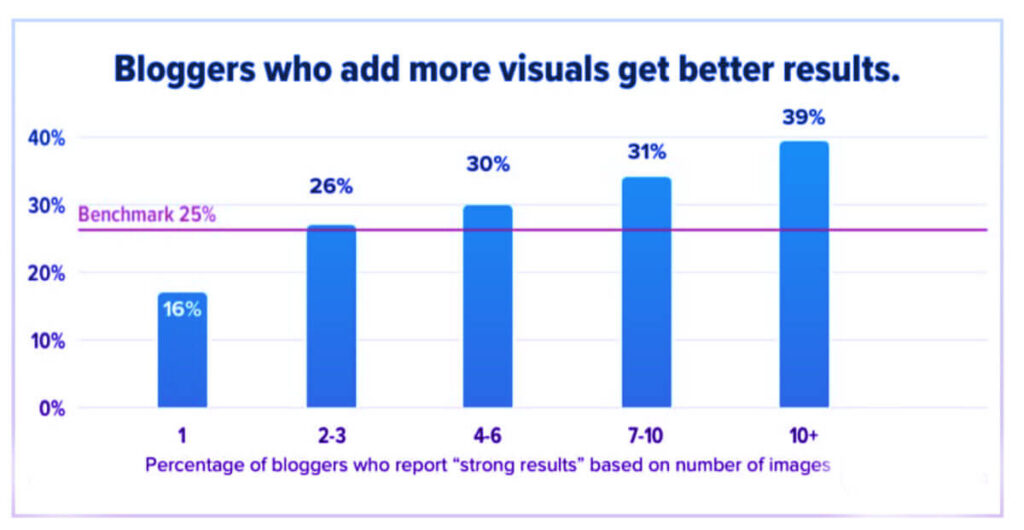
Adding the right visuals to your content isn’t just about making it look good.
It also helps your audience connect with and better understand your message.
There’s no set rule for how many images to use in a post, but research shows that articles with strong visuals usually get more engagement, shares, and better user retention than those with only text.
Still, it’s important not to overload your content with too many graphics. Focus on adding visuals that truly help explain your points.
Good visuals might be clear charts that explain complex data, up-to-date screenshots that show your point of view, or unique graphics that highlight your main ideas.
Here are some of the best types of visuals to use:
Informative Graphs and Charts: These help you share complex data and trends in a way that’s easy to understand quickly.
Personalized Images or Screenshots: Custom images that show your own experiences can make your content feel more relatable and help readers connect with you.
Stock Images (Used Sparingly): If you choose carefully, good stock photos can enhance your content without distracting from your message.
Infographics: These can break down complex information into simple, easy-to-remember visuals that your audience can quickly understand.
Cartoon-Style Illustrations or Comic Images: Fun or creative drawings can catch readers’ attention, make your content more enjoyable, and encourage people to share it.
Making your own graphics can take more time and effort, but the results are often worth it.
Custom visuals can boost engagement, increase your content’s sharing, and help it reach a wider audience.
Luckily, today’s easy-to-use design tools let anyone create great visuals, even without a design background.
Formatting Strategy #2: Create a Unique Layout
Create a custom layout: To make your content stand out, try moving away from standard blog layouts.
A custom layout can help highlight important information and make your content easier to use, giving readers a better experience.
This approach might take more time and effort, but it’s especially helpful for longer pieces, such as detailed guides.
So, what makes a layout custom? Most blogs use a standard structure, which is fine for regular posts.
A distinctive design can boost your content’s appeal and ease of use, attracting both readers and search engines.
Many blog posts use a basic format, which works for everyday content.
However, if you want to impress your readers and do well in search results, it’s important to avoid repeating the same patterns.
For example, Brian Dean updated his link-building guide on Backlinko by adding a clear table of contents, interesting fonts, and creative backgrounds.
A great example of good layout is Backlinko’s guide, which uses a clear table of contents to help readers find what they need easily.
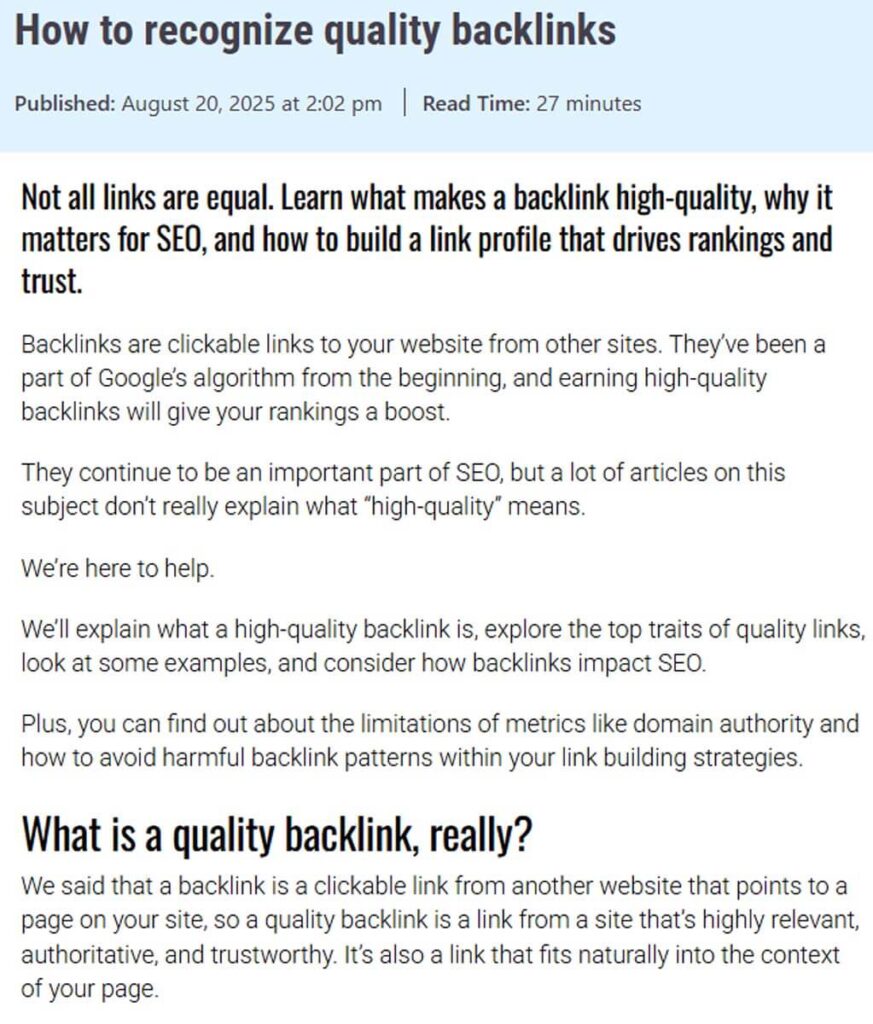
Dean also uses different fonts, bright color blocks, and plenty of white space, making the design both attractive and easy to use.
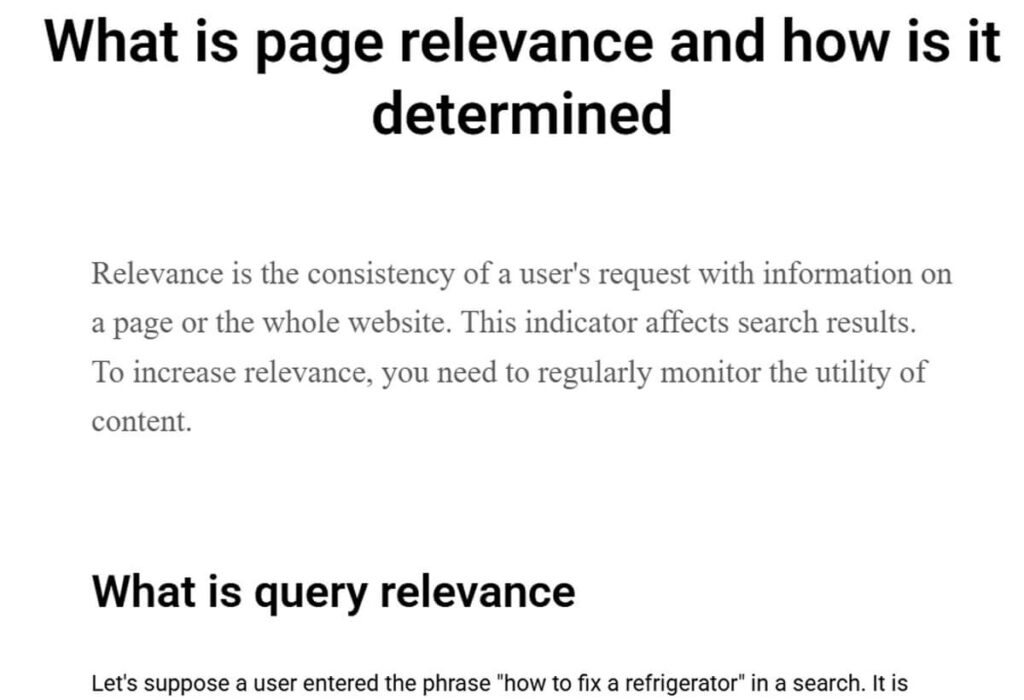
All these design choices create a polished look that builds trust and makes reading more enjoyable.
Creating custom layouts can take time, money, or creativity, but they can turn good content into something great by making it easier to read, share, and rank well.
Formatting Strategy #3: Use Lists to Make Content Easier to Read
Use lists wherever possible: Whenever you can, use lists to help readers quickly skim your content.
Research shows that most readers want to get useful information fast before deciding to read more.
Why Lists Work Well:
Quick Scanning: Lists help readers pick up key points right away.
Easier to Digest: Breaking information into smaller parts makes it clearer and easier to remember.
Less Need for Long Explanations: Lists make complex ideas simple, so you don’t have to write long descriptions.
Formatting Strategy #4: Structure Your Content for Easy Reading
Structure for maximum readability: It’s important to have a clear structure in your content.
Helps readers and also supports your SEO goals.
People are more likely to engage with content that’s easy to navigate.
To do this, organize your headings and subheadings carefully.
Use H2 headings for main sections and H3 headings for smaller points.
This structure helps readers find important information quickly, even in long articles.
On This Online Web, I make each subheading stand out by using different designs and extra spacing.
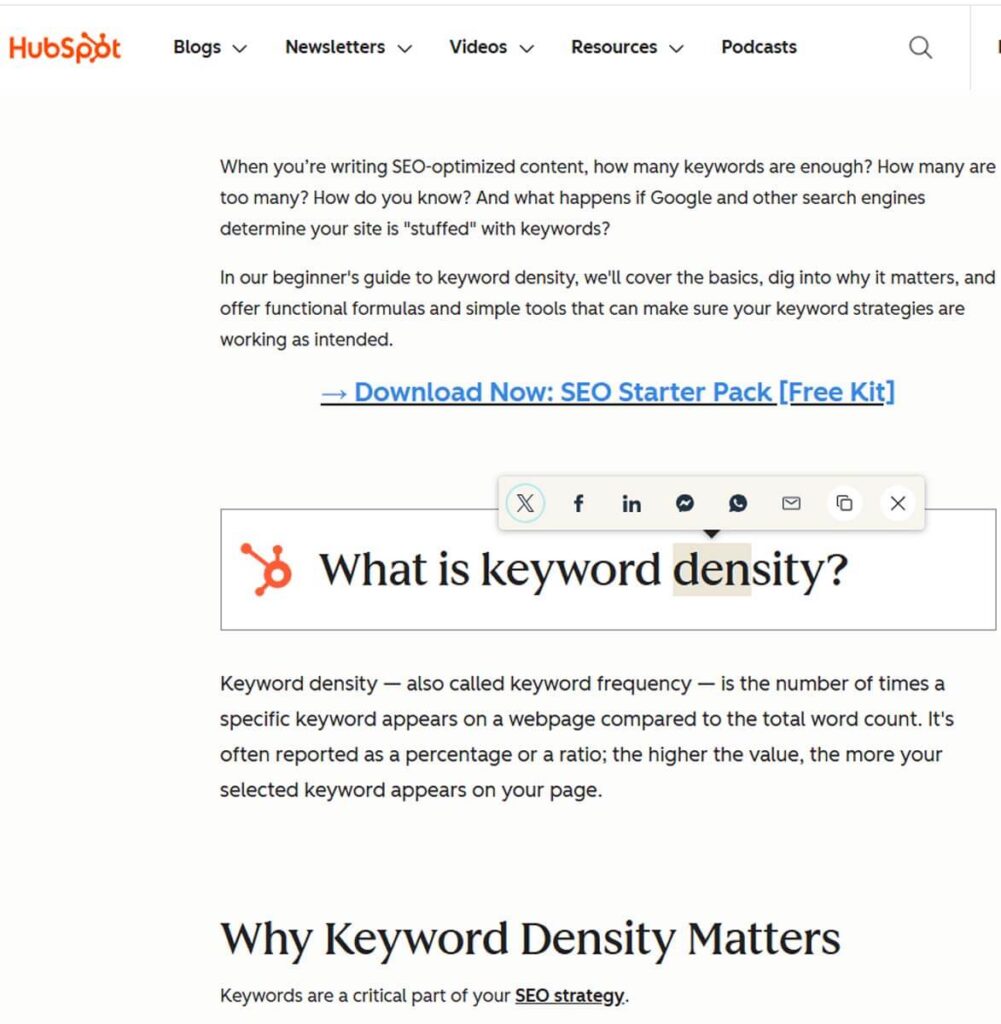
Without these differences, important ideas or transitions can get lost and be easy to miss.
Simple changes like adding bold callout boxes or unique blockquotes can break up the text and highlight key points.
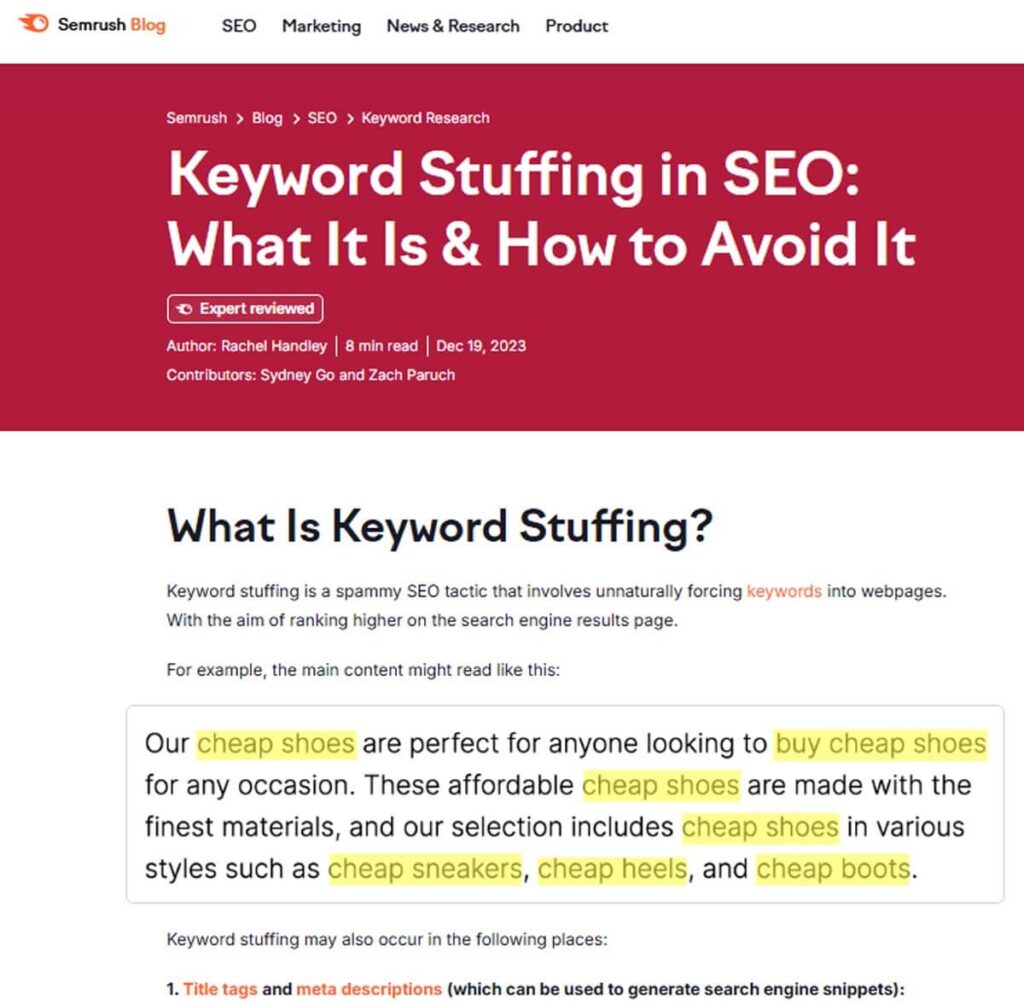
Even small design tweaks can have a big effect, often prompting readers to spend more time with your content.
4. Provide them With Something Trustworthy, Finally Establish Credibility
In the past, blogs were mostly personal journals and a way for people to share their thoughts.
Now, anyone can start a blog and claim to be an expert, even without real credentials. That’s why building credibility is so important.
If you use trustworthy sources, demonstrate your expertise, and connect honestly with your audience, you’ll build trust and grow a loyal readership.
This idea leads to an important question for readers: “Is this information credible?” As 2026 approaches, Google is shifting its search rankings to highlight content that is both trustworthy and truly useful.
In this changing environment, building credibility is now essential for getting noticed and succeeding in search results.
To make your content more credible, try these two proven strategies:
Option #1: Work with Experts or Reference Authority Figures
Interview or cite experts: If you are covering a topic in which you lack expertise, such as nutrition, it helps to reach out to well-known experts in that field.
Rather than pretending to be an expert, connect with a certified nutritionist to strengthen your content.
Interviewing them lets you tap into their knowledge and insights.
These steps help build E-E-A-T, which stands for experience, expertise, authority, and trustworthiness. They also make readers trust your work more.
For example, look at John Lee Dumas, who created “Entrepreneur on Fire.”
He started unknown in podcasting, but built his credibility by interviewing successful entrepreneurs and sharing their insights. You can do the same to boost your own credibility.
Until you become well-known, adding insights from respected experts can make your content much more impactful and well-received.
Option #2: Back Up Your Claims with Real Statistics
Support every claim with data: Solid facts are the best way to earn trust. Whenever you make a claim, back it up with strong evidence and clear citations.
I include statistics, links, or real examples to support almost every claim I make in my writing.
This approach takes extra effort, but it helps your content appear more reliable and trustworthy.
To find useful statistics, search your topic along with the word “statistics” on Google. You’ll find plenty of credible information.
No matter if you’re looking at marketing, SaaS, or health, good statistics are easy to find. Use them to strengthen your content.
Add clear links to your sources to build trust around your content.
For more detailed insights, look for niche materials related to your topic.
For example, searching for “content marketing statistics 2026” can help you find valuable sources.
Option #3: Be More Transparent
Increase transparency: When you mention your own research, be sure to briefly explain your methods, share clear author bios, and add “Reviewed by” lines from qualified experts. Especially important for YMYL (Your Money or Your Life) topics.
Being transparent is a key sign of quality content and helps readers trust that your work is real and reliable.
5. Give Readers More Control: Allow Readers Control in Complex Situations
It’s important to remember that your audience is not a single group. Even people with similar interests have different needs, learning styles, schedules, and experience levels.
So, besides creating great content, let your readers choose how they access and use information. It can make them happier and help your search rankings.
Strategy #1: Offer Different Content Formats
Offer content in multiple formats: People engage with content in different ways. Some prefer reading, while others like audio or visuals.
Don’t limit your content to just one format. Offer a variety of options.
Along with detailed infographics, I often add downloadable PDFs, audio explanations, or videos to my guides.
For example, an infographic can complement a written guide in a Backlinko post, helping both visual and verbal learners stay engaged.
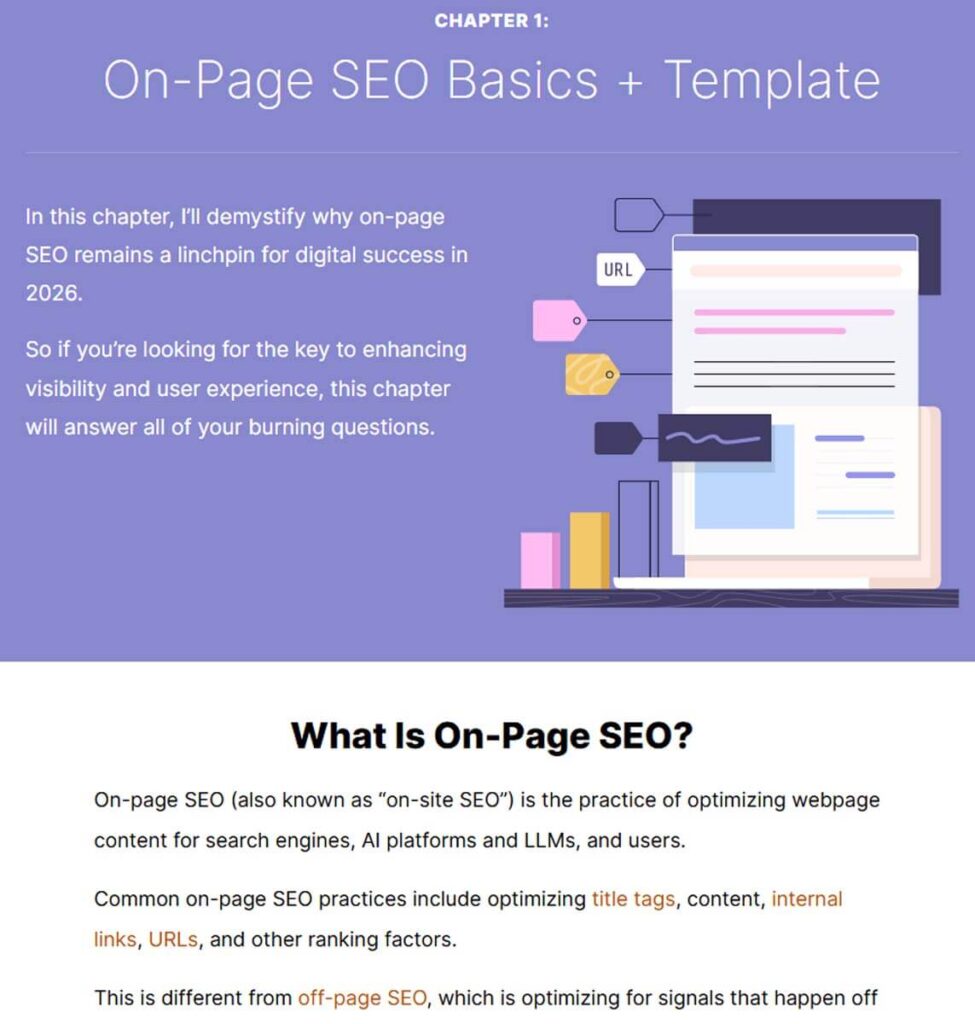
You can also require an email sign-up or sharing before letting people download PDFs.
If your content is valuable, this can benefit both you and your readers.
Strategy #2: Add a Clickable Table of Contents
Include a table of contents: Readers often look for sections that matter most to them, so make navigation easier.
A simple, clickable table of contents lets them jump right to what they want.
Wikipedia is a great example of this clear, easy-to-scan structure. It shows that clarity is more important than extra decoration.
To make it even more engaging, try a visually appealing version or use a WordPress plugin like Easy Table of Contents to improve usability.
A well-made table of contents can make reading easier and more enjoyable, helping readers move smoothly through your content.
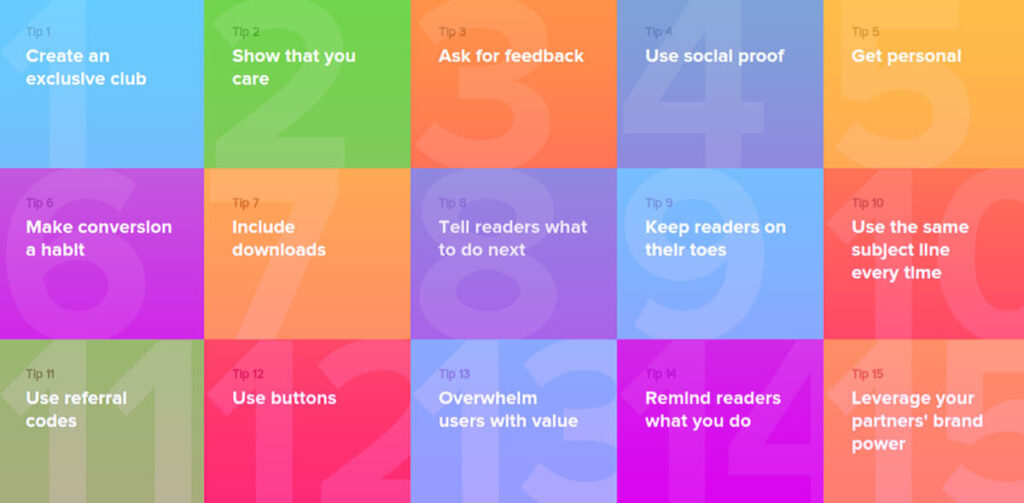
Picture a website screenshot showing a well-organized table of contents, designed to help users stay engaged.
The site’s visuals are eye-catching and make it easier to use, creating a welcoming first impression for visitors.
Strategy #3: Enable Users to Filter Large Lists
Long lists can overwhelm users and make it hard to find what they need.
Interactive filtering features are especially helpful in these situations.
Take Jon Cooper’s well-known list of SEO strategies as an example.
His catalog includes over 150 tactics, and he added a dynamic filtering system that makes it easy to navigate without feeling overwhelmed.
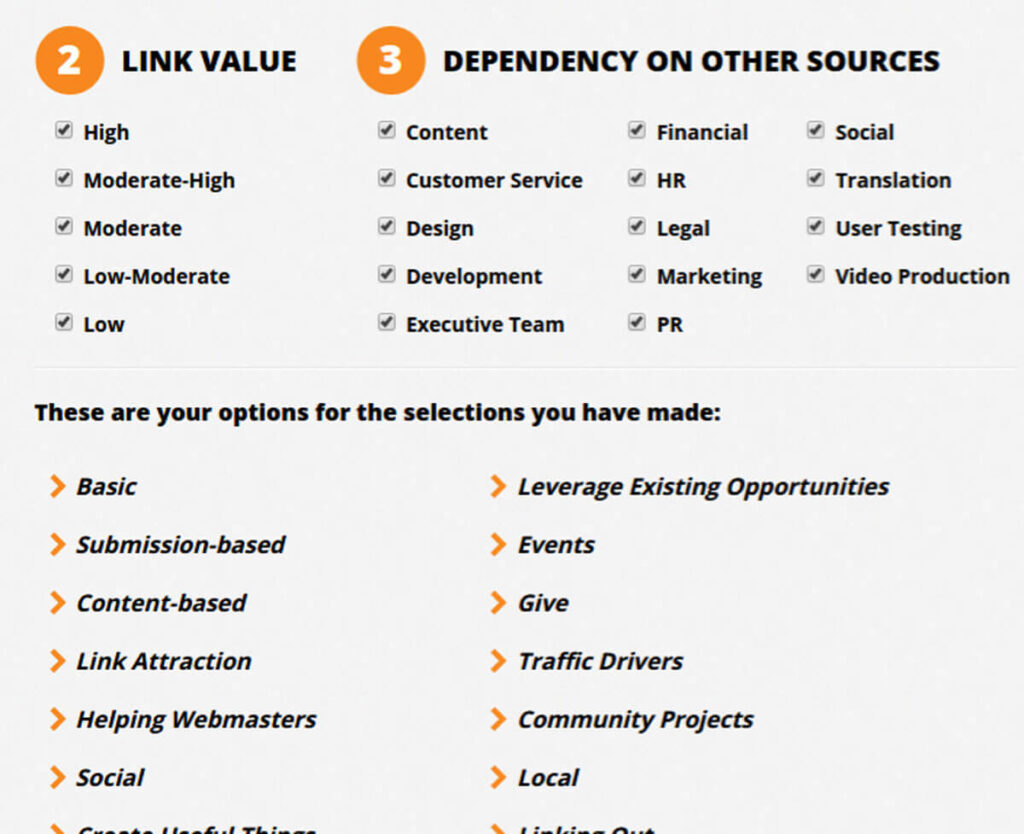
A visual of Jon Cooper’s filtering system shows how readers can adjust their experience to fit their needs.
Users can easily sort strategies by factors such as value, dependencies, or time to implement.
This kind of design makes long content easier to use and helps different users find what they need.
Adding features like this can be complex and require extra resources, but the boost in user satisfaction and engagement makes it worthwhile.
6. Ensure Mobile Friendliness
Ensure Mobile Friendliness: Today, making your website work well on mobile devices is no longer optional. It is essential.
With more people using the internet on their phones and tablets, most users now rely on these devices to browse online content.
To keep up with this trend, use a responsive design so your website adjusts smoothly to different screen sizes and orientations.
This flexibility gives visitors a consistent and engaging experience, whether they use a small phone or a large tablet.
Another important part of mobile optimization is how quickly your pages load. Focusing on faster load times can greatly improve user satisfaction.
Studies show that users often leave websites if they take more than a few seconds to load, so fast performance is crucial.
You can improve your site’s speed by compressing images, minimizing HTTP requests, and utilizing browser caching.
A fast, responsive website not only gives users a better experience but also matches what Google’s search algorithms look for, since they now favor mobile-friendly and quick-loading sites.
By focusing on responsiveness and speed, your website can create a user-friendly space that encourages interaction, repeat visits, and more traffic.
Taking this approach makes your site easier to access and helps your brand rank higher in search results, increasing your visibility in a competitive online market.
7. Promote Your Content
Promote Your Content: Share your digital content with a clear plan across social media platforms like Facebook, Twitter, Instagram, LinkedIn, and TikTok to boost its visibility.
Adjust your message for each platform’s audience to maximize engagement. Also, create eye-catching email newsletters to keep your audience interested.
Use compelling subject lines, concise summaries, and straightforward calls to action to motivate readers to explore more about your content work.
Share your content in online communities like niche forums, subreddit groups, and Facebook groups where your potential readers spend time.
Join discussions in these communities to build your reputation and connect with others, which increases the likelihood that your content will be shared naturally.
Being active and engaging helps you reach more people and encourages your audience to share your content, thereby greatly expanding your reach.
You can also team up with influencers or thought leaders who share your brand’s values.
Look for people who have a strong following and an audience similar to your target group.
Working with them can boost your credibility and help more people discover your content.
Also, look for well-known websites and blogs that can link back to your content, since backlinks can make your site more trustworthy.
Focus on sites in your field that have strong domain authority.
These partnerships can make your site more credible, improve your search rankings, and bring more qualified visitors to your content.
By applying these strategies, you can connect with a larger audience and leave a more impactful impression with your content.
8 Monitor Performance and Refine
Monitor Performance and Iterate: To ensure your content strategy succeeds, regularly use analytics tools such as Google Analytics to gain insights into how your content performs.
Look beyond basic numbers and examine key indicators such as traffic trends, engagement rates, average session time, and bounce rates.
These metrics help you understand your audience, how they use your content, and what interests them most.
By tracking and analyzing this data over time, you can spot new trends that can guide your future content.
For example, if people spend more time on your site, it usually means they find your content valuable.
On the other hand, a high bounce rate might indicate that your topics don’t match your audience’s interests or that your delivery needs improvement.
Also, check how posting at different times affects engagement, and adjust your schedule to improve results.
Improving site navigation, loading speed, and mobile responsiveness is just as important for a good user experience.
Make your content fit your audience’s needs and interests, either by giving personal recommendations or covering trending topics, to boost engagement.
By regularly using analytics, you can keep improving your content strategies and make your content better overall.
As you keep adjusting your approach based on data, your content will connect more with your audience.
All these improvements together will help you engage your audience more, keep them coming back, and increase conversions.
In Conclusion
Getting the top spot in search results is tough, so it’s important to stand out from the competition.
To get there, your content needs to be detailed, helpful, and the best answer to users’ questions.
Think of every article you write as an investment that will pay off over time.
If you put time and effort into quality content now, you’ll naturally get more traffic, backlinks, and leads in the future.
Remember, results don’t happen overnight. Getting to 100,000 monthly visits takes patience and steady work.
Instead of using just one strategy, try combining several techniques to create search-friendly content that puts the reader first.
A typical (This Online Web) article stands out because it:
Is the content thorough and informative? Absolutely.
Is it easy to understand and put into action? Definitely.
Is it organized for easy reading and use? Without a doubt.
Do facts and expert insights back it? Indeed.
Does it give readers different ways to interact? Sometimes, but there’s always room to improve.
Does it show firsthand experience and unique viewpoints? Aim for a clear “yes.”
By meeting these standards, I create content that not only competes for top rankings but also truly deserves to be at the top of search results.
10 Best Tools to Track Your Brand With AI Overview & Chat Assistant
8 Easy Steps: How to Remove Personal Information From Google
How to Remove Google Search Results: Follow 9 Easy Steps
6 Easy Steps: How to Test New Marketing Channels Find More
20 Ways To Social Proof Your Brand For Marketing Success